Vinland Saga an Ainme Review
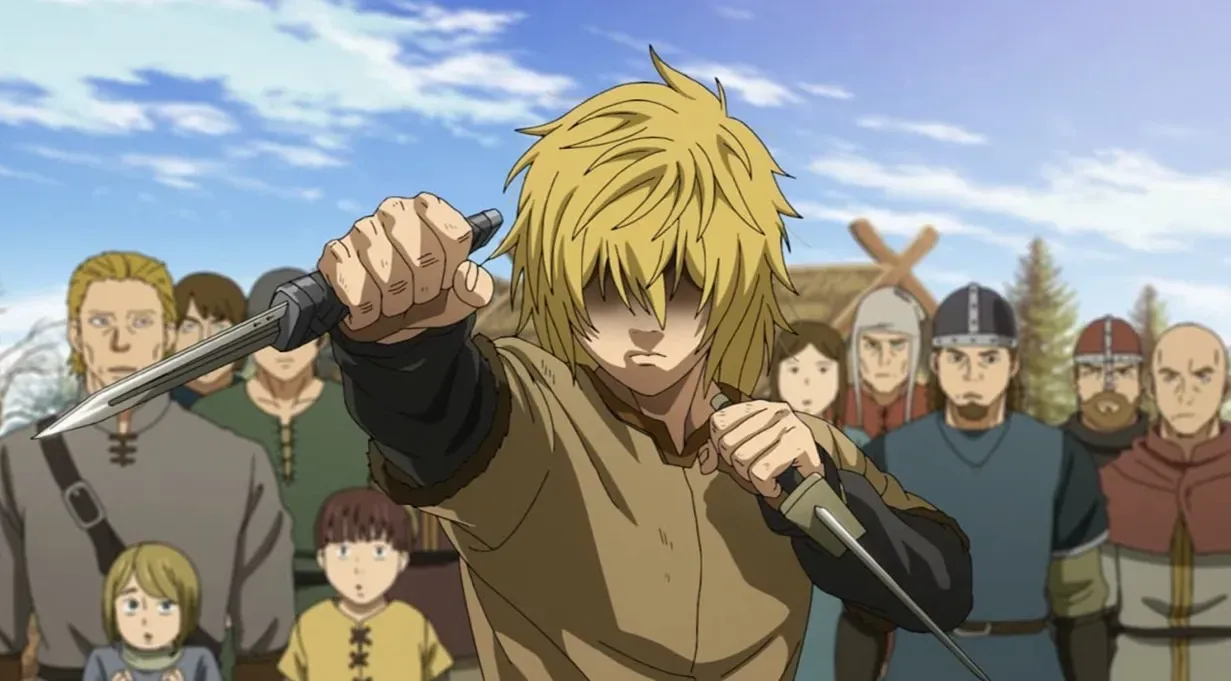
Studio: Wit Studio (Season 1) / MAPPA (Season 2)
Episodes / Season: Season 1 (24 episodes) + Season 2 (24 episodes)
Genre: Action, Adventure, Drama, Historical
Air date / Status: July–December 2019 (S1) / January–June 2023 (S2) – Completed through Farmland Arc
My Score: 9.5/10
Introduction
Plenty of anime know how to stage a battle. Far fewer know what a battle does to the person still standing afterward. Vinland Saga opens like a Viking epic — ice, ships, a boy chasing glory — and then, almost stubbornly, becomes one of the medium’s most serious examinations of violence, purpose, and adulthood.
Both seasons matter. Season 1 is ferocious and magnetic. Season 2 is quieter, harder, and in some ways braver. Together they ask what it costs to live by the sword, and whether someone who has already paid that cost can still choose another life.
Spoiler warning: The synopsis stays with the premise. Later sections discuss Thorfinn’s arc across both seasons in broad but honest terms, including the shift after Season 1. If you want that transformation completely cold, watch first and return.
Spoiler-Free Synopsis
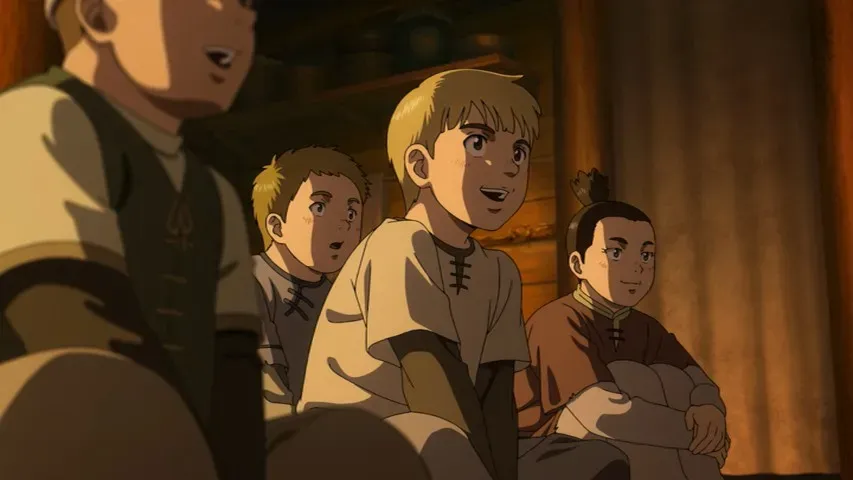
In early-eleventh-century Iceland, young Thorfinn grows up on tales of a warm land far to the west — Vinland — and on the legend of his father, Thors, a retired warrior trying to live as a farmer. When that peace is broken, Thorfinn is pulled into the wars between Denmark and England, trailing a mercenary band led by the calculating Askeladd.
A child’s hunger for adventure hardens into a single purpose. Years pass in raids and winter camps, among princes, berserkers, and men who treat war as a trade. The question is not only who wins the next fight. It is what kind of person a fight is allowed to make.
Characters
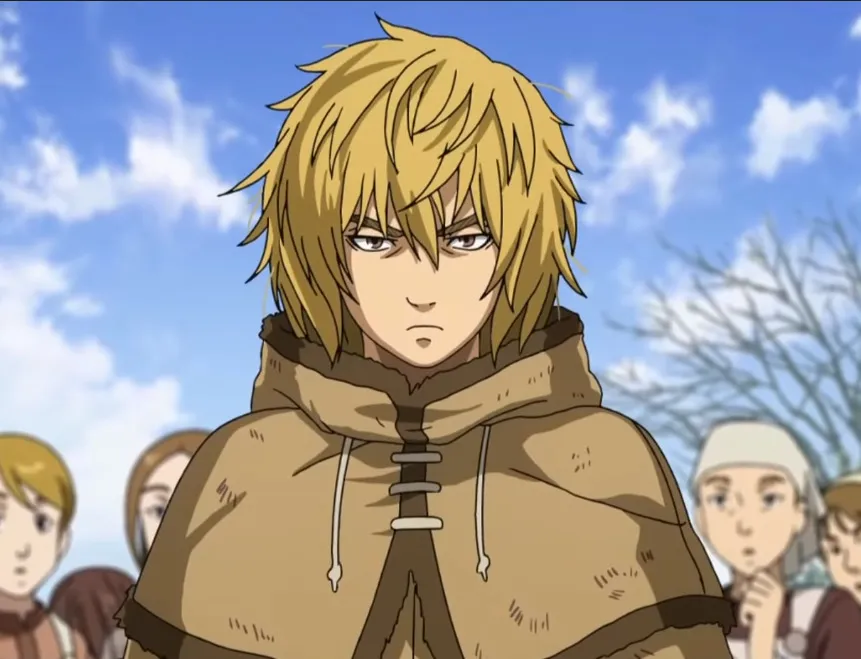
Thorfinn is the reason the series stays with you, and the writing treats him as a life rather than a type. He begins as a restless Icelandic boy who wants the sea and the saga, not the farm. After the rupture that defines his childhood, he becomes a small, vicious specialist: skilled enough to survive among adults, too young to notice that survival has replaced a self. He is brave and empty at the same time. The philosophy of his journey sits in that emptiness. For years he treats revenge as a moral system. If he can kill the right man, the world will make sense again. The series lets that belief run until it collapses. When the object of his hatred is gone, Thorfinn does not become free. He becomes vacant. A life organized around an enemy has no interior once the enemy disappears.
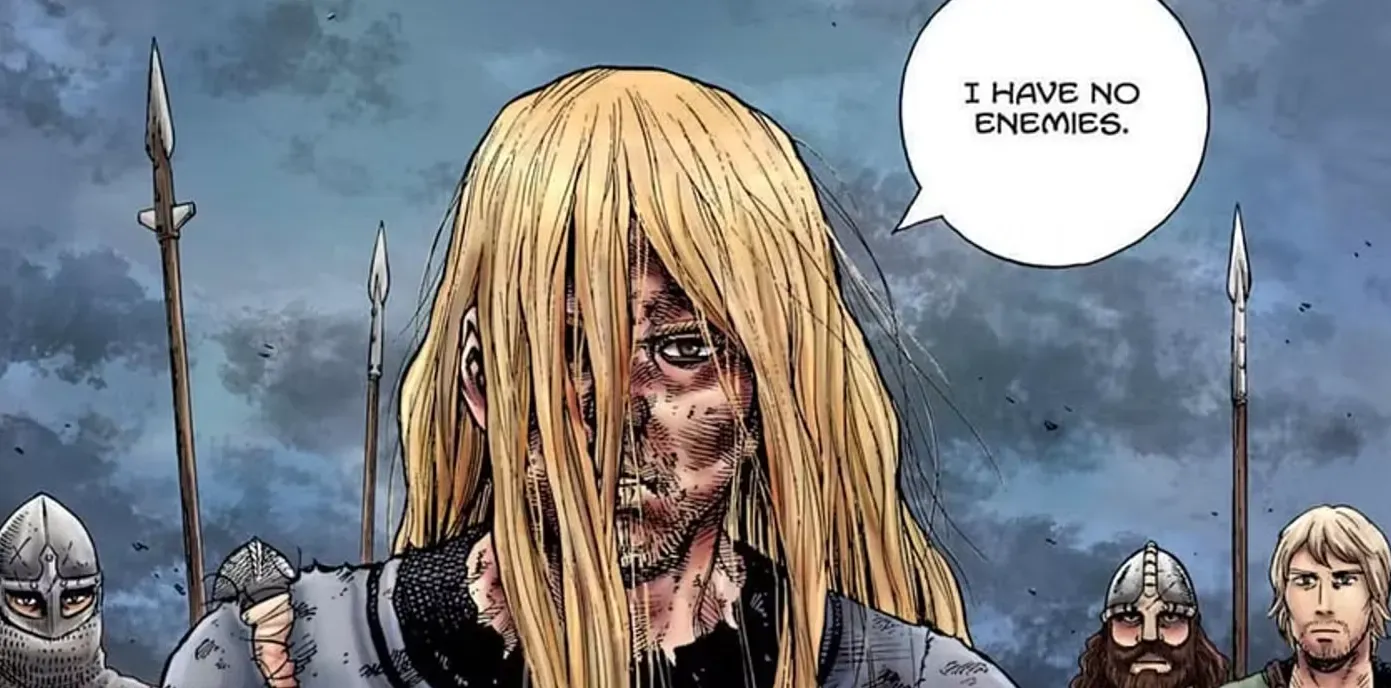
Season 2 is the reconstruction. Sold into bondage on a Danish farm, he is no longer a predator in someone else’s war. He is a body that plants, sleeps, and flinches. The violence is still in him — in nightmares, in reflex, in the way he cannot quite meet another person’s hope — but the show refuses to treat atonement as a speech. Change arrives through labor, conversation, and the slow discovery that other people have been broken by the same century. The later insistence that he has no enemies is not a slogan pasted onto a reformed hero. It is a hard-won ethic if the world keeps manufacturing reasons to kill, someone has to refuse the manufacturing.
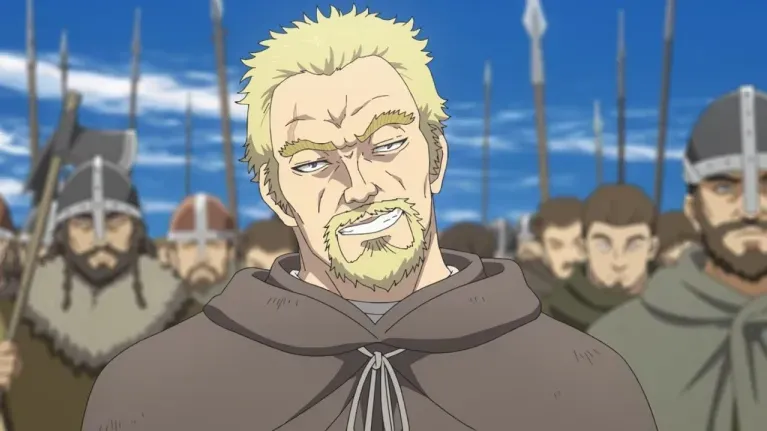
The supporting cast is built to test that ethic. Askeladd is the series’ great worldly intelligence — cruel, funny, and more complicated than a villain’s outline. Canute, the fragile prince who learns to wear power like armor, is almost Thorfinn’s dark mirror. Thorkell is joy as destruction. Bjorn gives Askeladd a loyalty that feels painfully human.
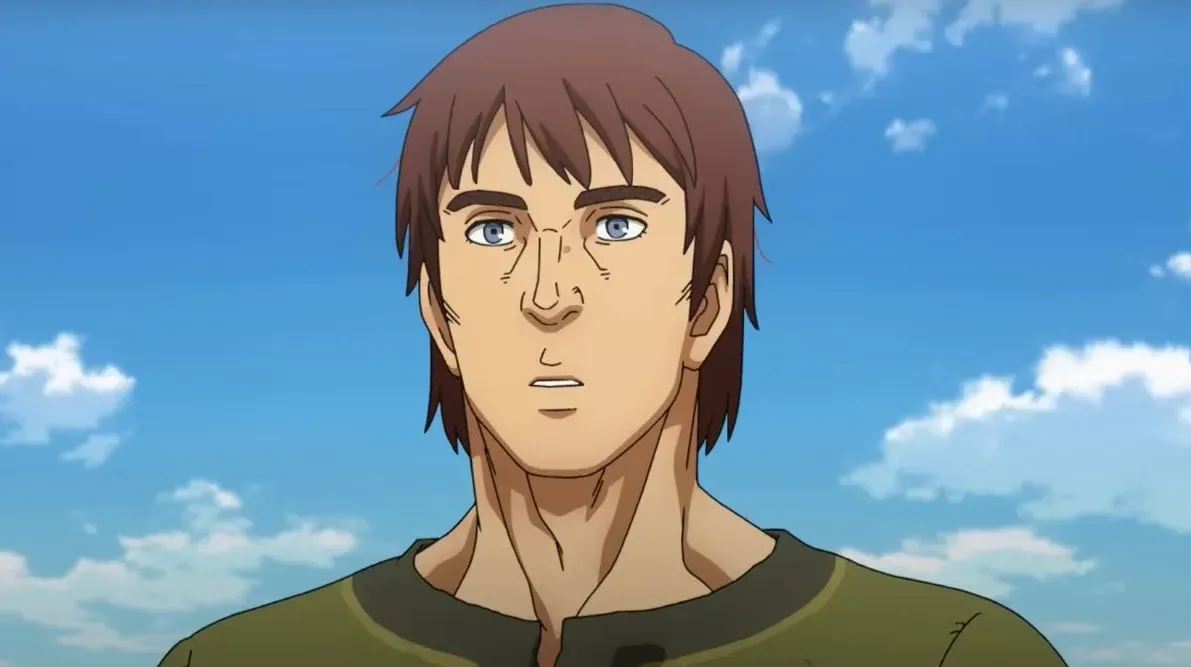
On the farm the circle tightens. Einar is the companion Thorfinn did not know how to need: angry, decent, and unwilling to let a hollow man stay hollow. Arnheid makes the cost of the era intimate rather than epic; her story refuses to treat suffering as fuel for a man’s growth. Ketil, Snake, and Leif Ericson each offer a different answer to whether a person can own land, guard it, or leave it without becoming the thing they fled. Even Thors, present more as memory than as screen time, remains the moral weather of the show: a true warrior is one who does not need an enemy.
Story & Pacing
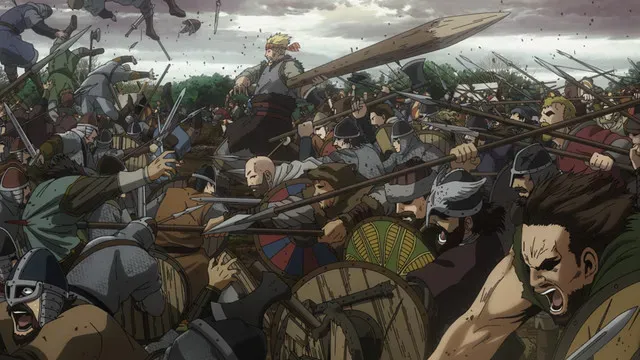
Season 1 moves from Iceland to the English war with unusual confidence. Raids and court intrigue give it momentum; quieter episodes keep the human scale intact. The London stretch can feel dense on a first watch, but it shows that Thorfinn’s private war sits inside a much larger machine.
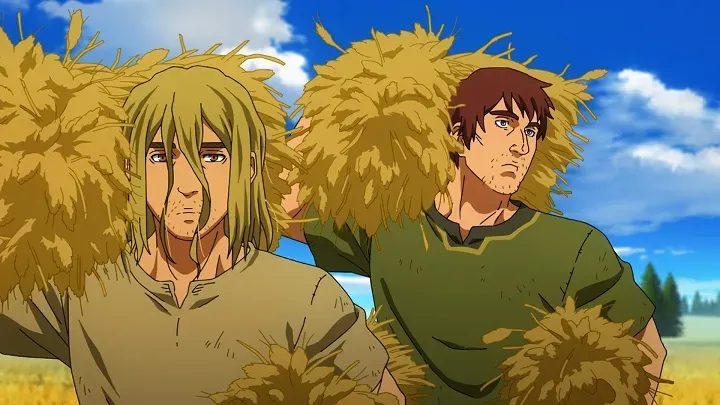
Season 2 changes tempo on purpose. Viewers who came only for shield-walls will feel the drop in spectacle and that drop is the point. The farm is not a detour, it asks whether a man can still exist when the saga is taken away. Fieldwork and sudden brutality sit next to each other until the later eruption feels earned.
Season 1 functions as a prologue and Season 2 begins the life that prologue made possible. Together both season tells the story of a man who is finding himself episode by episode and atoning for salvation.
Themes & Writing
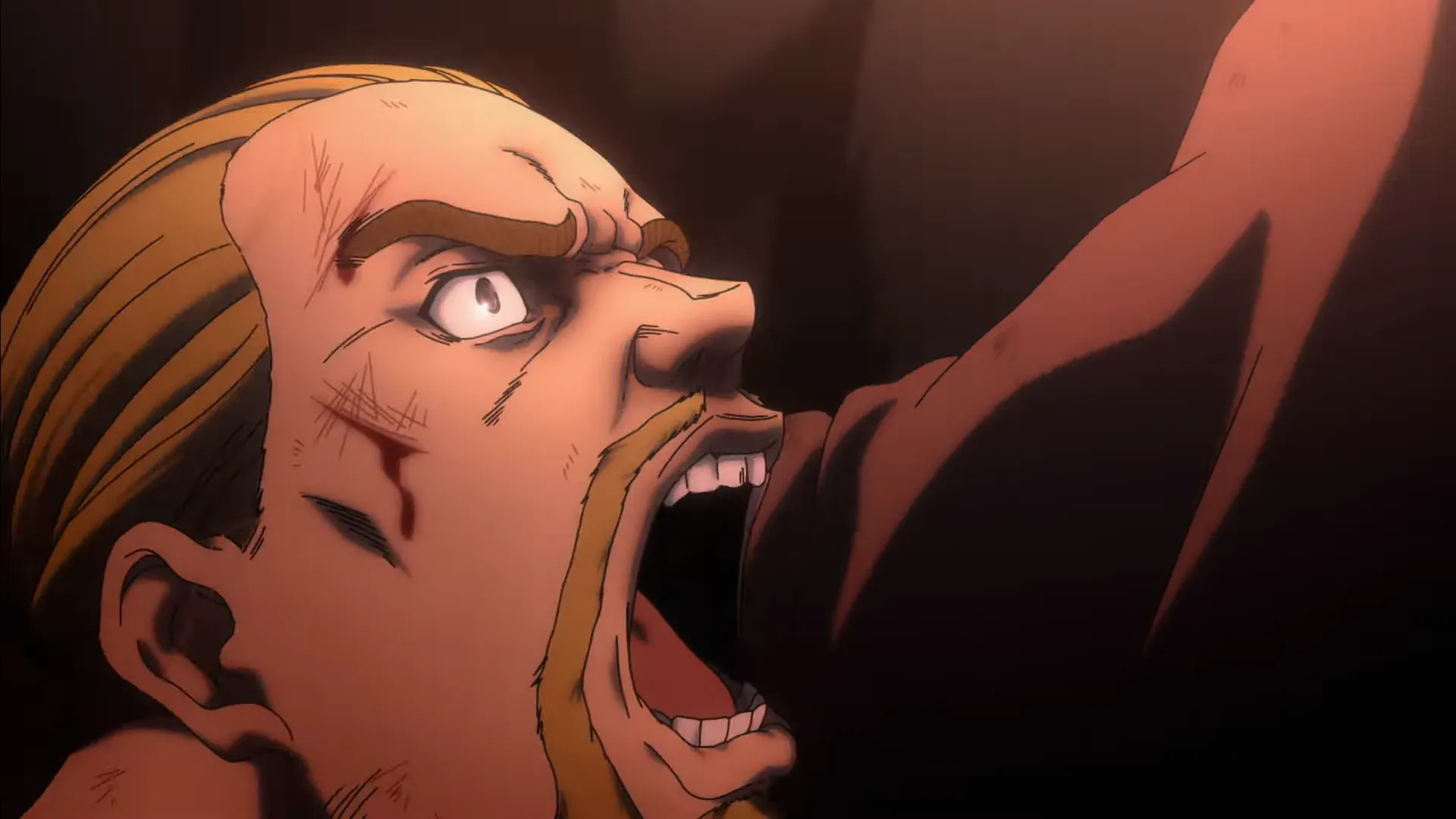
The central theme is not simply that war is bad rather it asks what violence offers people who fought them: identity, wages, a place in a story, a way to keep grief from turning inward. It then asks what remains when those gifts are revealed as debts.
Thorfinn’s philosophy evolves in stages that feel lived. First comes imitation — he wants to be his father without understanding him. Then comes the ethic of the feud. Then comes nihilism, the honest aftermath of a completed revenge. Only after that does a positive claim appear. Peace is not the absence of conflict. It is the decision to stop manufacturing enemies, including the ones you make of yourself.
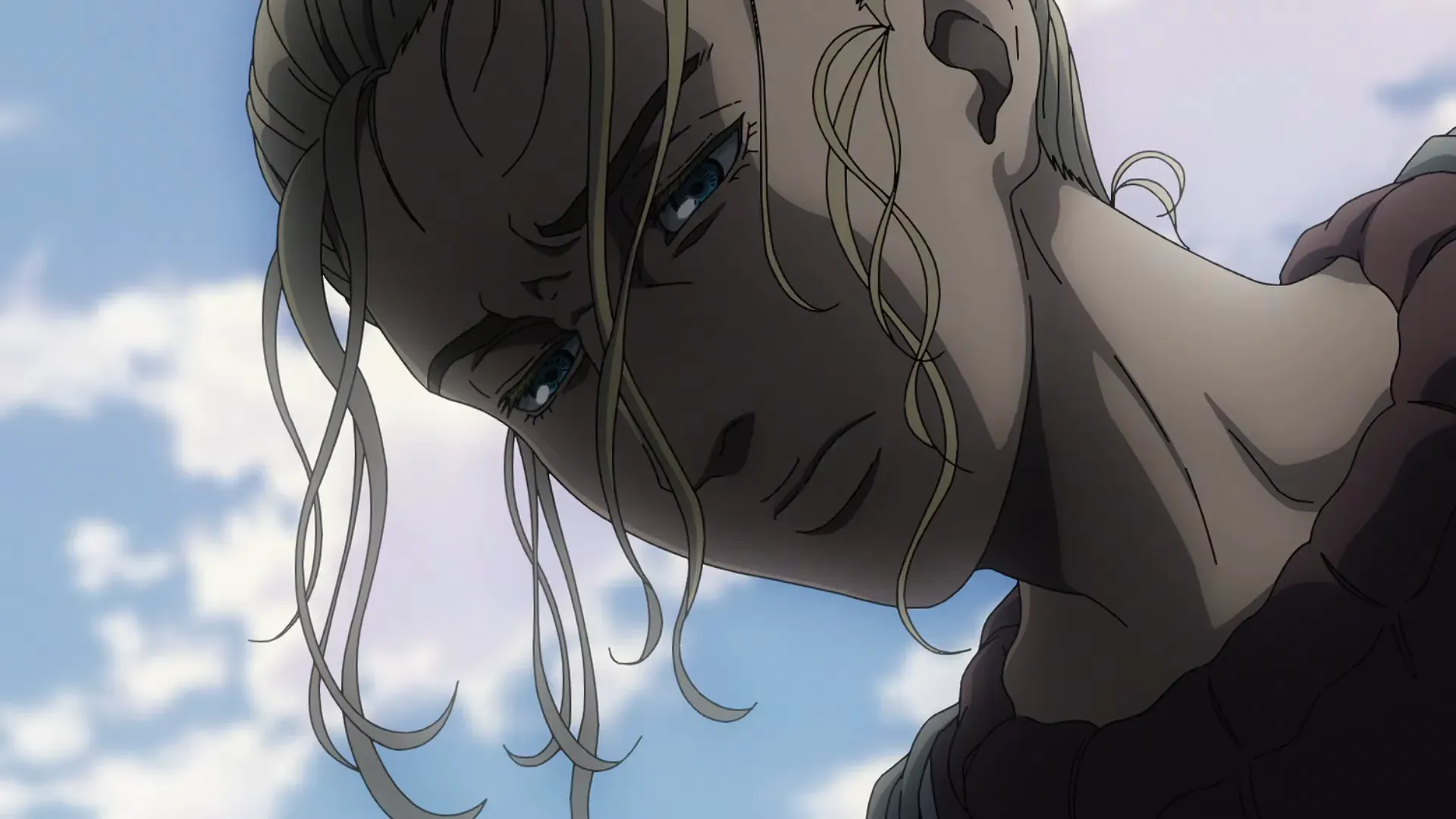
Other characters carry the argument. Askeladd talks about nations as useful lies. Canute tries to build paradise with a king’s tools. Einar talks about soil and tomorrow. Arnheid makes every speech about freedom feel expensive. The historical texture stays specific enough that the philosophy never floats free of the century that produced it.
Animation & Art
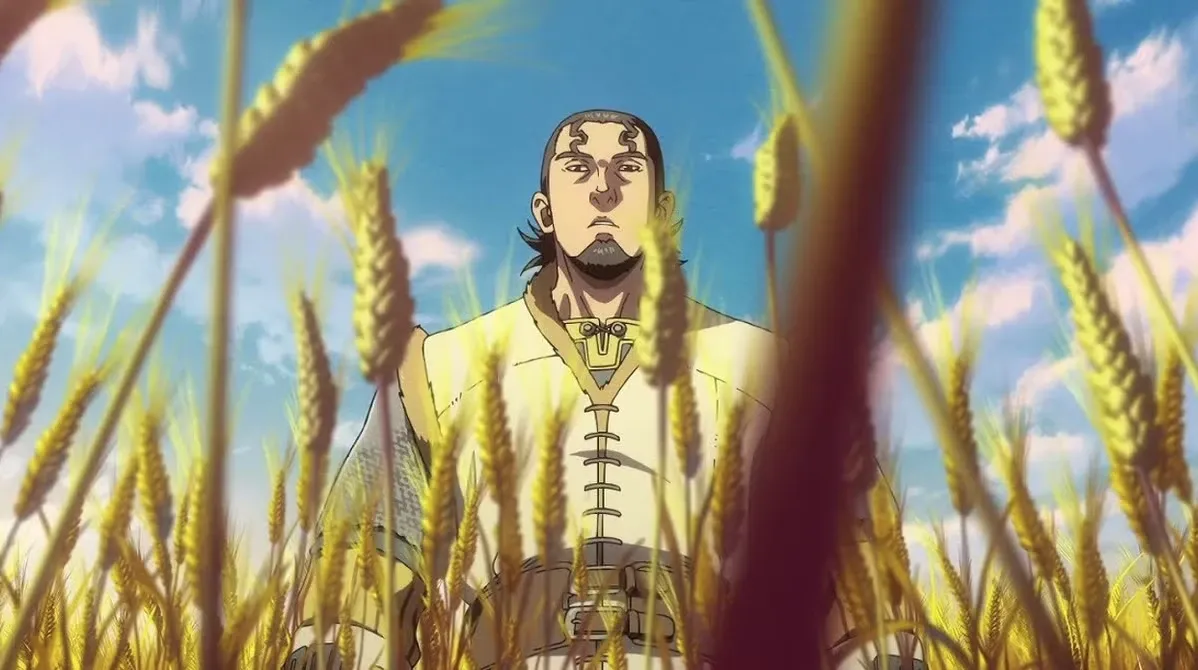
Wit Studio’s first season is built for weather and impact. Steel, sea spray, and winter light have weight. Battles feel like problems of distance and timing rather than highlight reels. The Icelandic opening has a stillness that makes later bloodshed feel like a fall from somewhere real.
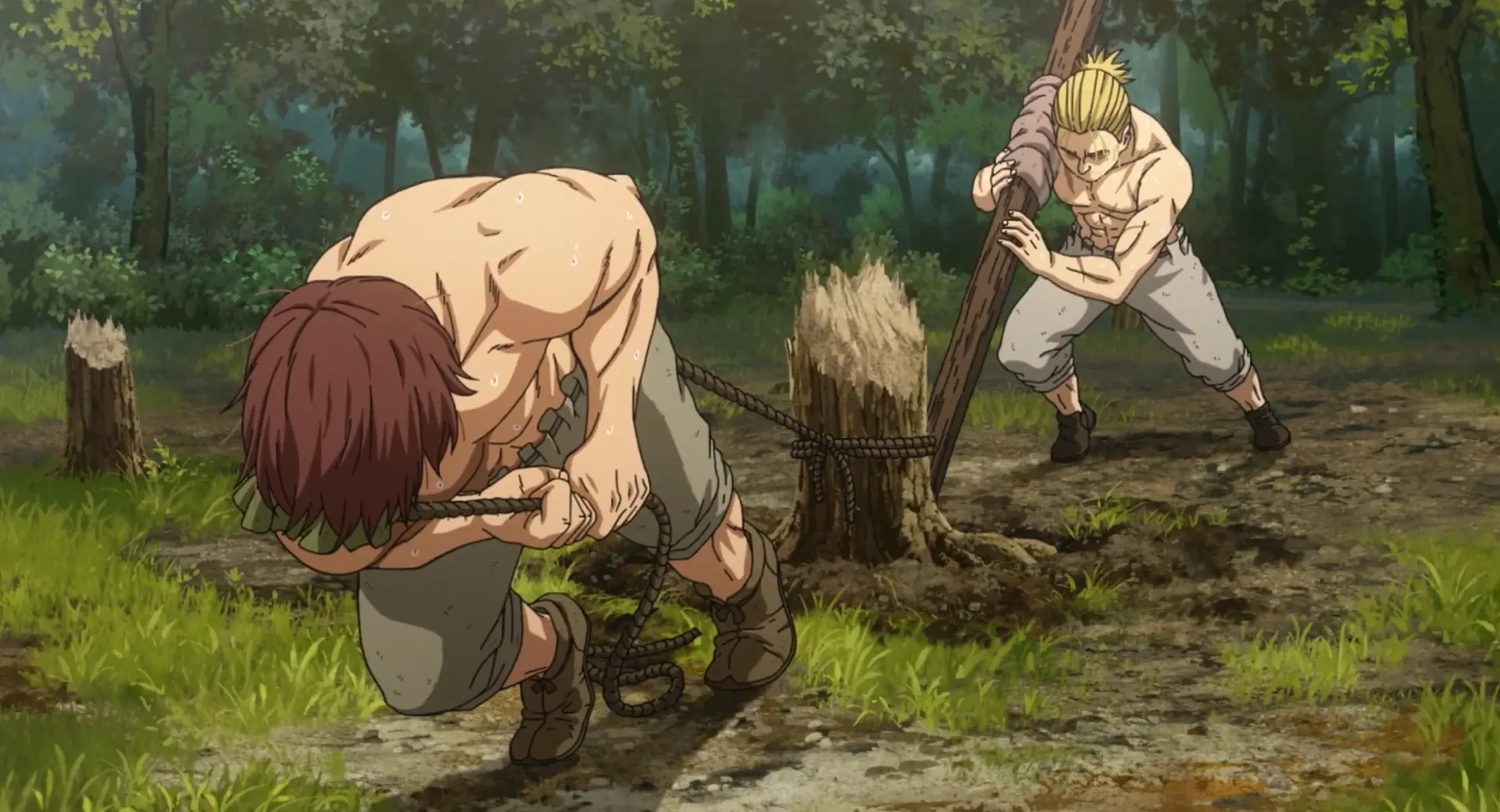
MAPPA’s second season trades some of that metallic sheen for earth: mud, wheat, wooden interiors, the gestures of people who work until dark. The studio change is visible. It is not a collapse. Director Shūhei Yabuta and designer Takahiko Abiru keep Thorfinn’s aged emptiness readable as character, not a redesign.
Music & Sound Design
Yutaka Yamada’s score is one of the series’ secret engines. Season 1 uses low strings, choir, and sudden percussion to make violence feel ceremonial and sick at once. Season 2 thins the orchestra and lets silence do more work. The music does not congratulate Thorfinn for growing. It sits with him while he fails to. Theme songs track the same shift, from the heat of “Mukanjyo” toward the weather-after-storm of “River” and “Ember.”
What Worked / What Didn’t
What worked:
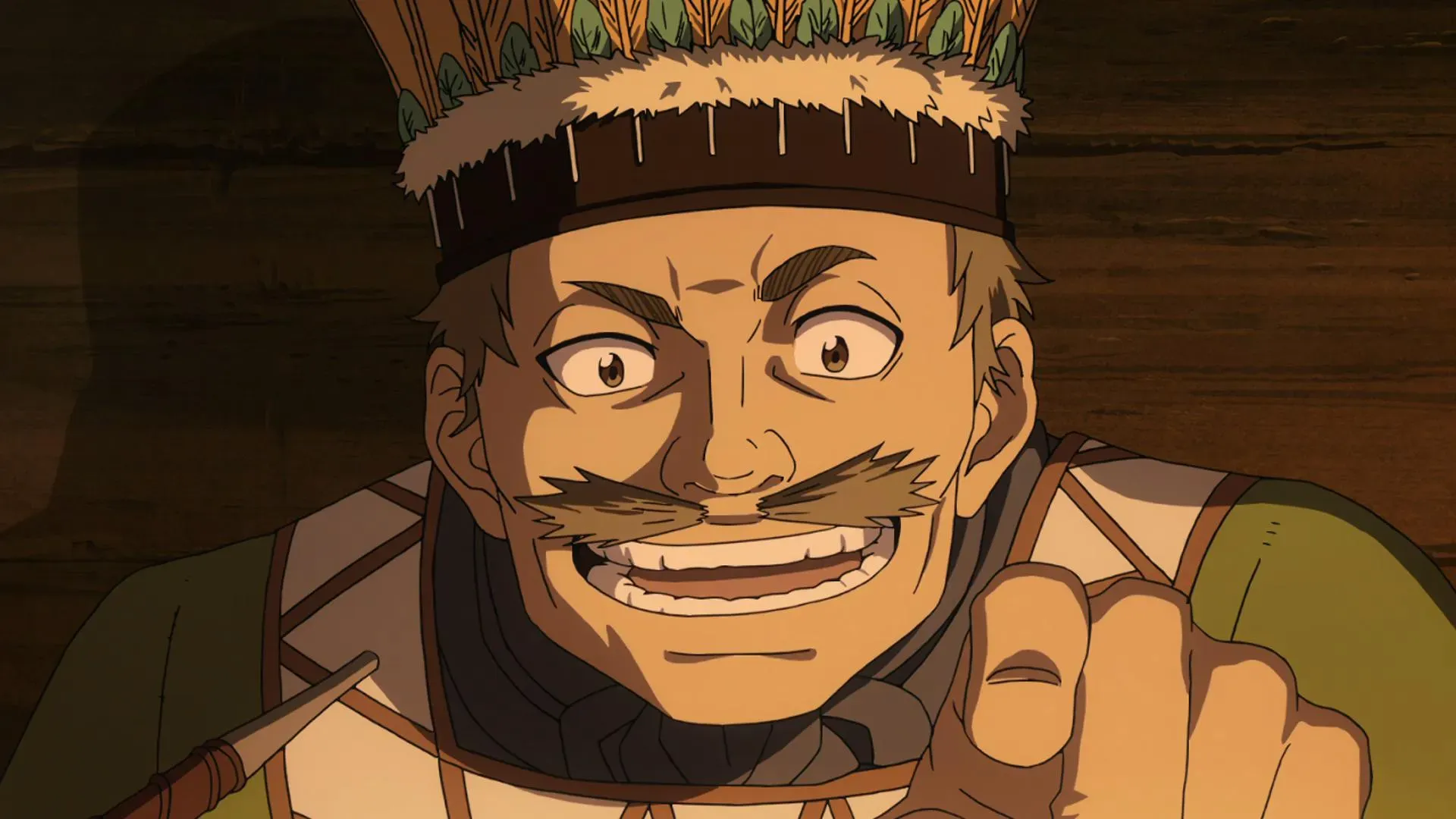
Thorfinn’s arc is among the strongest in modern anime because it is allowed to be ugly before it becomes wise. Askeladd is both a performance and a thematic instrument. Season 2’s tonal risk pays off: the farm is the moral center, not filler.
What didn’t fully land:
Season 1’s political midsection can blur if you came only for Thorfinn. Season 2’s early episodes will lose anyone who wanted a second campaign of pure action. A few English-court figures remain more functional than felt. And because the anime currently stops at the Farmland material, Vinland itself is still a horizon rather than a destination.
Who This Is For
This is for viewers who want historical fiction with a conscience: people who can sit with brutality when it serves a character, and with quiet when quiet is the harder scene to animate.
If you want a Viking power fantasy that stays a power fantasy, Season 2 will feel like a betrayal. If you are sensitive to wartime violence, slavery, and harm to women and children, go in with your eyes open. The series is not gratuitous, but it is unsparing.
About the Original Manga & Author
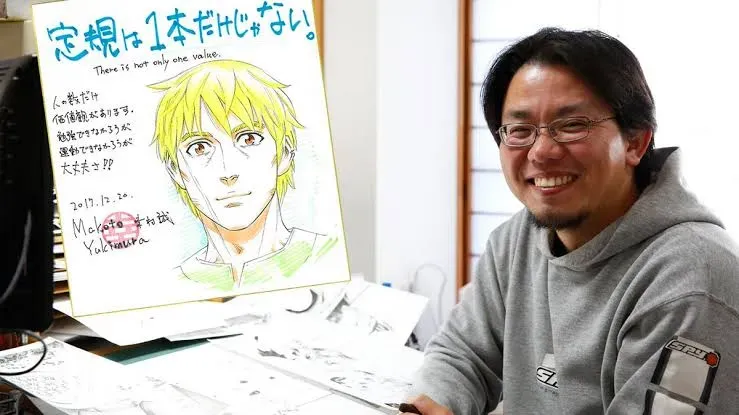
Vinland Saga is written and illustrated by Makoto Yukimura, who first drew notice with the science-fiction drama Planetes (1999–2004). The Viking epic began in Kodansha’s Weekly Shōnen Magazine in April 2005, then moved that December to the seinen magazine Monthly Afternoon, where it ran until its final chapter in July 2025. Kodansha collected the series in 29 tankōbon volumes, the last released in September 2025. Circulation has been reported above seven million copies. It won the Grand Prize at the 2009 Japan Media Arts Festival and the 2012 Kodansha Manga Award for Best General Manga. Kodansha USA publishes the English edition in hardcover two-in-one omnibus volumes. The anime covers the War and Farmland arcs; later voyages remain on the page.
Final Verdict + Score
Vinland Saga understands its hero as a long argument rather than a mascot. Season 1 shows how a child is forged into a weapon. Season 2 asks whether the weapon can become a person again. The battles are excellent. The philosophy is better.
Final score: 9.5/10
Highly recommended — especially if you are willing to let a war story grow into something more demanding than war.
Closing
I keep thinking about Thorfinn not in the moment he fights, but in the moment he realizes that fighting has been doing his thinking for him. That recognition is slower than a duel and far more difficult to animate. The series manages it anyway.
If you have watched both seasons, I would like to know where the character became real for you — the boy on the ice, the empty man in the field, or the first time he tried to live as if other people were not obstacles. If you have only seen the raids, consider staying for the harvest. That is where the saga earns its name.
Couch talk
Quiet on this thread so far — say something (we mod before it goes live).