Tokyo Ghoul Ainme Review: The Story of Ghouls and Humans
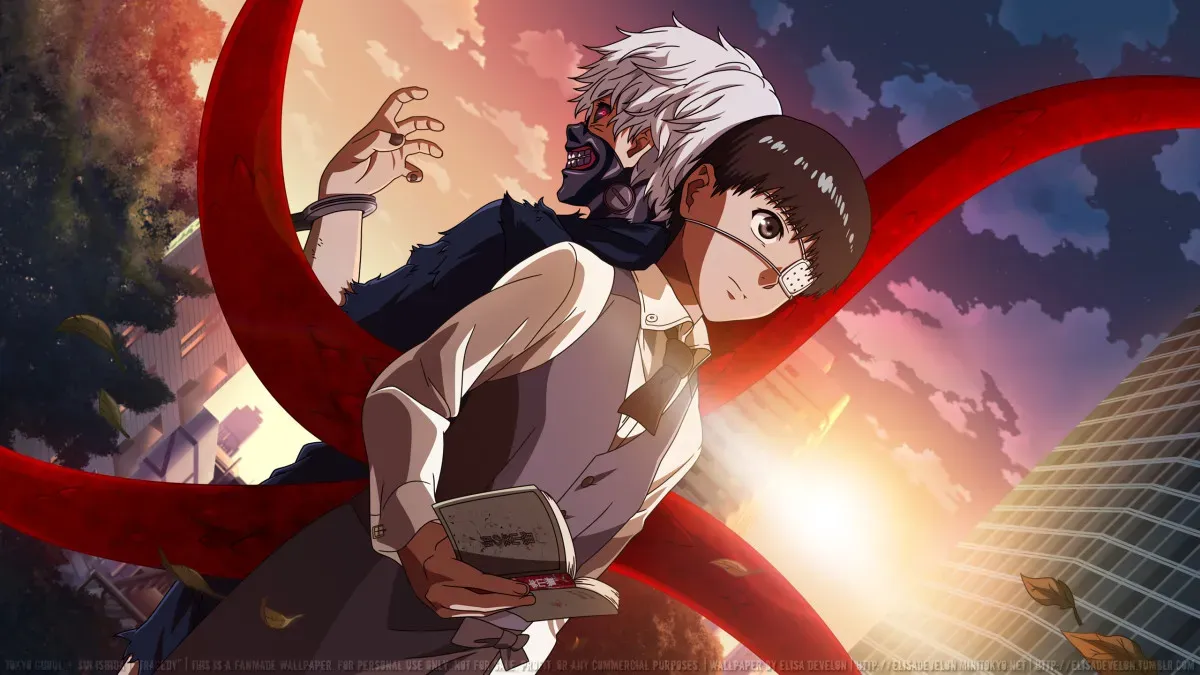
Studio: Pierrot
Episodes / Season: 48 TV episodes across four cours — Season 1 (12, 2014), Tokyo Ghoul √A (12, 2015), Tokyo Ghoul:re Part 1 (12, 2018), Tokyo Ghoul:re Part 2 (12, 2018)
Genre: Dark Fantasy, Action, Horror, Psychological
Air date / Status: July 2014–December 2018 – Completed
My Score: 8/10
Introduction
Tokyo Ghoul is one of those titles that arrived as a phenomenon and left as an argument. A shy literature student is rewritten overnight into something that eats people, and the city around him — cafés, investigators, underground gangs — has already decided which side of the line he belongs on. The first season still has the grip that made the series famous. What follows is messier: an alternate second cour, then a two-part sequel that tries to finish a huge manga in twenty-four episodes.
This review treats the whole television run as one story, because that is how most people watch it now. The gist is Kaneki’s life, not a checklist of raids. The conclusion is the point of staying. The adaptation is uneven, sometimes badly so, and the score is for the shape of that life as it still reaches the screen — not for a panel-faithful ride.
Spoiler warning: The synopsis stays with the premise. From Story & Pacing onward, the piece talks about the full series in outline, including where √A leaves the manga, who Kaneki becomes in :re, and how the ending settles. It does not narrate every late fight. If you want the last cour completely cold, watch first.
Spoiler-Free Synopsis
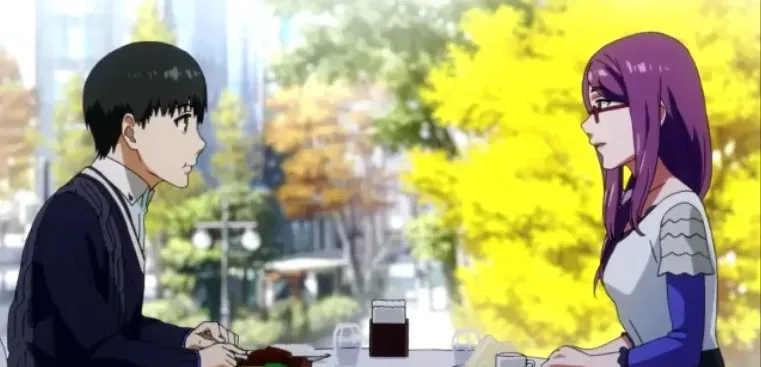
In a Tokyo that looks ordinary until it does not, ghouls live among humans and survive by eating them. Ken Kaneki is a bookish college student who wants a quiet date and a quieter life. The woman across the table, Rize Kamishiro, is not what she seems. A street accident and a transplant later, Kaneki wakes up as a one-eyed half-ghoul: human enough to remember who he was, ghoul enough that coffee and companionship become the only safe substitutes for a meal.
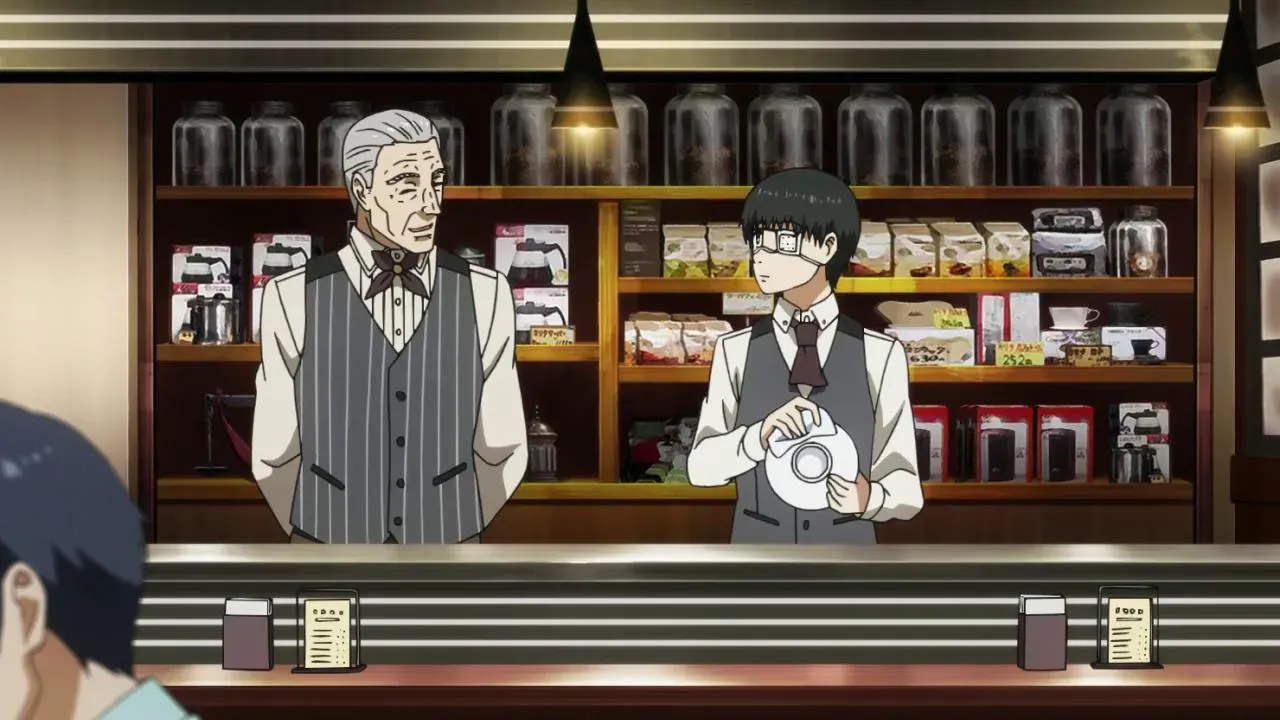
The café Anteiku takes him in. Investigators from the Commission of Counter Ghoul (CCG) hunt what he has become. Other ghouls offer different answers — hide, fight, or devour. The premise is simple and cruel: there is no clean way to stay himself.
Characters
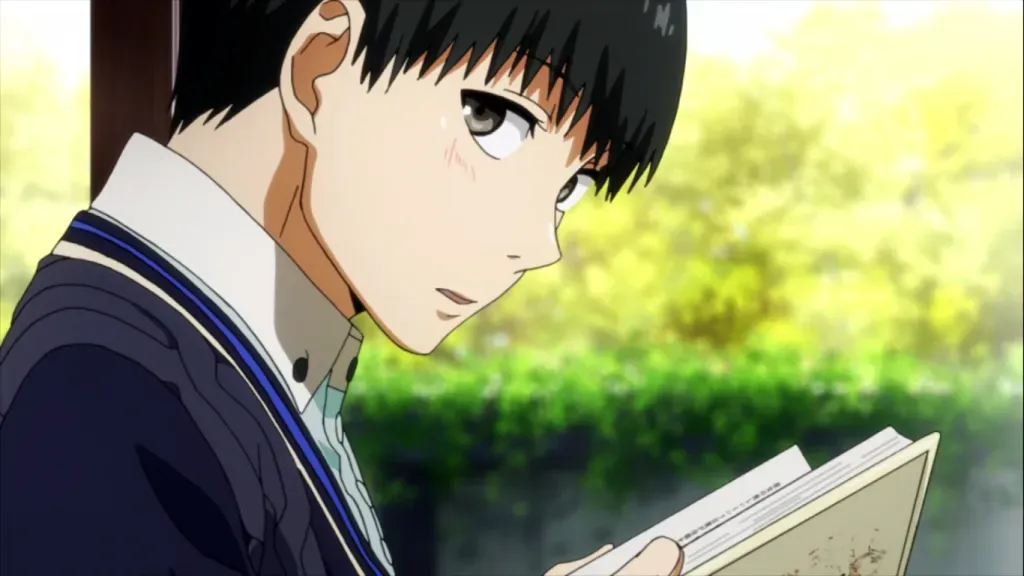
Kaneki is the series. He begins as someone who would rather be hurt than hurt anyone else, a reader who treats kindness as a personality. Season 1 spends its best hours breaking that idea without turning him into a different lead overnight. The white-haired figure who walks out of captivity is still Kaneki; he has only decided that passivity is another way to die. Everything after that — the mask, the investigations, the crown he never really wanted — is an argument with that decision.
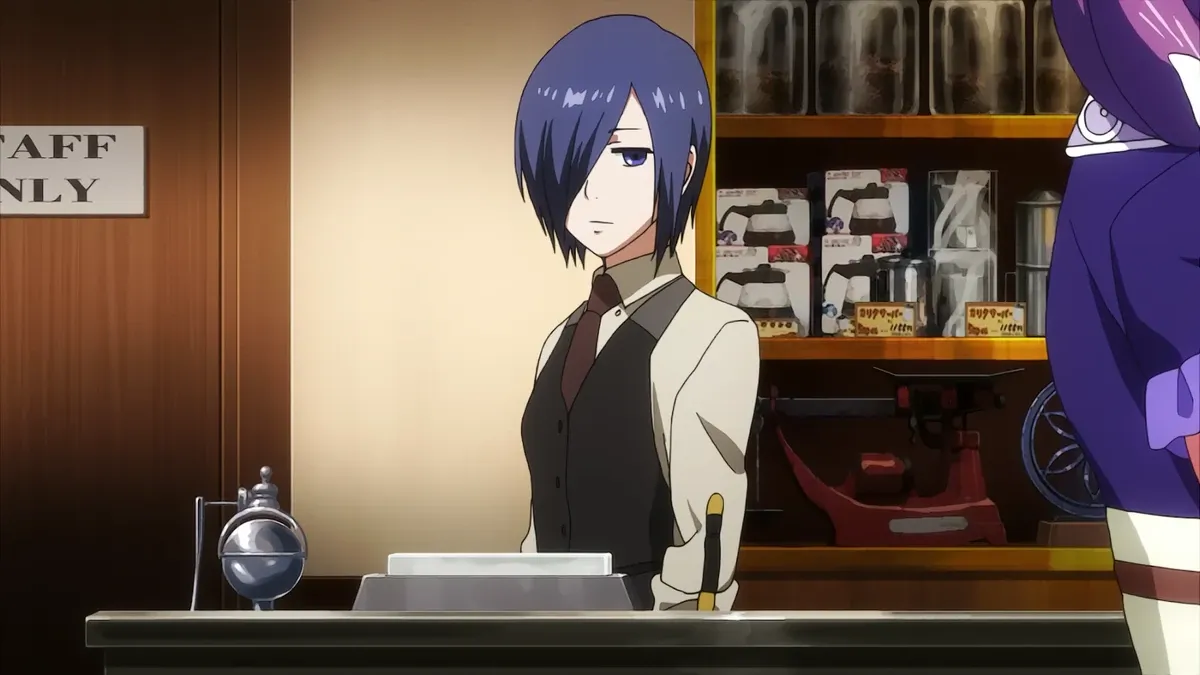
Touka Kirishima is the other fixed point. Sharp, territorial, and much younger in her anger than she wants to look, she is Anteiku’s heat. The writing uses her as more than a tsundere fixture: she is the person who already lives the double life Kaneki is only learning, and later she is the reason a story about eating people still ends at a table. Hideyoshi Nagachika, Hide, is the human friend who refuses to treat Kaneki as a closed case. His loyalty is almost too clean for this world, which is why it matters when the series finally has to say what that loyalty costs.
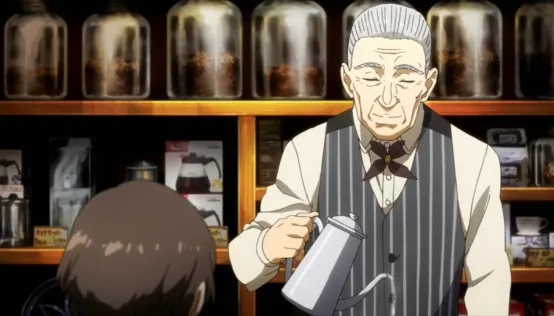
Anteiku’s quiet center is Yoshimura, the manager who has already survived one version of the war Kaneki is entering. Across the line stand Koutarou Amon, a CCG investigator who wants justice to be simple, and Juuzou Suzuya, a former experiment who treats killing like a game until it isn’t. Shuu Tsukiyama arrives as a gourmet predator and stays as something stranger: vanity, hunger, and eventual devotion stacked in one coat. Hinami Fueguchi is the child the story keeps trying not to sacrifice.
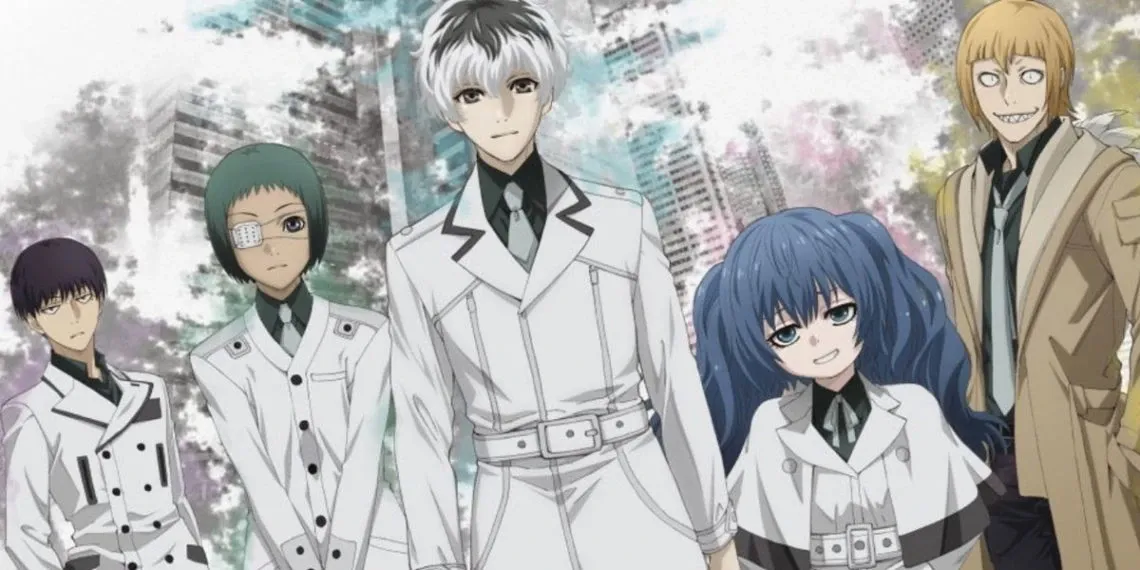
:re rebuilds the roster around a man who does not remember he is Kaneki. As Haise Sasaki he mentors the Quinx — humans given ghoul grafts — and the squad is the sequel’s best new texture. Tooru Mutsuki, Kuki Urie, Ginshi Shirazu, and Saiko Yonebayashi each carry a different answer to the same graft. Kishou Arima, the CCG’s unbeatable reaper, and Eto Yoshimura, the one-eyed owl who writes books under another name, turn the conflict from street horror into a system. Furuta Nimura is the last face of that system: a man who treats other people’s tragedies as a joke he is allowed to finish.
The adaptation does not give all of them equal air. Some of :re’s richest people arrive as sketches. The through-line still holds because Kaneki, Touka, and Hide remain readable even when the crowd around them blurs.
Story & Pacing
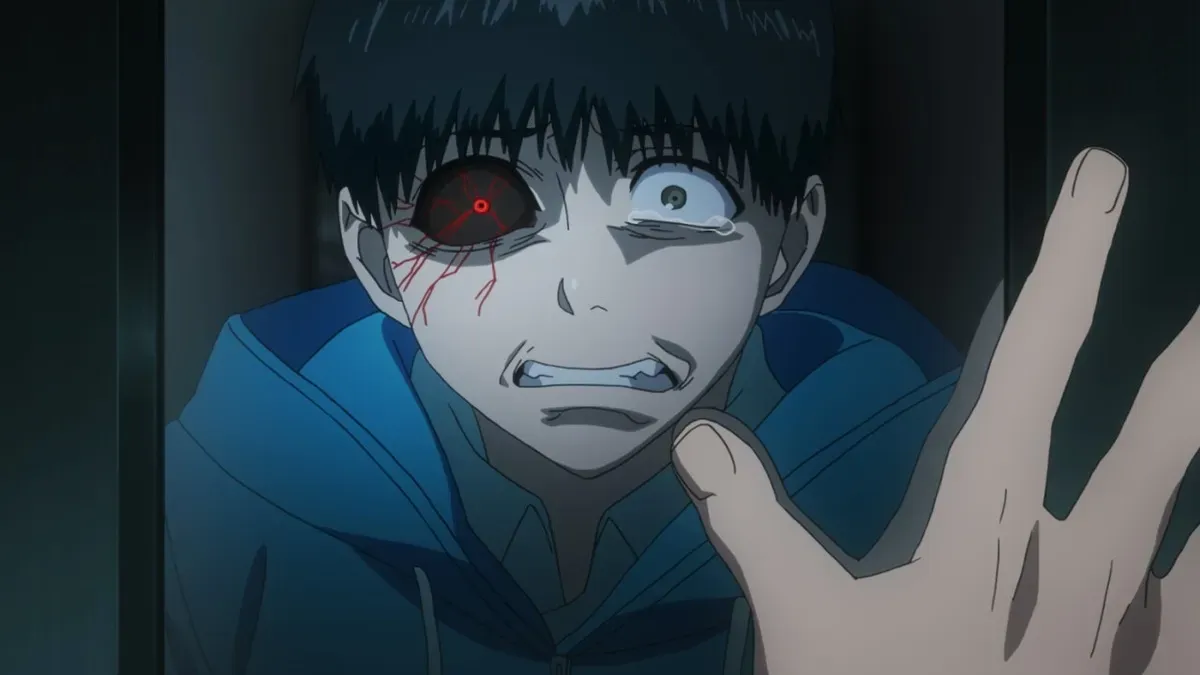
Season 1 is the strongest cour and the one that still sells the premise. Kaneki learns the rules at Anteiku, brushes the CCG, and is taken apart by a sadist who wants to prove that kindness is a luxury. The last episodes of that season are the series at its most focused: a person choosing to live as a monster rather than die as a victim. It covers the early manga with cuts, but the cuts do not yet break the spine.
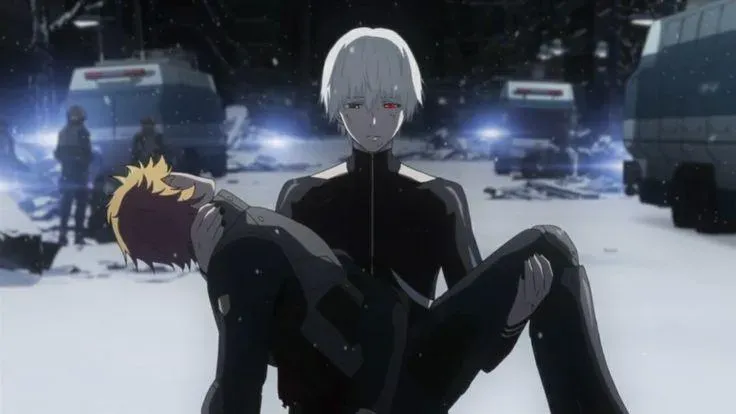
√A is the fork. Instead of following Kaneki’s manga path — leaving Anteiku to protect it from a distance — the anime sends him into Aogiri Tree and writes an original road toward a similar ruin. Some images still work. The season as a whole feels like a first draft of someone else’s ending: alliances without enough motive, battles without enough setup, a finale that rhymes with the books more than it earns them. If Season 1 is a conversion story, √A is the year the show started improvising.
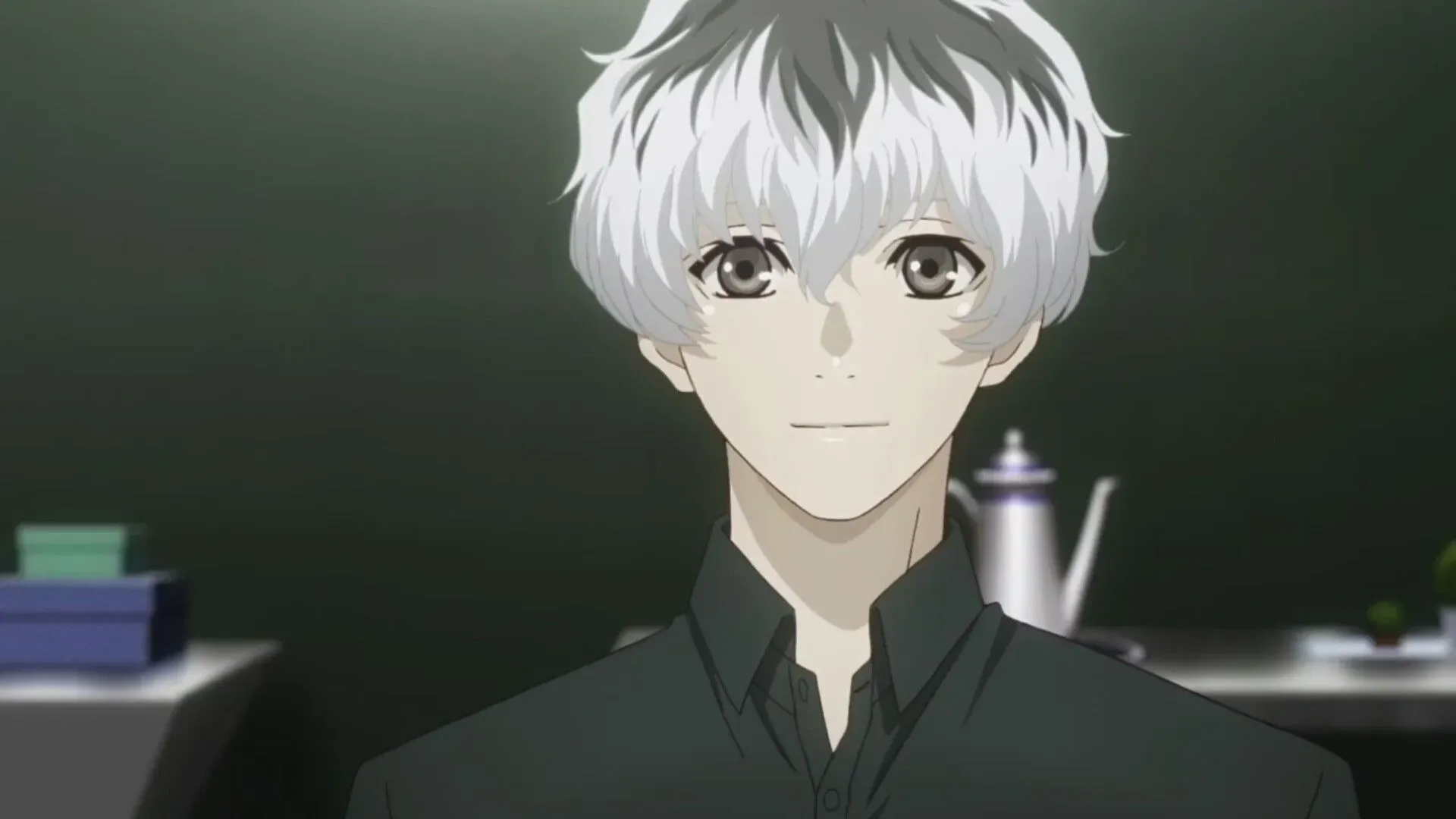
:re picks up years later with Kaneki gone and Haise in his place, a CCG mentor who smiles too carefully. The idea is excellent. A half-ghoul hunting ghouls while his old self sleeps under the floorboards is the natural second half of the first season’s question. The problem is volume. The :re manga is sixteen books of investigations, auctions, prison breaks, island wars, and a conspiracy older than the CCG. Twenty-four episodes cannot hold that without becoming a summary. Part 1 still has room for the Quinx and the unease of Haise’s kindness. Part 2 is a sprint through revelations that needed chapters: the One-Eyed King, the organization Goat, the Washuu rot inside the CCG, and the disaster called Dragon.
The gist, compressed to what the anime still communicates, is this. A boy is forced across a species line. He tries to stay gentle, then tries to stay strong, then tries to stay useful to whichever side will have him. Institutions on both sides — café, tree, commission, clown, clan — use that hunger. The late story argues that the war was never only humans versus ghouls. It was a handful of people managing the slaughter so the rest would never sit at the same table. Dragon is that management collapsing into a single body. The last movement is Kaneki climbing into the thing he has become, facing the origin that rewrote him, and refusing to let the city stay a feeding ground.
The conclusion the anime does reach is the manga’s conclusion, thinned but intact. Years later the hunt has a different name. Humans and ghouls share a fragile peace instead of a secret. Kaneki and Touka have a daughter, Ichika, and a life that looks almost ordinary if you do not know what it cost. Hide is still in the picture. The tone is not triumph. It is aftermath: the war ended, the hunger did not vanish, and the people who survived chose a kitchen over a throne. That is the destination Season 1 was already pointing toward, even when the middle seasons lost the map.
Themes & Writing
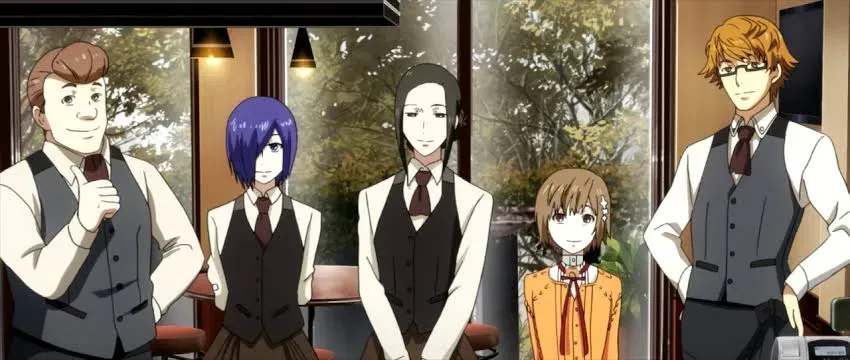
The series is about appetite and belonging. Ghouls eat because they must. Humans hunt because they can dress it as law. Kaneki’s half-state makes both positions look like alibis. Every faction offers him a script — victim, king, investigator, martyr — and the writing is at its best when you notices the script.
Identity is not a mask you take off. Haise is not a fake Kaneki; he is Kaneki’s wish to be good without memory. When the memories return, the show has to ask whether goodness that depends on forgetting is goodness at all. The later ethic is smaller and harder: live with the people who stayed, stop pretending a crown will fix a city, accept that peace is maintenance rather than a last battle.
Sui Ishida’s manga carries that argument with symbolism, side lives, and jokes that curdle. The anime keeps the slogans and loses a lot of the texture. √A invents choices that do not deepen the theme. :re states late twists before it has earned the dread. What survives is still worth hearing. A story that begins with a date and a transplant ends with a family and a city that has to learn how to share a street. That rhyme is the writing’s real achievement, even when the adaptation hurries the verses.
Animation & Art
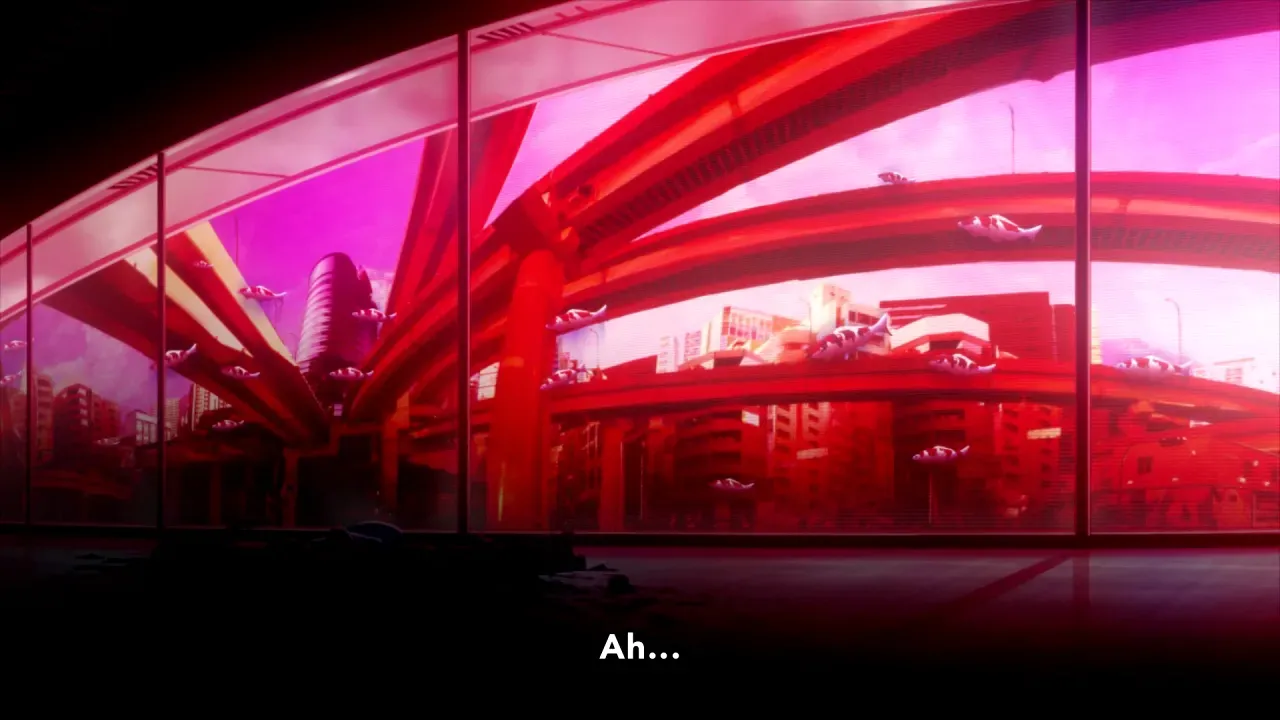
Season 1 has a look: red and black, coffee steam, a kakugan in a human face. Character designs are sharp enough that the cast remains iconic a decade later. Action is uneven — some kagune clashes have weight, others smear — but the horror scenes know how to sit still. √A keeps the palette and loses some of the care.
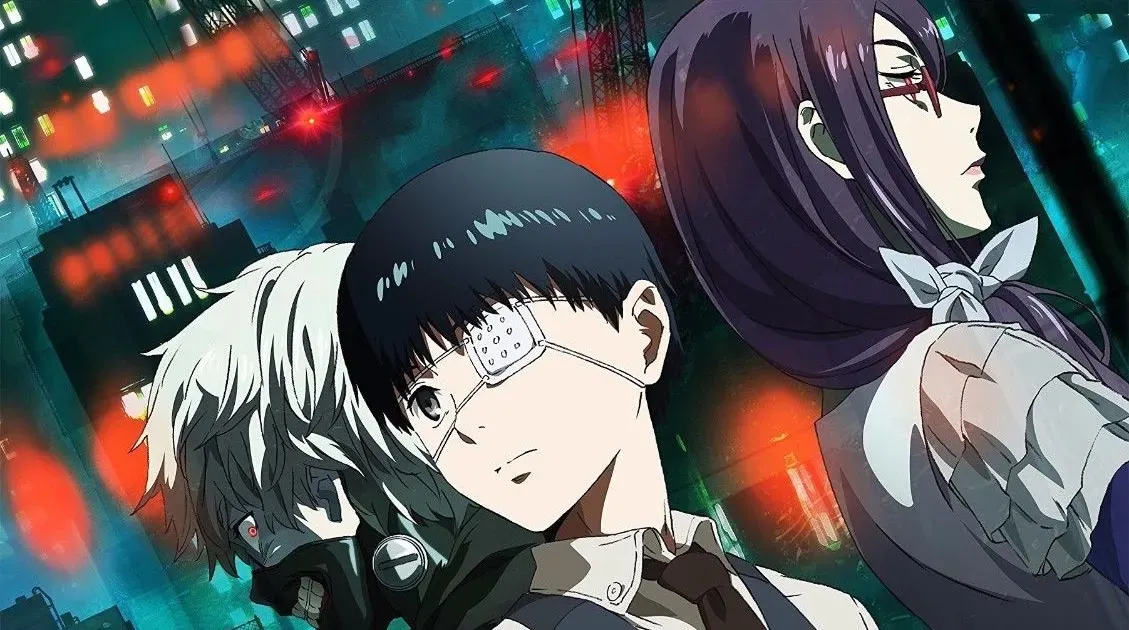
:re is the visual drop people remember. Designs flatten, motion relies on effects, and fights that should feel mythic play like a recap special. The Quinx designs and Haise’s softer face are good ideas poorly served by the schedule. You can still read a scene. You cannot always feel it. For a series whose first poster was a boy with a stitched eye, that is a real cost.
Music & Sound Design
Yutaka Yamada’s score does more consistent work than the later animation. It knows when to be a pulse and when to leave a café quiet. TK from Ling Tosite Sigure’s “unravel” is still the sound of the franchise: a voice tearing at the same word Kaneki cannot stop saying. √A answers with österreich’s “Munō” and Amazarashi’s “Kisetsu wa Tsugitsugi Shindeiku,” both colder. :re brings Cö shu Nie’s “Asphyxia,” then TK again with “katharsis,” which feels like the first opening looking at the last cour. The music remembers the story even when an episode is rushing past it.
What Worked / What Didn’t
What worked:
A premise that is easy to explain and hard to live with. Kaneki’s change of mind in Season 1, which still lands. Touka and Hide as the two kinds of love the story believes in. Anteiku as a place, not a headquarters. The Haise idea — a gentle investigator sitting on a grave. A final destination that is domestic rather than apocalyptic, which is braver than another king-on-a-rooftop freeze-frame. A theme that stays visible through four cours: who gets to be a person.
What didn’t fully land:
√A’s original path, which trades the manga’s mid-game for a thinner Aogiri tour. :re’s compression, which turns major lives into walk-ons and major wars into montages. Animation that declines as the scale grows. Continuity bruises between √A’s ending and :re’s opening, especially around Hide. Villains and side characters who needed the pages the anime did not have. A conclusion that is emotionally right and narratively undercooked if this is the only version you know.
The 8 is a score for the journey you can still see. It is not a claim that Pierrot solved the books.
Who This Is For
This is for viewers who can live with a jagged adaptation if the central life is strong: dark urban fantasy, identity horror, and a lead who keeps choosing a worse option for a better reason. It is a fair first watch if you want the cultural object and the ending, and if you are willing to treat :re as a sketched map rather than a novel.
Skip the full anime run if adaptation quality is a deal-breaker, if rushed finales make you angry more than sad, or if you already know you would rather read. The manga is the complete sentence. The show is the sentence said out loud, too fast, with the last word still intact. People who want only Season 1 as a closed horror piece can stop there and not be wrong; they will miss the kitchen the story was walking toward.
About the Original Manga & Author
Tokyo Ghoul is written and drawn by Sui Ishida. The first part ran in Shueisha’s Weekly Young Jump from September 2011 to September 2014 and was collected in fourteen volumes. The sequel, Tokyo Ghoul:re, ran in the same magazine from October 2014 to July 2018 and filled sixteen more, for thirty volumes in all. Viz Media released both series in English, the original from 2015 to 2017 and :re from 2017 to 2020. By 2021 the franchise had more than 47 million copies in circulation worldwide. Ishida’s later series is Choujin X, a different superhuman story with the same taste for broken bodies and stubborn hope. The books are where the side characters and the late conspiracy have room to breathe; the anime is the silhouette.
Final Verdict + Score
8/10. Watch the whole run if you want Kaneki’s story from the transplant to the family, and go in knowing Season 1 is the craft high, √A is a detour, and :re is a conclusion delivered at speed. The gist is a boy who was eaten by the city learning how to live in it without eating everyone else. The ending is not a twist. It is a table, a child, and a peace that has to be maintained. That is enough to recommend it. It is also enough to send you to the manga afterward.
Closing
I keep coming back to the first season’s quiet scenes more than the kakuja spectacle: a cup of coffee, a book, a friend who will not leave. The later cours spend those things and then, almost stubbornly, try to give some of them back. If you have watched all forty-eight episodes, I want to know which version of Kaneki stayed with you — the student, the white-haired fighter, the investigator who smiled, or the man who finally sat down. If you stopped at √A, the last cour is still waiting, thin and sincere, with an ending that knows what the beginning cost.
Couch talk
Quiet on this thread so far — say something (we mod before it goes live).