Princess Mononoke an Ainme Review
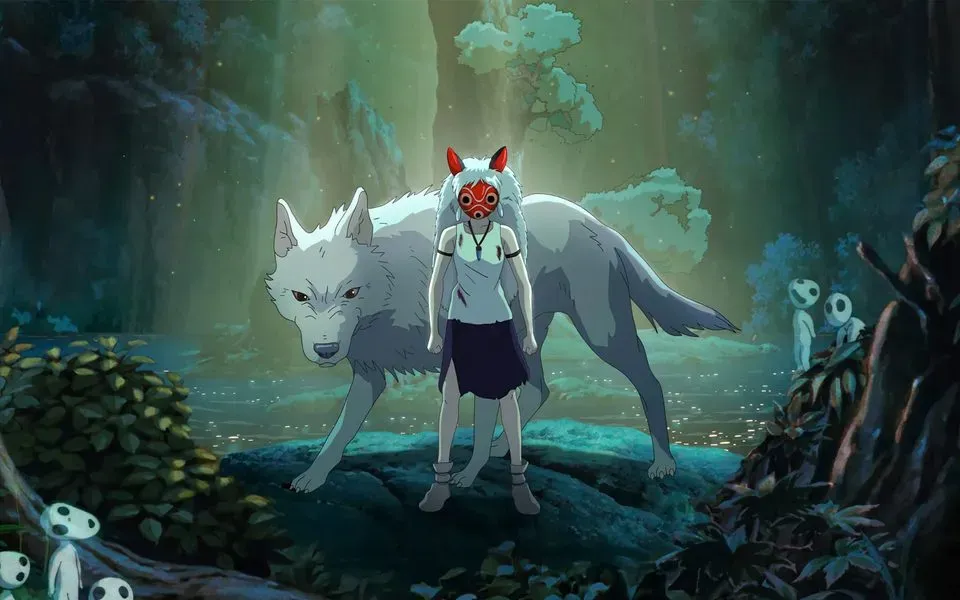
Studio: Studio Ghibli
Episodes / Season: Feature film (133 minutes)
Genre: Fantasy, Adventure, Drama
Air date / Status: July 12, 1997 (Japan) – Completed
My Score: 9.5/10
Introduction
Some films ask you to pick a side. Princess Mononoke asks you to look clearly instead. Hayao Miyazaki’s 1997 epic is not a gentle fairy tale about hugging trees. It is a bloody, beautiful argument about what people do when they want to live, and what the world does when it wants to survive.
I consider it one of the finest animated films ever made — not because it is pretty, though it is, but because it refuses to flatten anyone into a mascot. Gods are frightened, humans are capable of kindness and ruin in the same breath.
Mild spoiler warning: The synopsis stays with the premise. Later sections discuss character roles and the film’s ending in broad terms. If you want the first viewing completely cold, watch first and return.
Spoiler-Free Synopsis
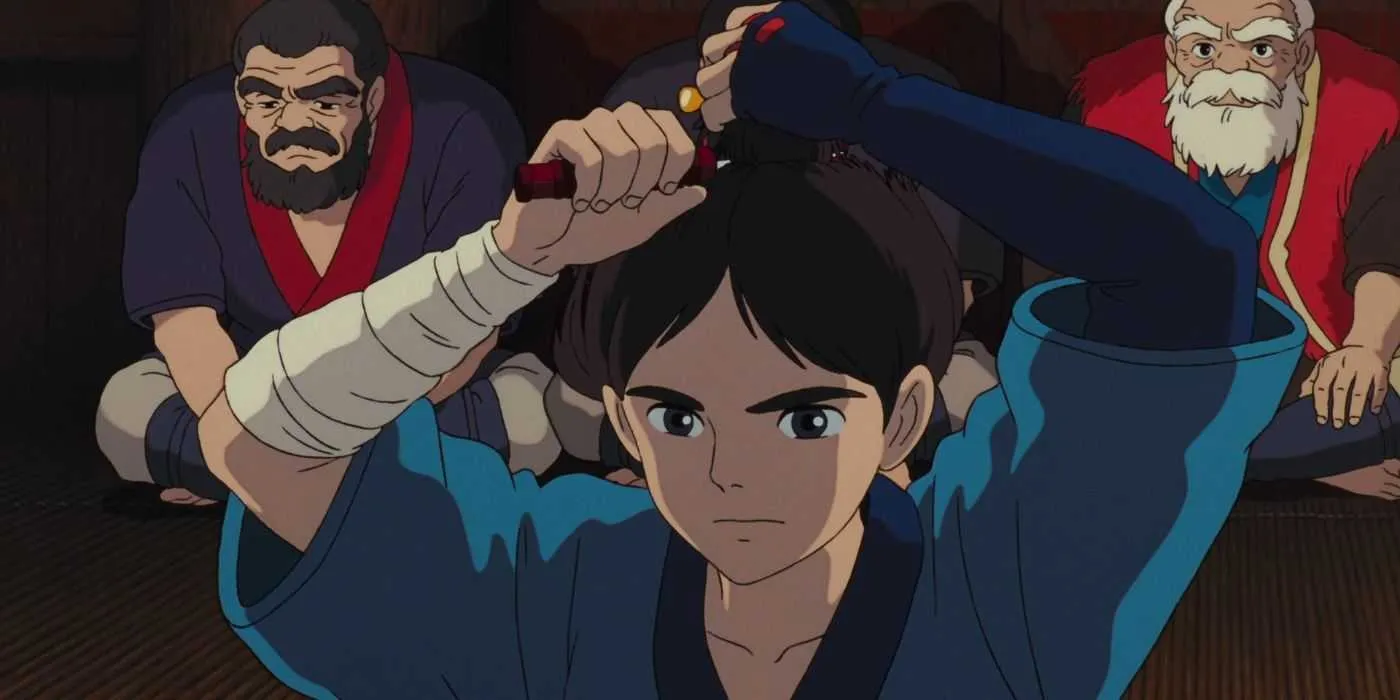
In a hidden Emishi village, young prince Ashitaka kills a rampaging demon boar to protect his people. The victory costs him a cursed wound that will consume him unless he finds its source. Banished from home, he rides west “to see with eyes unclouded by hate.”
That road leads him into a war. On one side stands Lady Eboshi, leader of Irontown, who clears the forest to mine iron and give work to outcasts other societies discard. On the other stands San, a human girl raised by wolves, who attacks the town in the name of the forest gods. Between them lies the ancient cedar woods and the Forest Spirit both sides hope to claim or destroy.
Ashitaka is not there to crown a winner. He is there to keep as many lives intact as the curse and the war will allow.
Characters
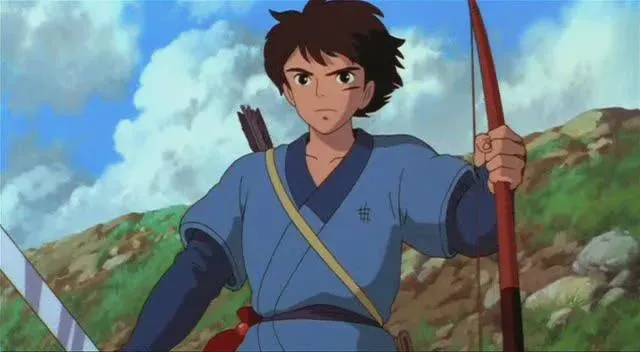
Ashitaka is an unusual hero: courteous, lethal, and almost stubbornly decent. The curse in his arm gives him strength he does not want and rage he must restrain. He listens, he intervenes, and he pays for both. That restraint is the moral center of the story.
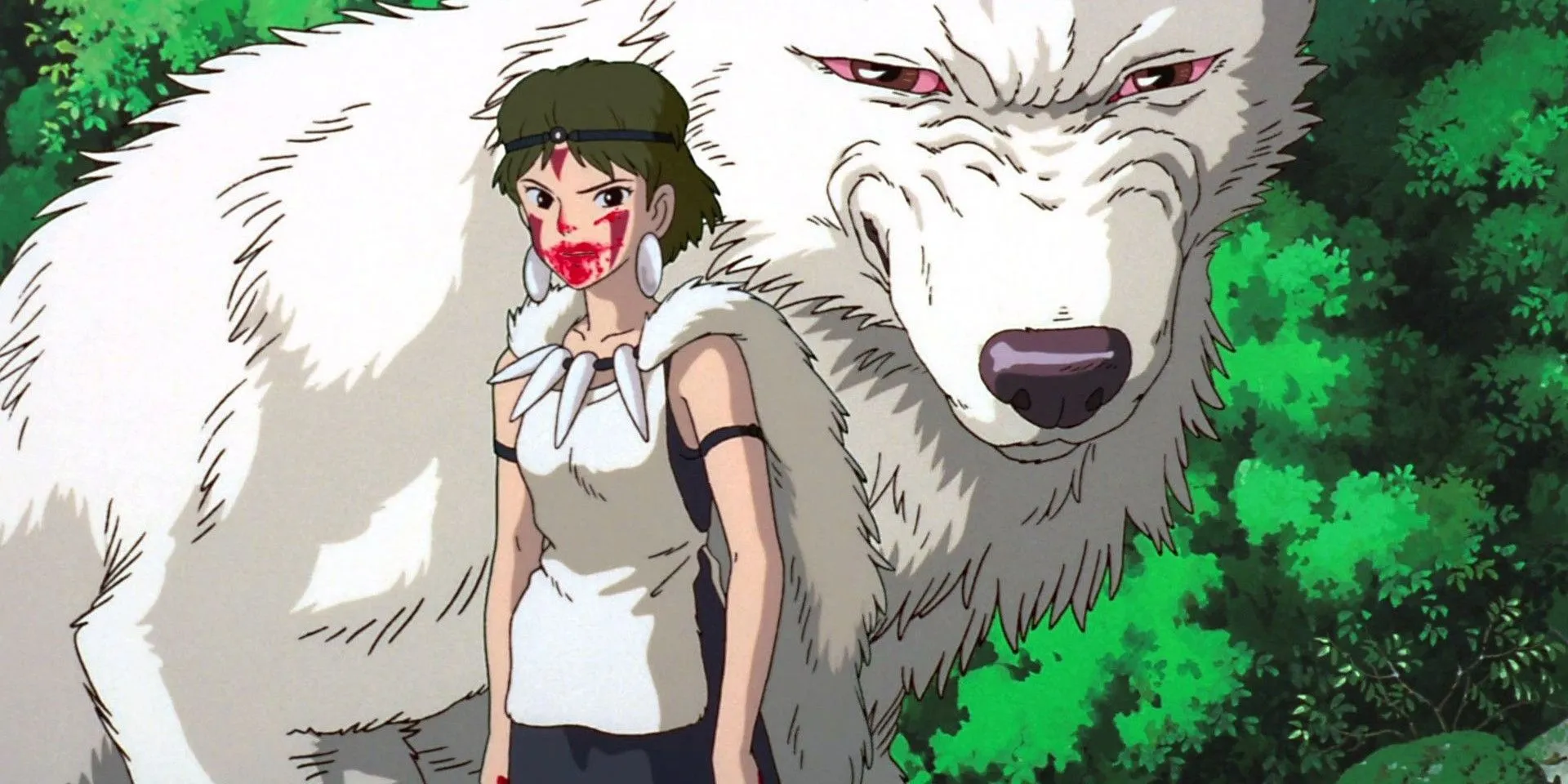
San is not a princess in any courtly sense. She is feral, grieving, and convinced that humanity is a disease. The film never treats her hatred as cute rebellion. It is earned, ugly, and incomplete. She loves her wolf family with a ferocity that feels more honest than most animated romances.
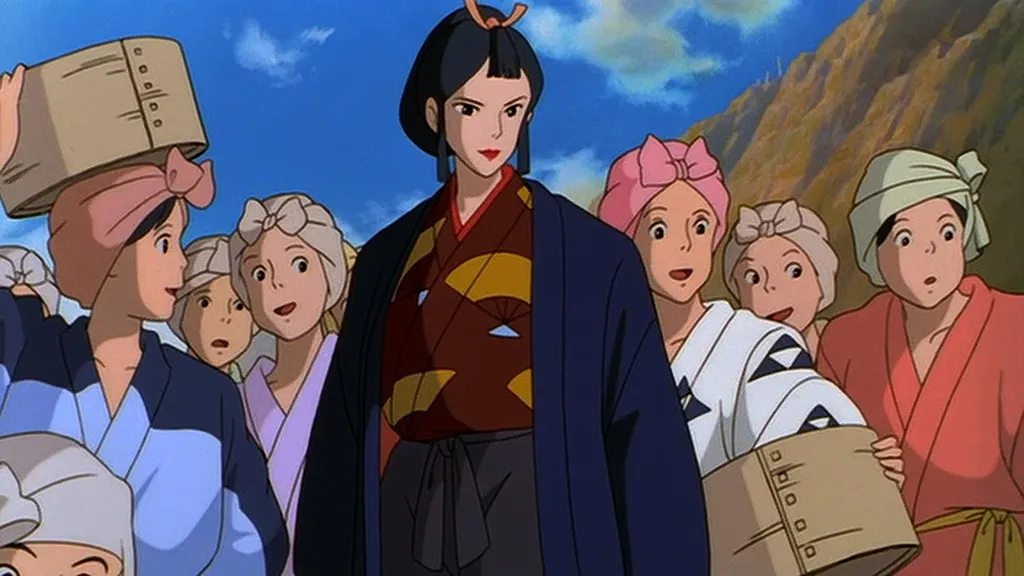
Lady Eboshi may be Miyazaki’s most interesting human antagonist. She cares for lepers, employs former brothel women, and runs Irontown with genuine competence. She also shoots gods without hesitation. You can admire her and still see the damage she leaves in the soil.
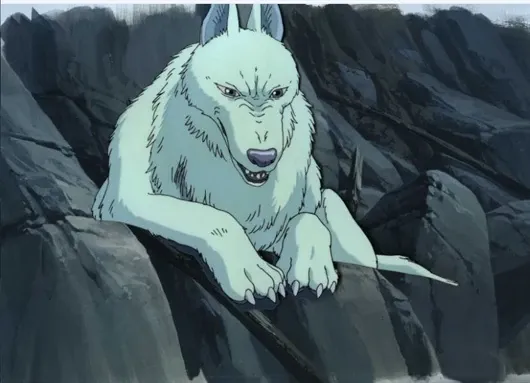
The supporting cast is unusually sharp. Moro, the wolf goddess who raised San, speaks with the tired clarity of someone who has watched humans for three centuries. Jigo, the smiling monk, is useful, funny, and morally vacant. Okkoto, the blind boar god, turns pride into tragedy. Even smaller figures such as Kaya, Gonza, and the women of Irontown have texture instead of function. The Forest Spirit heals and takes life with the same unreadable calm — a refusal to make nature merely “nice.”
Story & Pacing
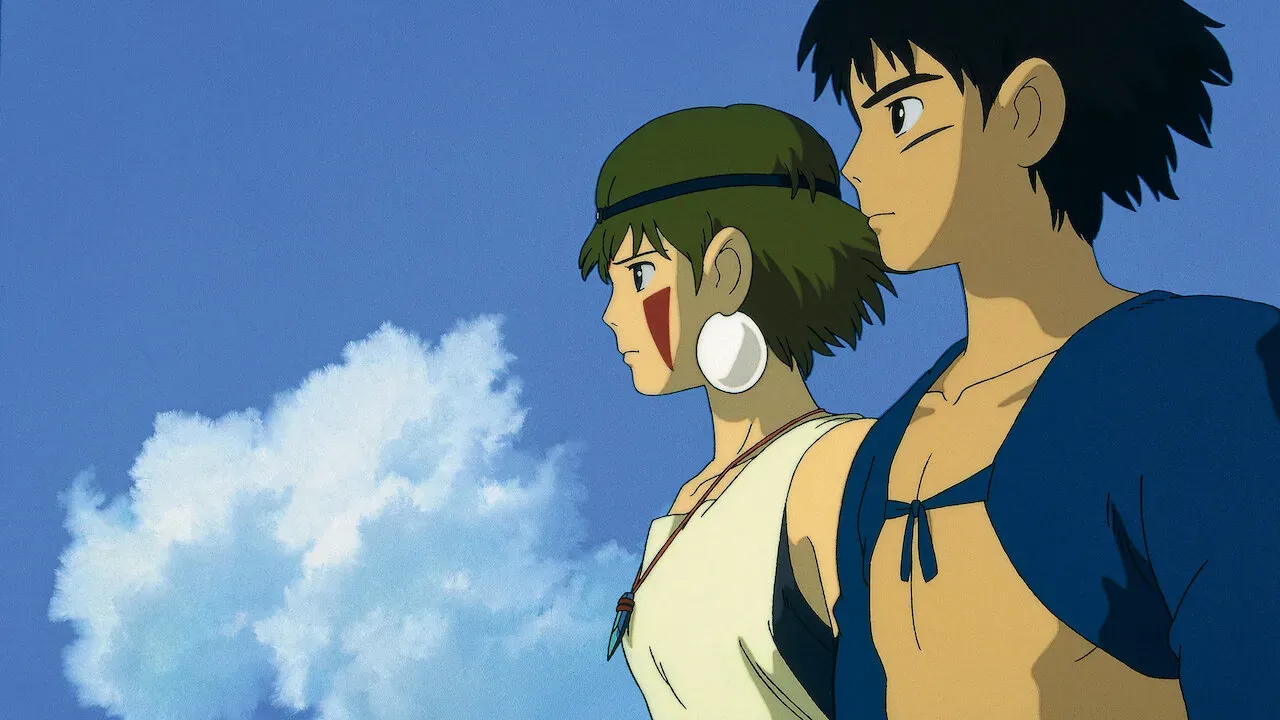
For a 133-minute film, Princess Mononoke is dense without becoming muddy. The opening village attack is one of the most startling sequences in Ghibli’s catalog: sudden, grotesque, and already arguing that this will not be a cozy adventure. From there the story travels, gathers factions, and tightens around Irontown and the forest.
Pacing is mostly superb. Quiet travel scenes give Ashitaka — and the audience — room to look. Action arrives in bursts that feel costly rather than spectacular for their own sake. If there is a dip, it is in the midsection, where political maneuvering around the Emperor’s envoys and Jigo’s schemes adds context but briefly slows the line between Ashitaka and San.
The final act is extraordinary, it does not resolve the war with a speech. It lets catastrophe happen, then asks what kind of life is still possible afterward.
Themes & Writing
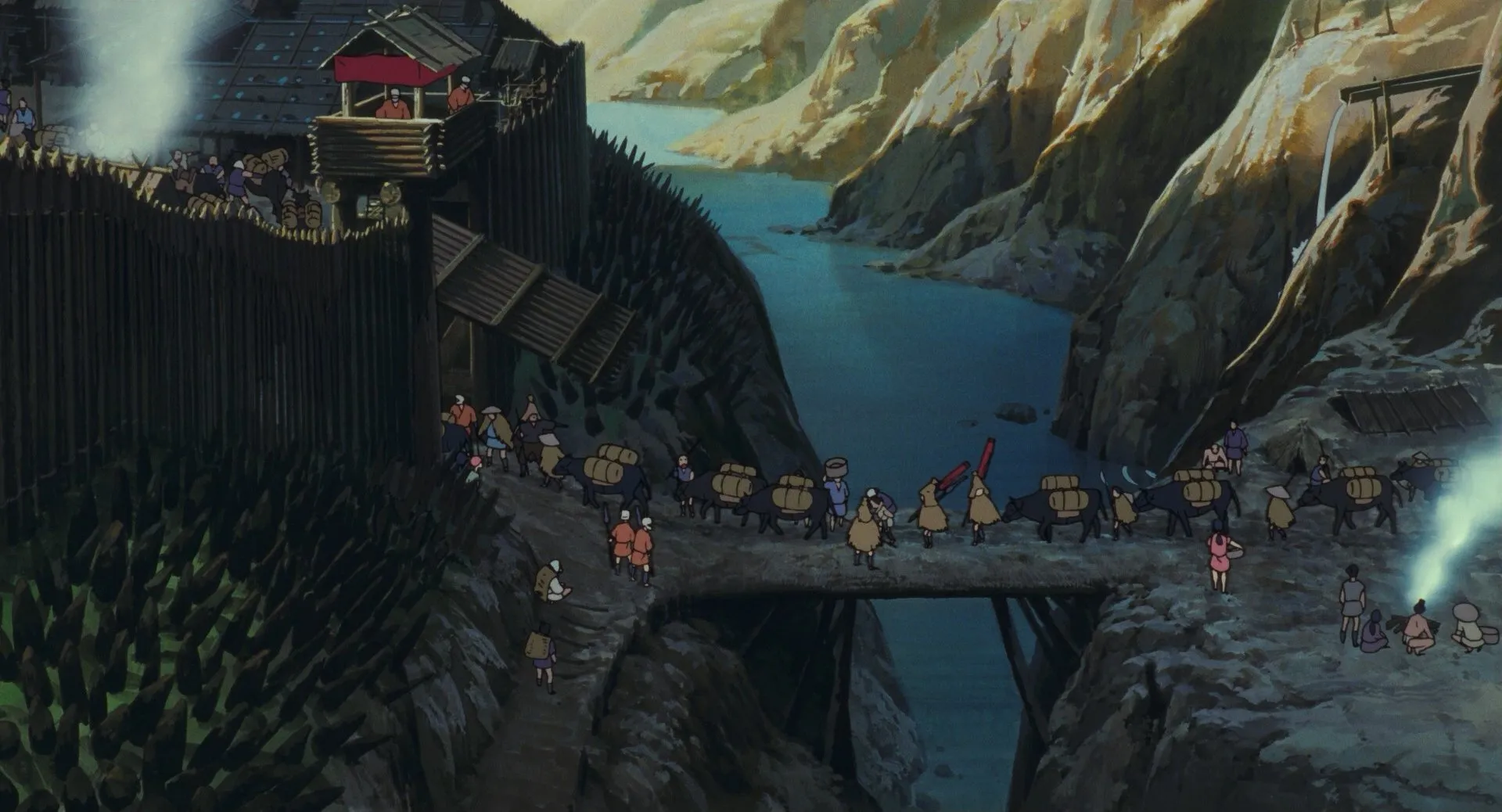
The film is often summarized as “nature versus industry.” That slogan is too small. Miyazaki is writing about coexistence under pressure, how communities protect their own, how hatred travels like an infection, and how seeing clearly is harder than choosing a banner.
Names and belonging matter as much as iron and trees. San is human and not. Ashitaka is a prince without a future at home. Irontown’s people are discarded souls who finally have work. Nobody here is fighting from luxury, which is why the argument lands. The writing grants dignity to labor and to wilderness, then refuses to pretend those dignities are easy to reconcile.
Hate is treated as a physical force — the curse on Ashitaka’s skin, the worms that pour from wounded gods. Forgiveness, when it appears, is practical and incomplete rather than sentimental.
Animation & Art
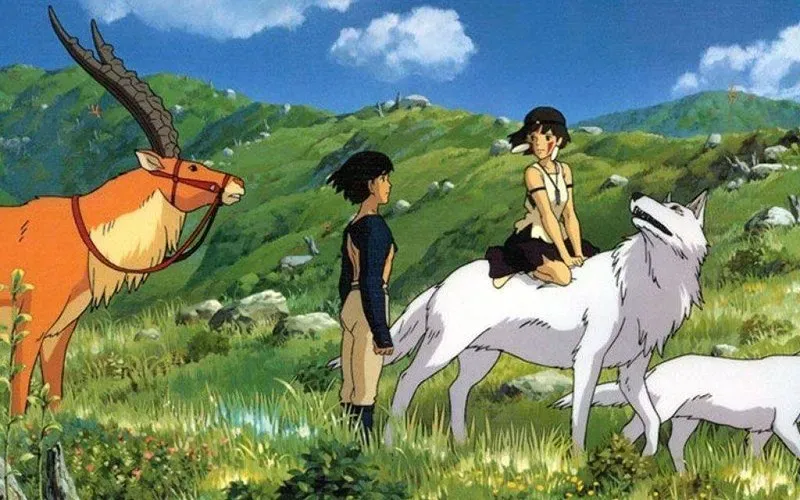
Studio Ghibli was already a standard-bearer in 1997. Princess Mononoke still looks like a peak. Backgrounds inspired by the old-growth forests of Yakushima have a wet, breathing density. Smoke, ironworks, moss, and night rain are rendered with a patience digital shortcuts still struggle to imitate.
Character animation is just as considered. San’s movement is animal before it is graceful. Eboshi’s posture tells you she has commanded rooms for years. The demon curse is genuinely disturbing — a reminder that this film was made for older audiences. Miyazaki supervised tens of thousands of cels himself, and you can feel that attention in cloth, fur, and falling water. Early computer assistance appears in the writhing curse effects, used as a tool rather than a substitute.
Music & Sound Design
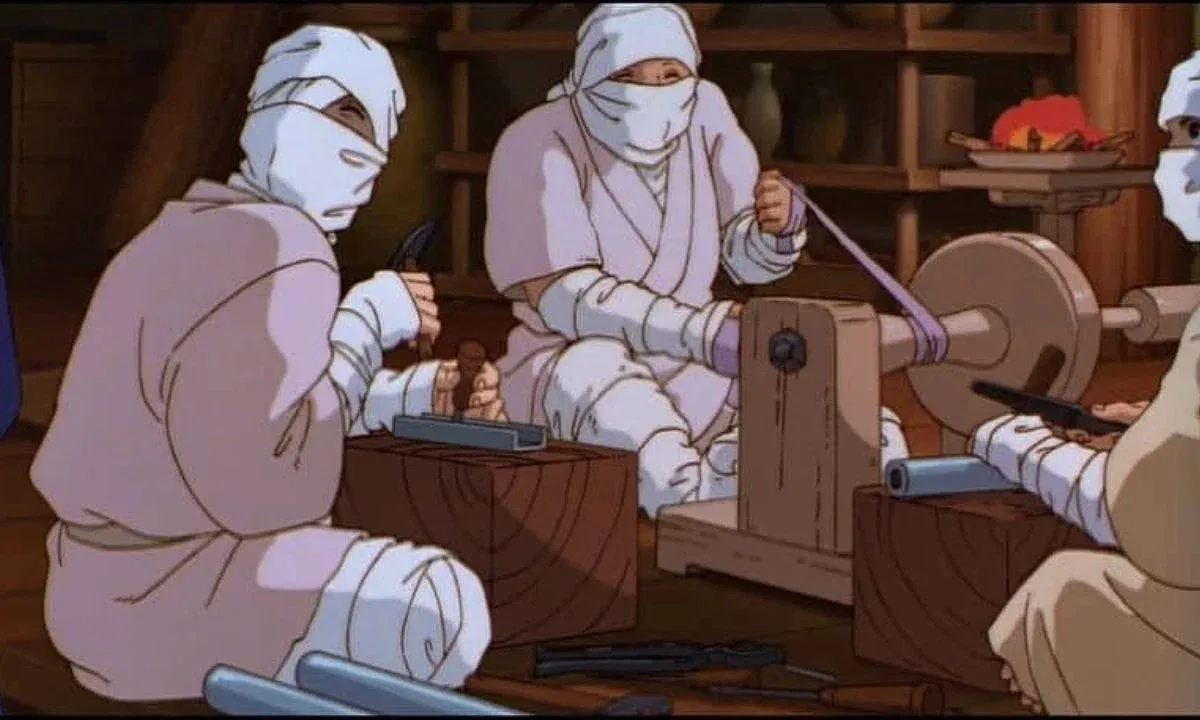
Joe Hisaishi’s score is one of the great film soundtracks of the 1990s. The main theme has the sweep people remember, but the quieter cues do more of the real work: hollow notes under the forest, iron percussion in the town, a mournful line behind wounded gods. Hisaishi does not decorate the pictures. He argues with them.
Sound design matters just as much. The roar of the Tatari-gami, the clank of bellows, the sudden absence of birdsong — the film uses silence as carefully as music. The original Japanese performances are grounded and specific. The English dub, adapted by Neil Gaiman, is unusually thoughtful for its era, even if many viewers will still prefer the original.
What Worked / What Didn’t
What worked:
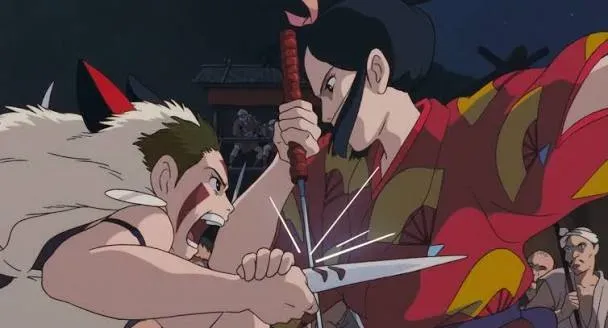
The moral complexity is rare in mainstream animation. Ashitaka, San, and Lady Eboshi form a triangle in which every point is understandable. The world feels old and inhabited. Violence has weight. The ending honors the themes instead of sanding them into a victory parade. Visually and musically, it remains a high-water mark.
What didn’t fully land:
The mid-film political layer can feel crowded on a first watch. Some viewers find San’s hostility hard to stay with until her softer notes arrive. The film is also unapologetically grim — wounded flesh, severed heads, a god’s death — and that intensity can overwhelm anyone expecting the gentler register of My Neighbor Totoro or Kiki’s Delivery Service.
These are the costs of the film’s seriousness, not failures of craft. For a work this ambitious, they are modest.
Who This Is For
This is for viewers who want animation treated as adult storytelling: morally complicated, visually overwhelming, and emotionally unresolved in a truthful way. Fans of Nausicaä of the Valley of the Wind, historical fantasy, or films that refuse a clean “good versus evil” frame will likely be held from the first sequence to the last.
If you want a comforting Ghibli bedtime story, this is the wrong door. Viewers sensitive to graphic violence involving animals and people should go in prepared. The film is not cruel for sport, but it does not look away.
About the Author
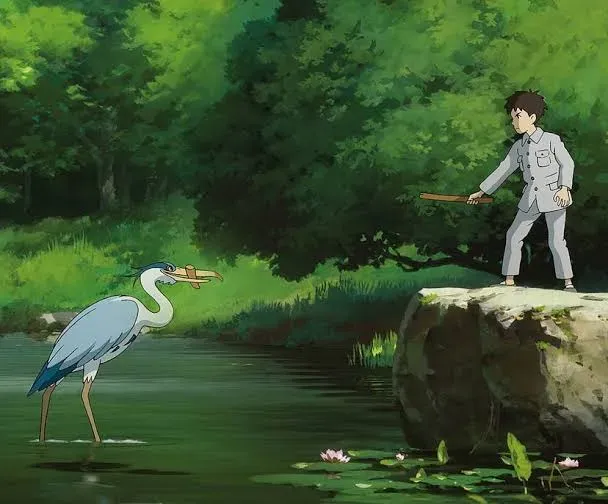
Miyazaki’s major manga remains Nausicaä of the Valley of the Wind, serialized in Tokuma Shoten’s Animage from 1982 to 1994 and collected in seven volumes (published in English by Viz Media). That epic, along with the 1983 graphic novel Shuna’s Journey, shares DNA with this film: a traveling prince, a wounded world, and the question of how humans might live without devouring what sustains them. After this film he went on to Spirited Away, Howl’s Moving Castle, The Wind Rises, and The Boy and the Heron.
Final Verdict + Score
Princess Mononoke is Miyazaki at his most rigorous and most generous: a war story that refuses to crown a victor, a nature story that refuses to make the forest harmless, and a human story that still believes decency is possible after the worst has happened.
Final score: 9.5/10
Essential viewing — for anime fans and for anyone who cares what popular art can do when it decides not to flatter its audience.
Closing
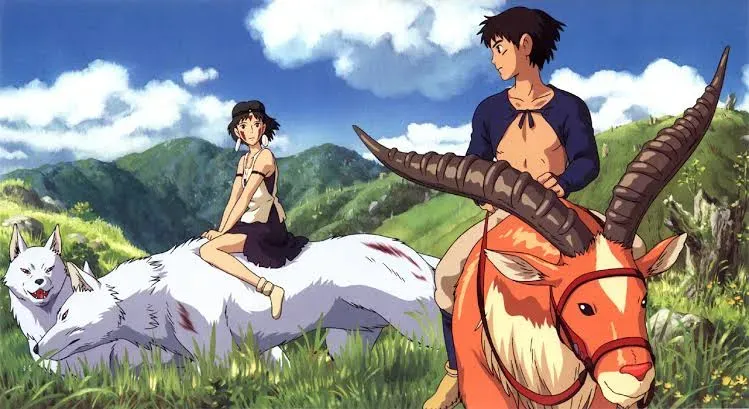
There's only one way of watching a Ghibli Movie and that's totally immersing yourself in the story itself, and princess Mononoke doesn't fails to do so.
If you have seen it, I would like to know which side of the mountain stayed with you — San’s fury, Eboshi’s resolve, or the quiet insistence that both might still share a world. If you have not, set aside an evening. This one deserves your full attention.
Couch talk
Quiet on this thread so far — say something (we mod before it goes live).