Parasyte: The Maxim Review: A Hand That Thinks, and a Boy Who Has to Stay Human
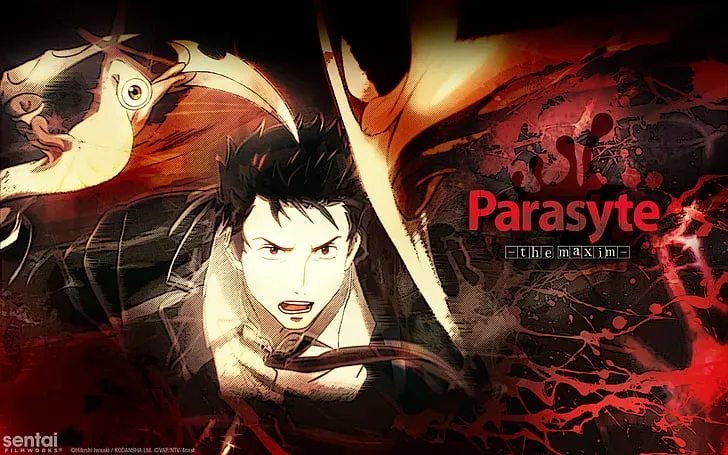
Studio: Madhouse
Episodes / Season: 24 episodes (2 cours)
Genre: Horror, Sci-Fi, Action, Psychological
Air date / Status: October 2014 – March 2015 – Completed
My Score: 8/10
Introduction
Parasyte: The Maxim starts with a worm that wants a brain and settles for a right hand. That joke lasts about one episode. After that, Madhouse’s 2014 adaptation of Hitoshi Iwaaki’s manga is a body-horror coming-of-age story dressed as an invasion: parasites take human heads, eat people like livestock, and argue — some of them, anyway — about whether the livestock deserve a vote.
Its the same dish of "bad" alien invation but with different spices and its actually good in taste. The series is blunt, sometimes talky, and willing to let a high-school romance sit next to a scene that looks like a slaughterhouse. An 8 is the score for a show that earns its questions about species and mercy, even when the mid-run detective work and the speeches about “what is a human” start repeating the assignment.
Spoiler warning: The synopsis stays with the premise. From Story & Pacing onward, this covers the shape of all 24 episodes — Shinichi’s change after his mother, Reiko Tamura’s experiment in living, Gotou, Migi going quiet, and the last human leftover. Watch first if you want the kills and the grief cold.
Spoiler-Free Synopsis
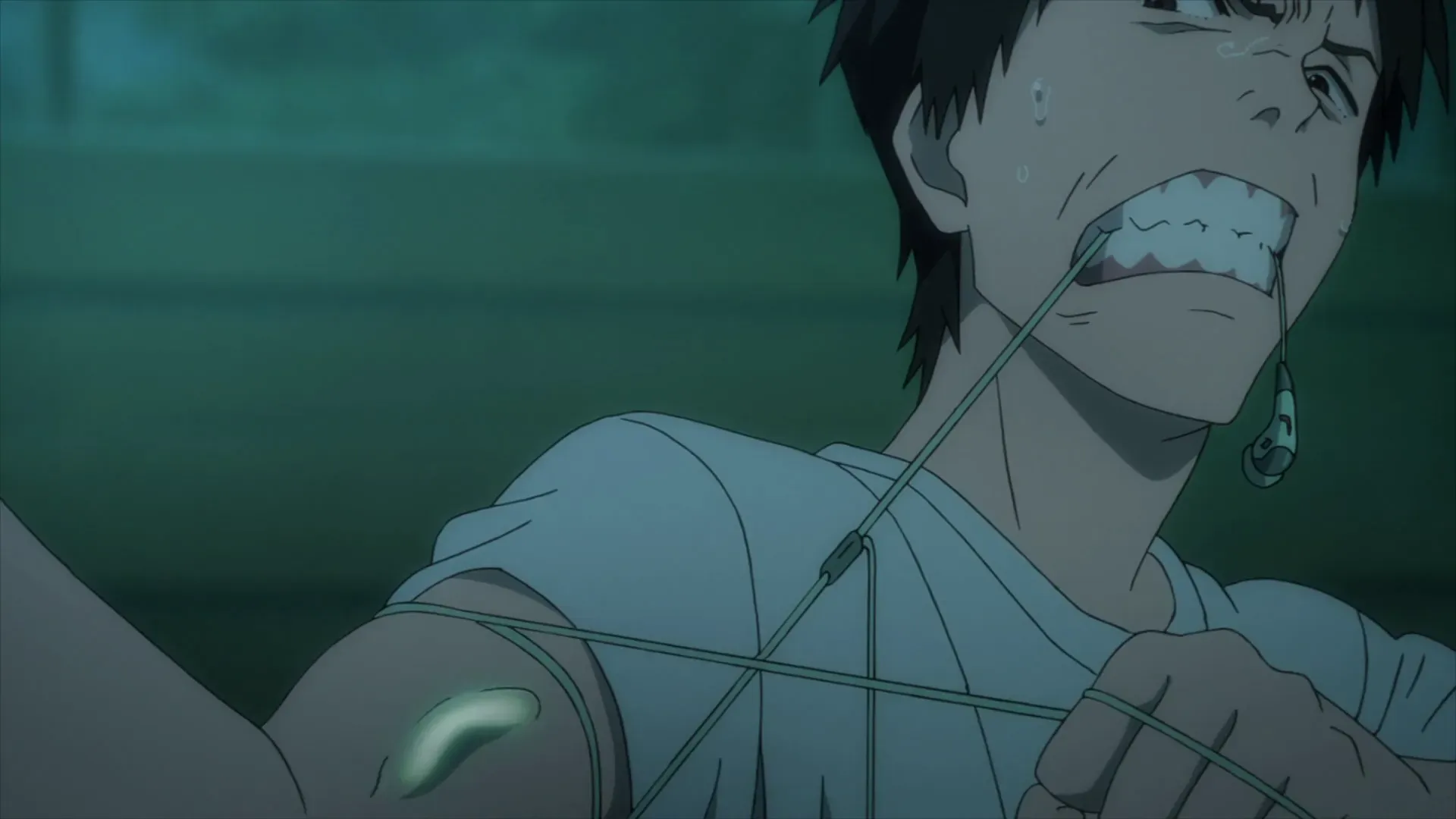
One night, worm-like aliens drop into Japanese bedrooms and try to crawl into sleeping heads. Most succeed. Shinichi Izumi fights his off. It misses the brain and takes his right hand instead. The thing in the sleeve names itself Migi, speaks like a bored scientist, and has no interest in Shinichi’s feelings — only in not being discovered and not starving.
Shinichi tries to stay a student. His classmate Satomi Murano notices that he is colder, faster, and worse at pretending nothing happened. Elsewhere, people vanish in pieces. The parasites who did get brains walk into offices, classrooms, and city hall. They look like neighbors. They are not.
The arrangement is simple and ugly: one boy and one alien sharing a nervous system, trying to survive other aliens who consider a failed takeover a security risk.
Characters
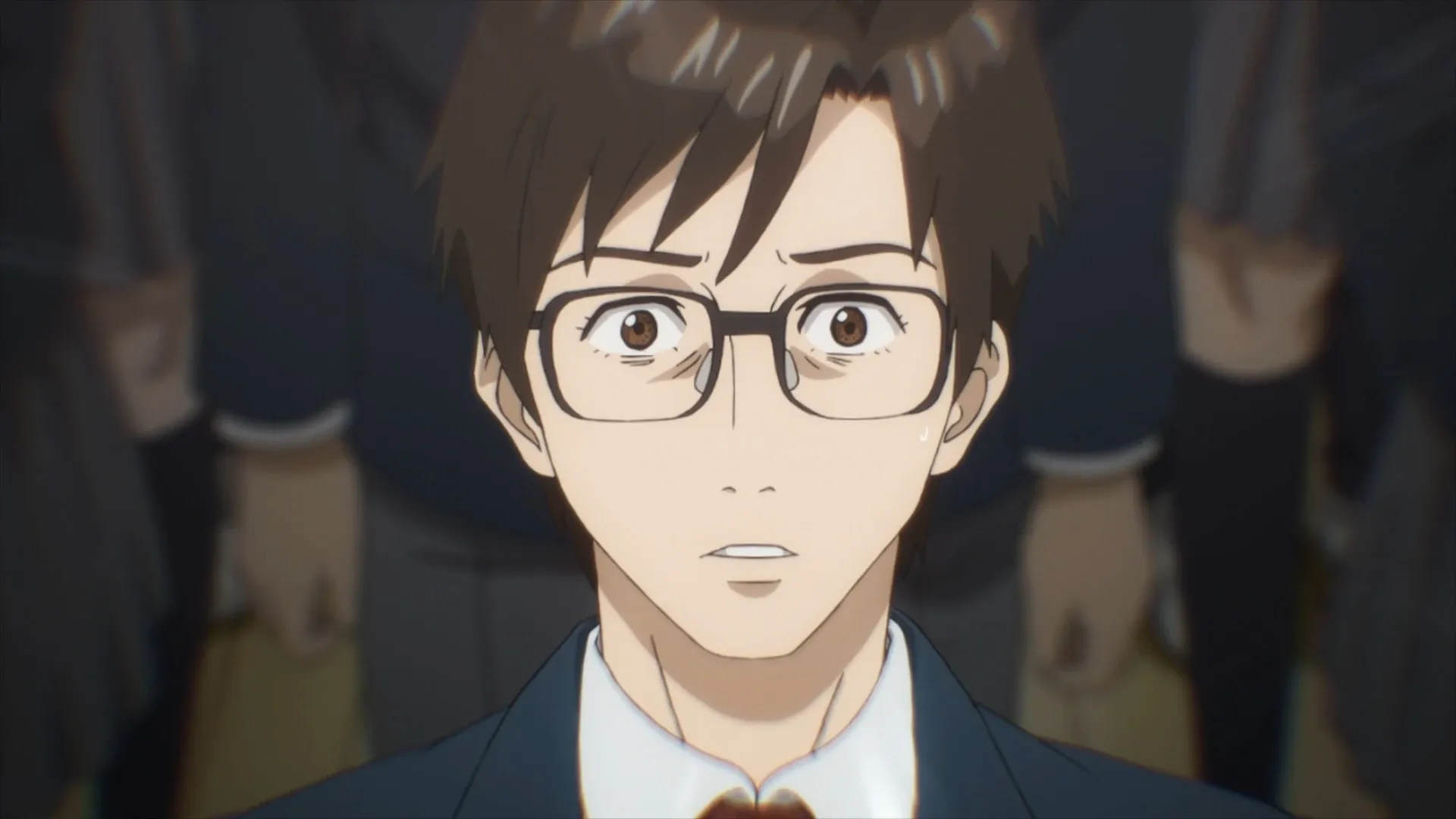
Shinichi is the show’s experiment. Early on he is an ordinary, slightly soft protagonist — the kind of kid who would rather not look at a corpse. After the parasites reach his family, something in him goes quiet. The writing does not treat that as a power-up, it treats it as damage. He becomes more efficient at killing, worse at crying on schedule, and newly able to hear what Migi hears. The question is not whether he can win fights. It is whether Satomi will still recognize the person who comes home.
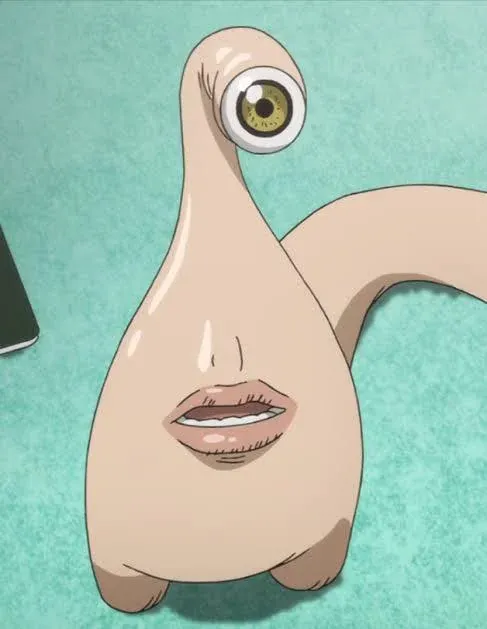
Migi is the best idea in the room. Aya Hirano plays it as dry, curious, and almost kind by accident. Migi does not love Shinichi, Migi calculates and the partnership works because the calculations keep including Shinichi’s continued existence. Their banter is the series’ relief and its thesis: two organisms stuck together, arguing about food, sleep, and whether other lives count.
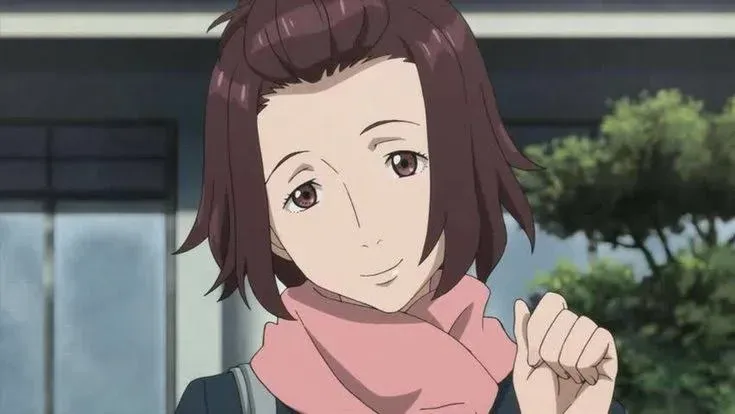
Satomi is the human baseline — not a prize, a measure. She is written with less interior life than Shinichi deserves as a partner, but the show needs someone who still flinches. When she stays, it means more than a confession scene.
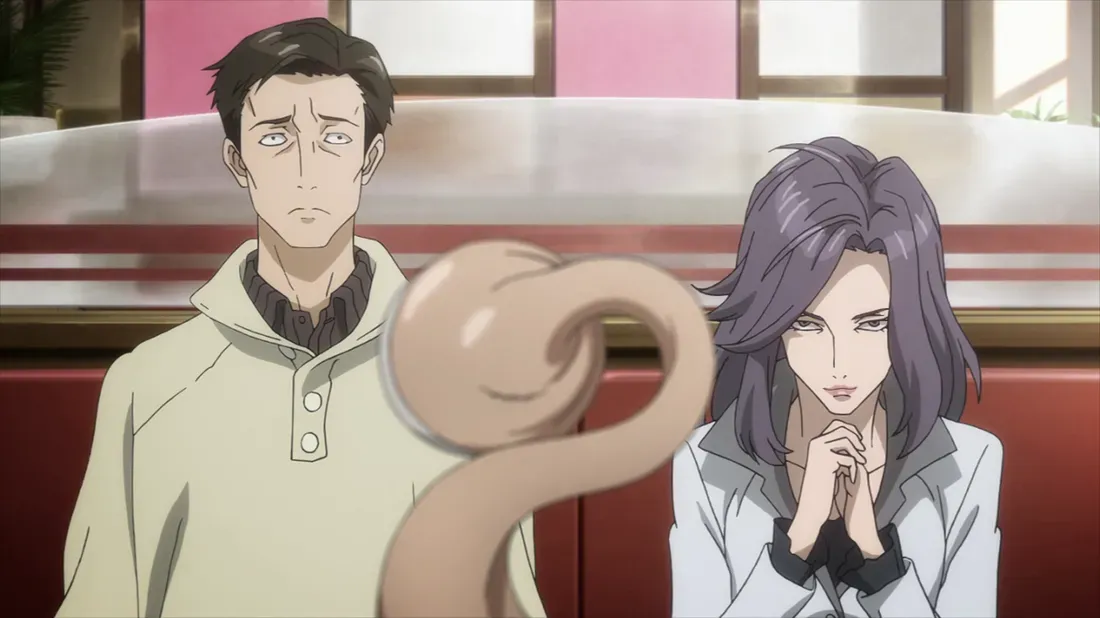
The parasites are not a hive. Ryouko Tamiya, later Reiko Tamura, is the standout: a teacher-host who decides to keep a pregnancy and study humans instead of only eating them. She is colder than Shinichi and more honest than most of the adults. Gotou is the opposite argument — several parasites stacked into one body, strength without a self worth keeping. Around them sit smaller cases: a man who talks to the thing in his hair like a friend, a detective hunting a pattern he cannot name, Kana Kimishima whose sensitivity to parasites makes her useful and doomed. Kana’s stretch is the one that most often feels like the plot shopping for a subplot.
Story & Pacing
Twenty-four episodes is the right length for the manga’s spine and a little long for every errand in the middle. The first cour is the tightest: the failed takeover, the first hunts, the family house, the moment Shinichi stops being only a victim. Kenichi Shimizu directs those hours like horror that still has to go to school in the morning, convenience stores, classrooms, a hand that unfolds into blades under a sleeve.
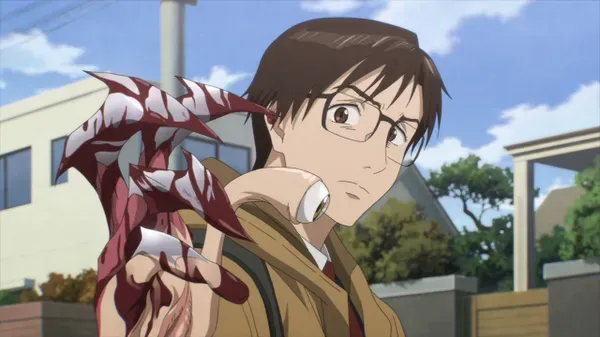
The mother’s death is the hinge. After it, the series is no longer “boy and monster learn to share a desk.” It is a study of a boy who cannot put the old face back on. The second cour widens into city-scale parasite politics, Tamura’s attempt at a family, and the police closing in. Some of that widening is rich while some of it is circular: another alley, another speech about food chains, another civilian who exists to die instructively.
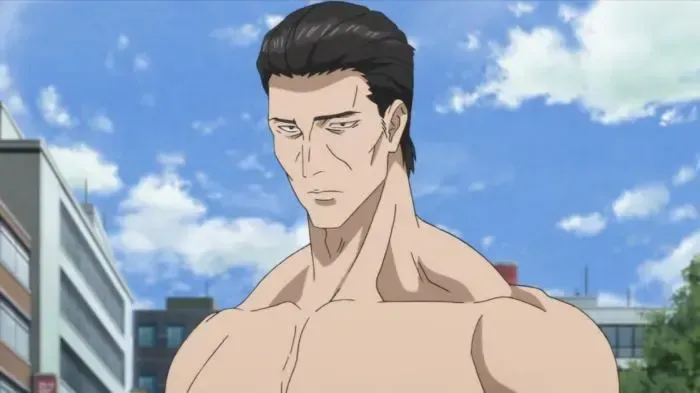
Gotou is the correct final boss for this premise — not a king, a pile. The fight is messy on purpose. What follows is quieter and better than a victory lap: Migi choosing rest, Shinichi left with a hand that is only a hand again, and a last human cruelty that has nothing to do with aliens. The coda with the serial killer is Iwaaki being consistent. The threat was never only the worms.
Pacing sags when the show parks on Kana’s investigation and on classroom texture that the first cour already established. It snaps back whenever Tamura is on screen, or whenever Shinichi and Migi have to decide, in the same second, whether to run or cut.
Themes & Writing
Iwaaki’s question is older than the CGI teeth: if something eats you, is it evil, or is it a species doing what yours does to cattle? The series is not subtle about the comparison. Factory farms, classroom lectures, news footage of people treating other people as meat — the writing points at the mirror and waits. That directness is a feature until it becomes a refrain.
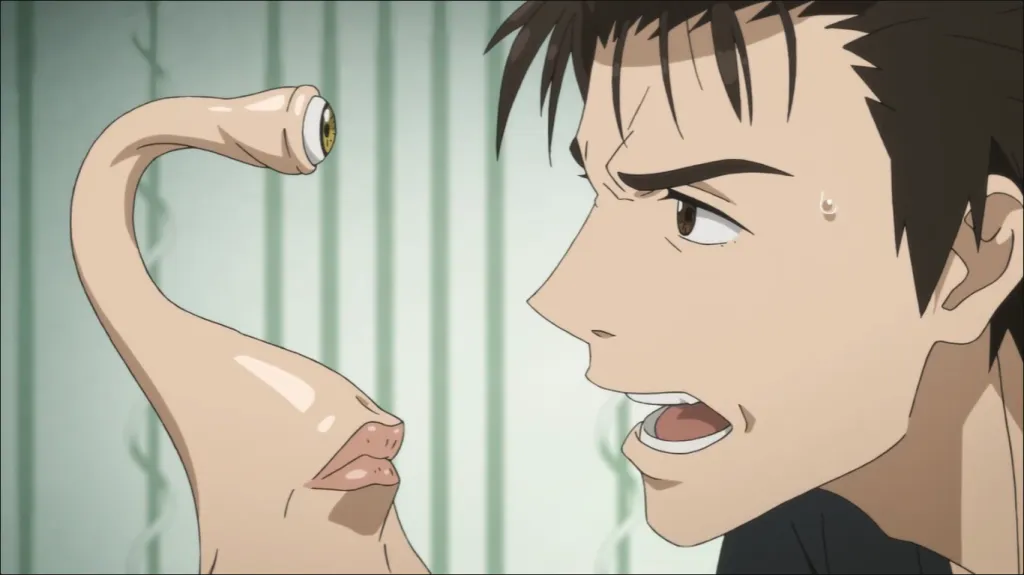
The better version of the theme lives in relationships, not monologues. Migi learns a sliver of attachment and still refuses to call it love. Tamura tries to raise a child inside a stolen body and treats tenderness as data. Shinichi keeps killing parasites and then goes home hoping Satomi will touch a person who no longer startles like one. Humanity here is not purity. It is the inconvenient habit of caring after you have learned how easy killing is.
The title’s “maxim” is the rule a species lives by. Parasites: take a host, eat, hide, continue. Humans: survive, but also care, feel guilt, stay recognizable. The show works best when those two rules share one body and have to argue over ordinary things like sleep — Migi’s rule versus Shinichi’s — instead of another speech about nature.
Animation & Art
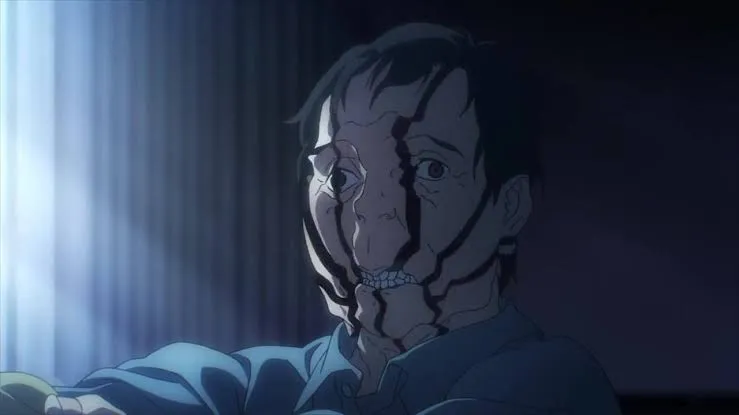
This is mid-2010s Madhouse: sharp when a body has to come apart, thinner when a crowd has to stand still. Tadashi Hiramatsu’s designs keep faces readable after the heads open. The parasite transformations still work because they stay biological — muscle, bone, a mouth where a mouth should not be — instead of turning into generic CGI monsters for the whole runtime. Some CG compositing dates the show. The silhouette of a hand becoming a weapon does not.
Action is clearest in close quarters: a classroom, a stairwell, a hotel corridor. Wide-city spectacle is less confident. The color script helps more than the budget — ordinary daylight on extraordinary wounds, so the horror never gets to hide in gothic lighting.
Music & Sound Design
Ken Arai’s score is electronic pulse under wet sound design: blades, breath, the small noises of a hand that should not speak. It is functional more than haunted. The opening, “Let Me Hear” by Fear, and Loathing in Las Vegas, is the correct kind of loud — a warning the show actually keeps. Daichi Miura’s “It’s the Right Time” is the softer aftertaste, the human hour after the credits logic of survival.
The series is better when it lets rooms be quiet. A talking hand is already enough noise.
What Worked / What Didn’t
What worked:
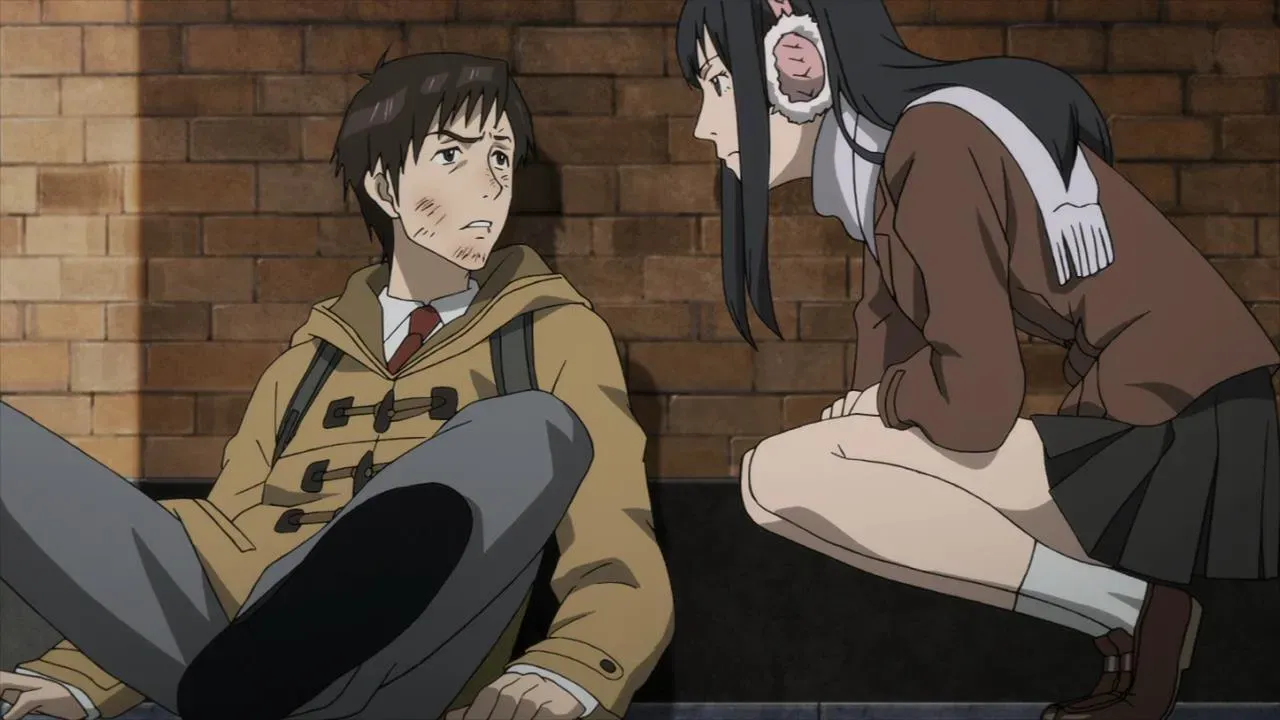
The premise executed as a relationship, not only as gore. Migi as a character instead of a gimmick. Shinichi’s emotional flatline after his mother as consequence rather than cool. Tamura as the parasite who actually thinks. Body horror that stays tactile. A finale that lets the alien rest and still does not pretend people are safe from people. A complete two-cour adaptation that reaches the manga’s ending instead of inventing a cliff.
What didn’t fully land:
Kana’s arc as a mid-series detour that costs more time than it returns. Supporting humans who exist to illustrate a point and then leave. Repeated lectures on nature that the images had already made. Uneven animation in talk-heavy episodes. Satomi written as compass more than person. The last human antagonist arriving like a short story stapled to a novel — thematically right, dramatically abrupt.
The 8 is for a show that still has a hand around your wrist after the speeches fade: ugly, curious, and unfinished in the way living things are.
Who This Is For
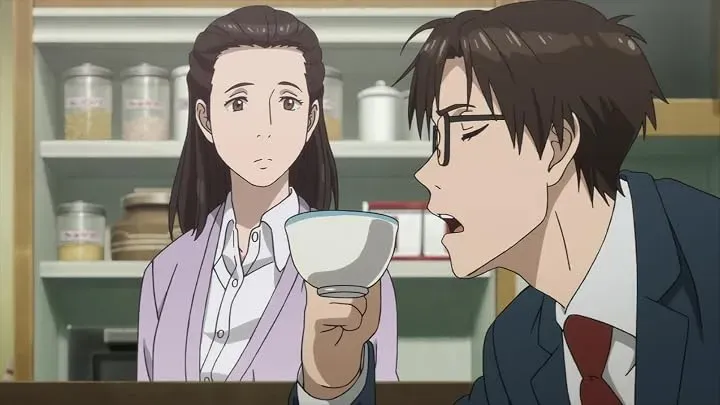
This is for viewers who can sit with gore if the gore is attached to an idea, and for people who like seinen horror that argues in complete sentences. If you want a monster-of-the-week that stays a monster, or a romance that never has to smell like blood, this will feel like homework with a body count. If you bounced off the live-action films or Parasyte: The Grey, the Madhouse series is the version that keeps Shinichi and Migi at the center for the full distance.
Skip it if graphic dismemberment is a hard no, if you need consistent sakuga every episode, or if on-the-nose theme statements will pull you out of the scares. First-timers who only know the meme of the talking hand should know the meme is the easy part.
About the Original Manga & Author
Hitoshi Iwaaki wrote and drew Parasyte (Kiseijū) after earlier work such as Fūko no Iru Mise. The series began in Kodansha’s Morning Open Zōkan in 1989, moved to Monthly Afternoon that November, and finished in December 1994 — 64 chapters collected in ten tankōbon volumes (later reissued in eight). It won the 1993 Kodansha Manga Award for general manga and the 1996 Seiun Award for best comic. English editions arrived through Tokyopop (twelve volumes), Del Rey, and Kodansha USA; a new paperback line has been rolling out again in recent years. Iwaaki’s other major work is the historical epic Historie, still in Afternoon, which has taken the Japan Media Arts Festival grand prize and the Tezuka Osamu Cultural Prize. The parasites on screen are his, blade for blade; Madhouse’s job was to let the hand talk at television speed.
Final Verdict + Score
8/10. Parasyte: The Maxim is a complete, often bruising adaptation of a manga that was already asking the uncomfortable question in the early ’90s. Watch it for Shinichi and Migi, for Tamura, and for the stretches where the horror is allowed to be sad instead of only loud. It is not a perfect machine. It is a species argument that still has teeth.
Recommended if you want two cours of sci-fi horror with a finished ending and a partner who will not pretend to be your friend.
Closing
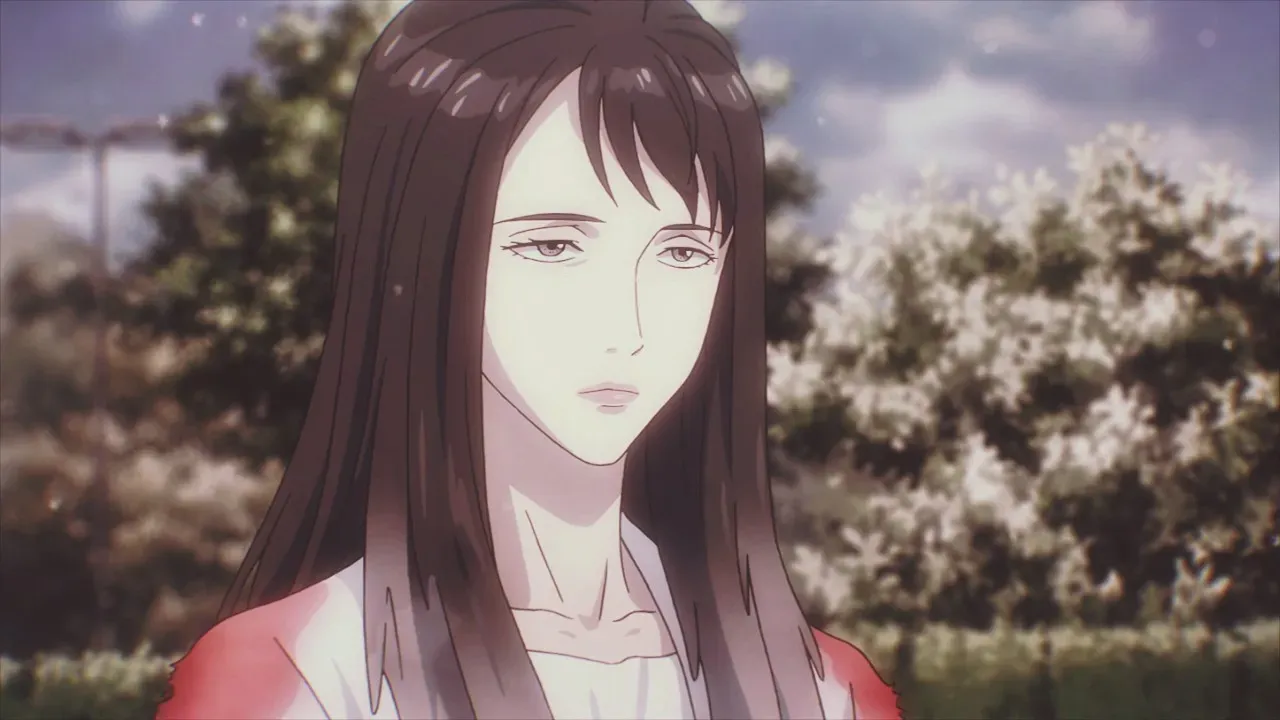
One of the most interesting scene of the anime for me was Ryouko's change of heart or rather say an interesting take by the author how other organisms starts to appreciate what humans actually share among themselves, which is profound and beyond simple survival instinct.
If you have a favorite parasite — or a moment where Shinichi stopped feeling like the protagonist and started feeling like the problem — say so. The comment section can take a little blood.
Couch talk
Quiet on this thread so far — say something (we mod before it goes live).