Demon Slayer: The Story of What the Blade Remembers
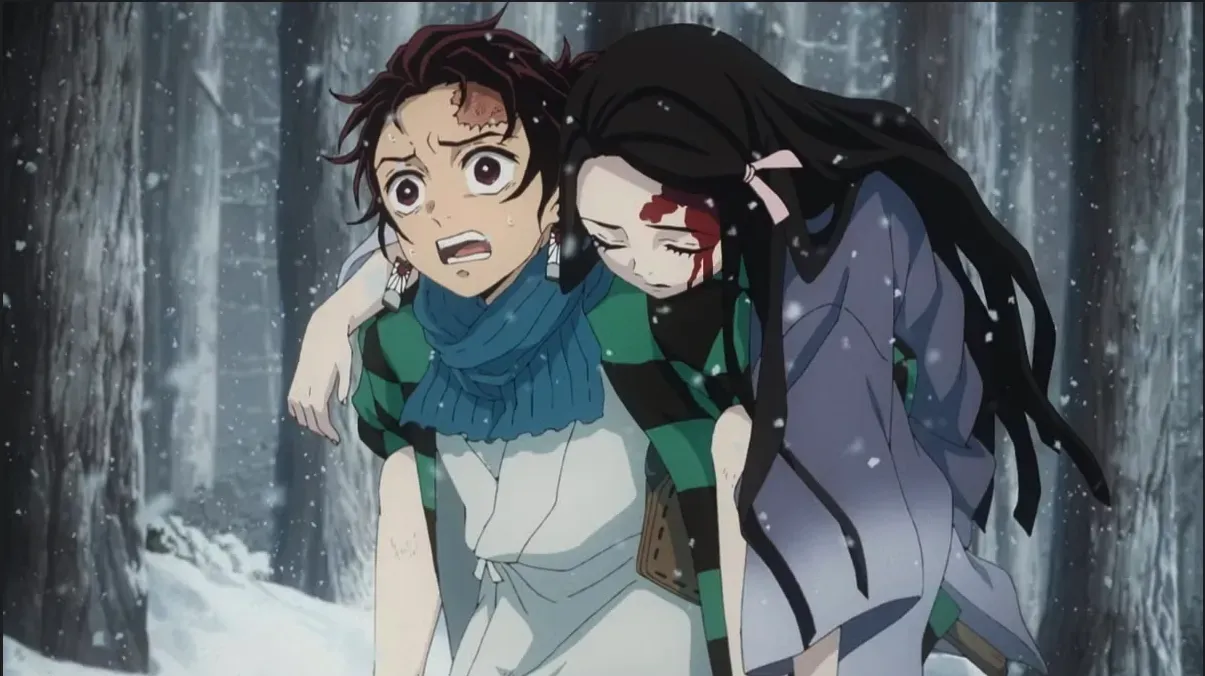
Tanjiro Kamado returns home to find his family slaughtered. The sole survivor is his younger sister Nezuko, transformed into a demon yet still clinging to a thread of humanity. That opening sequence does not rely on spectacle. It relies on the weight of ordinary life being cut short. The snow, the blood, the small details of a household that will never wake again — these images settle deeper than any later battle. The series understands that emotional impact is not created by volum, it is created by the careful placement of what can no longer be restored.
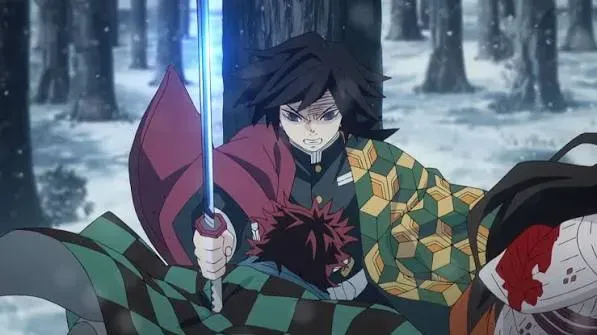
The first major presence who enters this broken world is Giyu Tomioka. He appears as an obstacle, cold and decisive, ready to end Nezuko’s existence. The confrontation is brief. What remains is the first clear statement of the story’s moral tension: mercy is not softness. It is a choice made against instinct. From that moment the narrative begins its long examination of what it costs to protect something already marked for destruction.
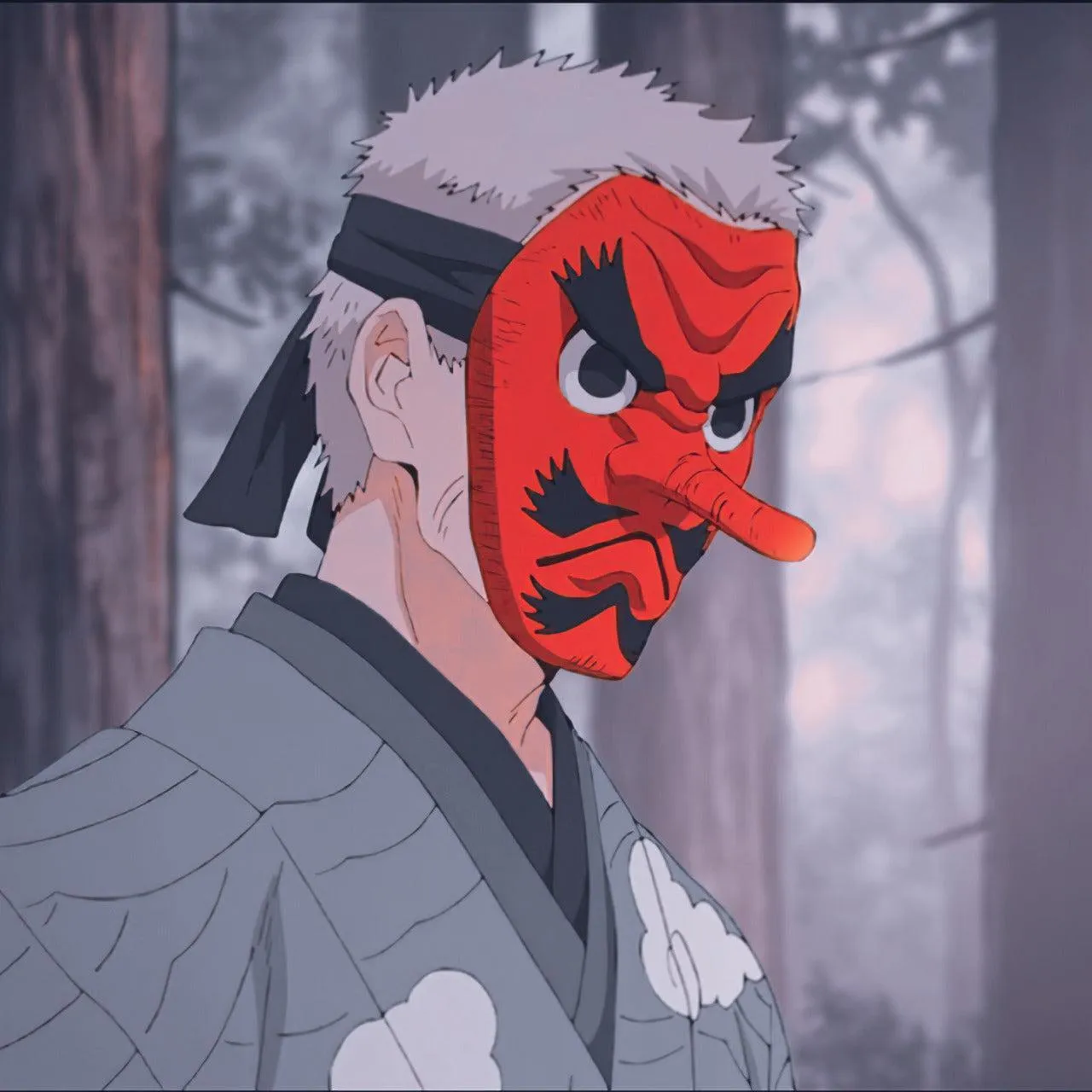
Tanjiro’s training under Sakonji Urokodaki introduces the physical language that will define the rest of the work. The mountain, the endless swings, the presence of the deceased disciples Sabito and Makomo — these elements are not background. They establish that every technique carries the memory of those who failed before. When Tanjiro finally enters the Final Selection, the series has already made the audience feel the distance between survival and purpose.
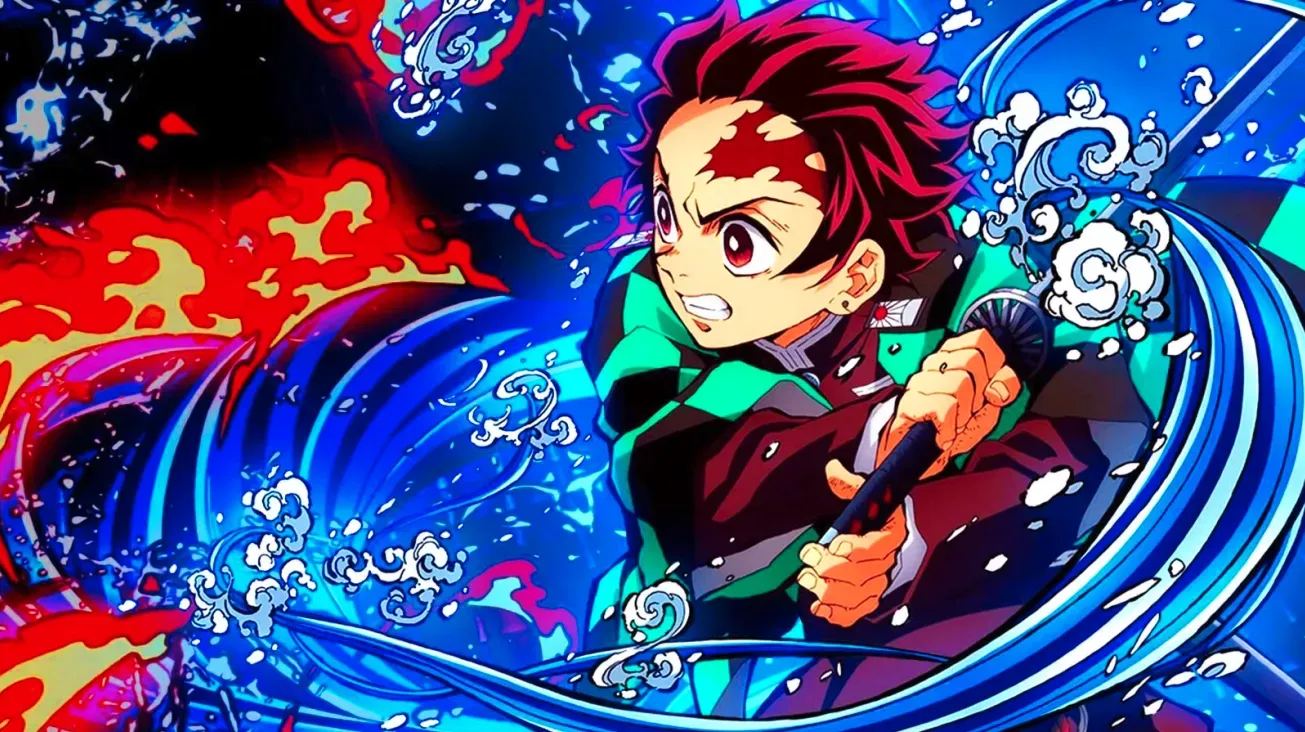
The early missions tighten the focus. On Natagumo Mountain the confrontation with the spider family, and particularly with Rui, forces the first true collision of emotion and combat. Rui’s twisted idea of family is not treated as simple villainy. It is treated as a distorted mirror of the bond Tanjiro is trying to preserve. The Water Breathing forms, animated with a fluidity that makes each movement feel both elegant and desperate, turn the fight into something more than choreography. The audience feels the strain in Tanjiro’s body and the fracture in Rui’s longing at the same time.
The Flame That Stayed
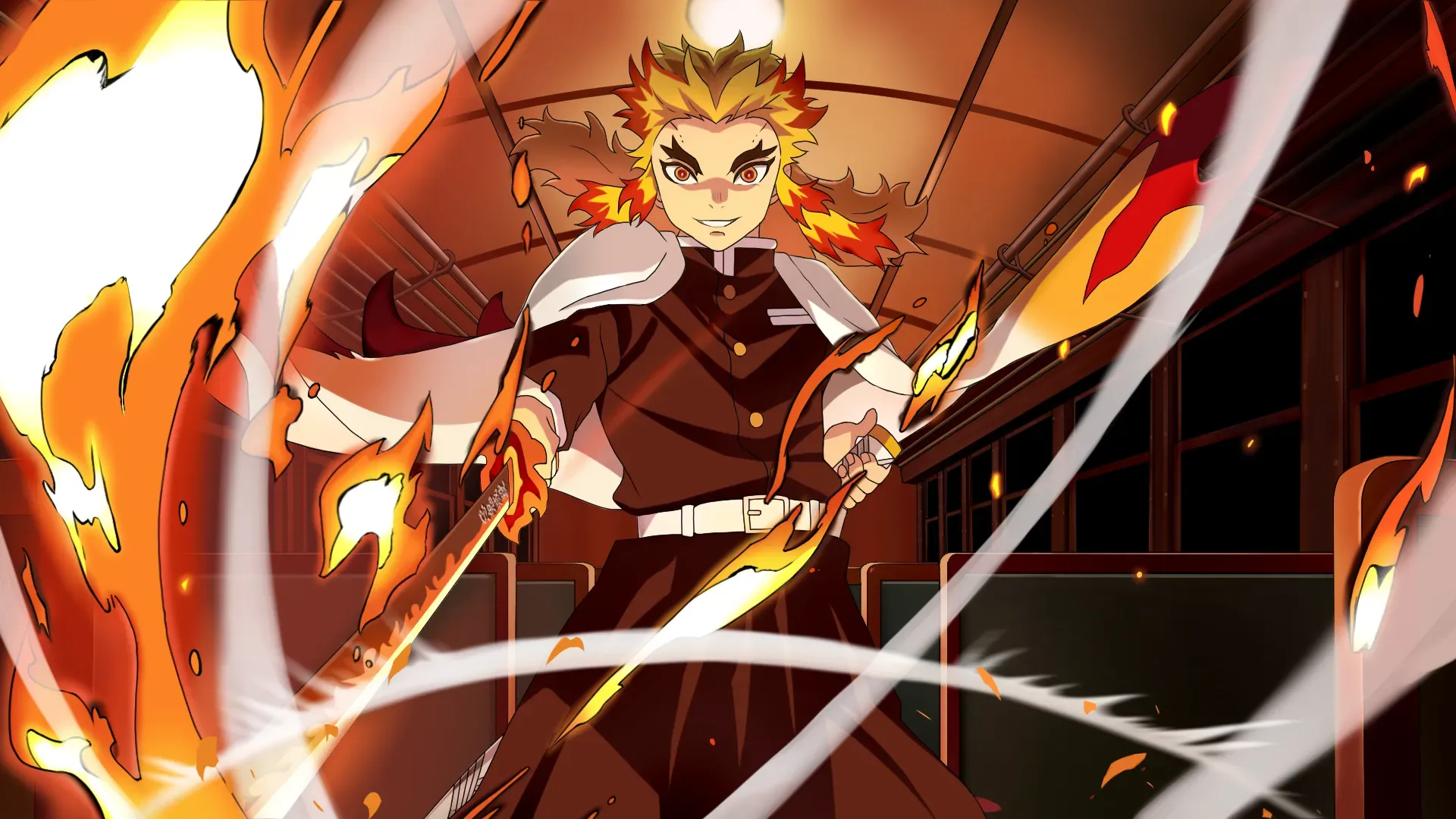
The Mugen Train arc raises the stakes without abandoning the intimate register. Kyojuro Rengoku enters the story already burning. His presence is brief, yet the series gives him enough space for his conviction to become tangible. The battles against Enmu and later Akaza are staged with the kind of precision that makes every impact land in the chest as much as on the screen. Rengoku’s final stand is not written as a heroic speech. It is written as a man refusing to let the flame go out while he still has breath. The emotional aftershock of that sequence remains one of the clearest examples of how the series fuses spectacle with lasting weight.
Entertainment District Arc
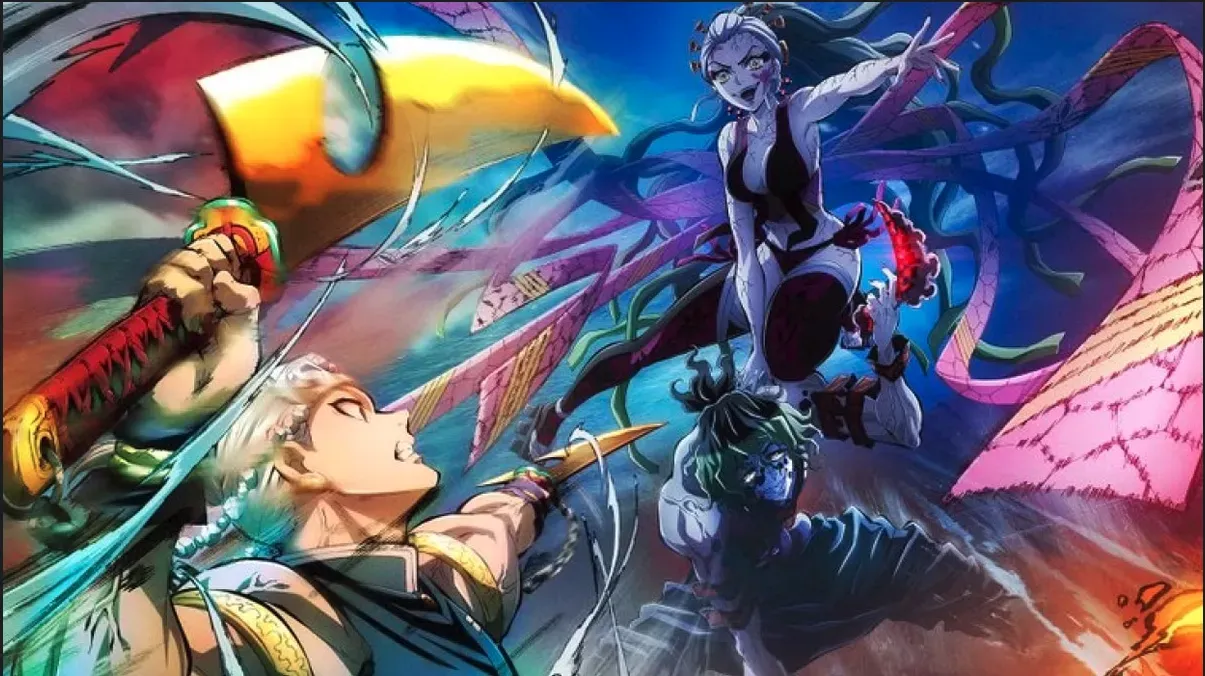
In the Entertainment District the focus shifts to the cost of spectacle itself. Tengen Uzui brings a louder energy, yet the heart of the arc belongs to the suffering of Daki and Gyutaro and to the quiet endurance of the women trapped inside the district’s glitter. The dual battle that closes the arc is a masterclass in visual rhythm. Ufotable’s animation does not simply decorate the action, it makes the violence feel heavy, the desperation legible, the sibling bond between the demons as tragic as it is monstrous. When the dust settles, the victory does not feel clean. It feels necessary and costly.
The Swordsmith Village arc
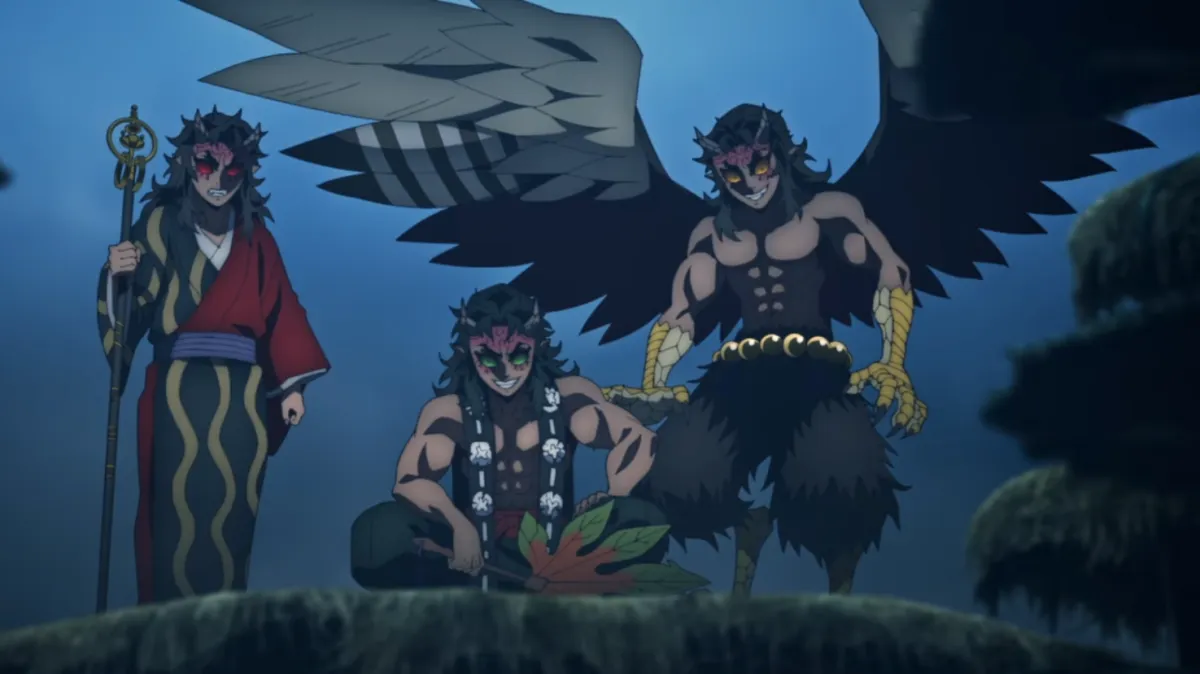
The Swordsmith Village arc continues this pattern. The introduction of Muichiro Tokito, Mitsuri Kanroji, and the upper-rank demons Hantengu and Gyokko expands the world while keeping the emotional through-line intact. Tanjiro’s growth is measured not only in new forms but in the increasing difficulty of remaining himself inside the escalating violence. The animation reaches new peaks of clarity and force, yet the series never lets the visual brilliance outrun the human stakes.
Hashira Training arc
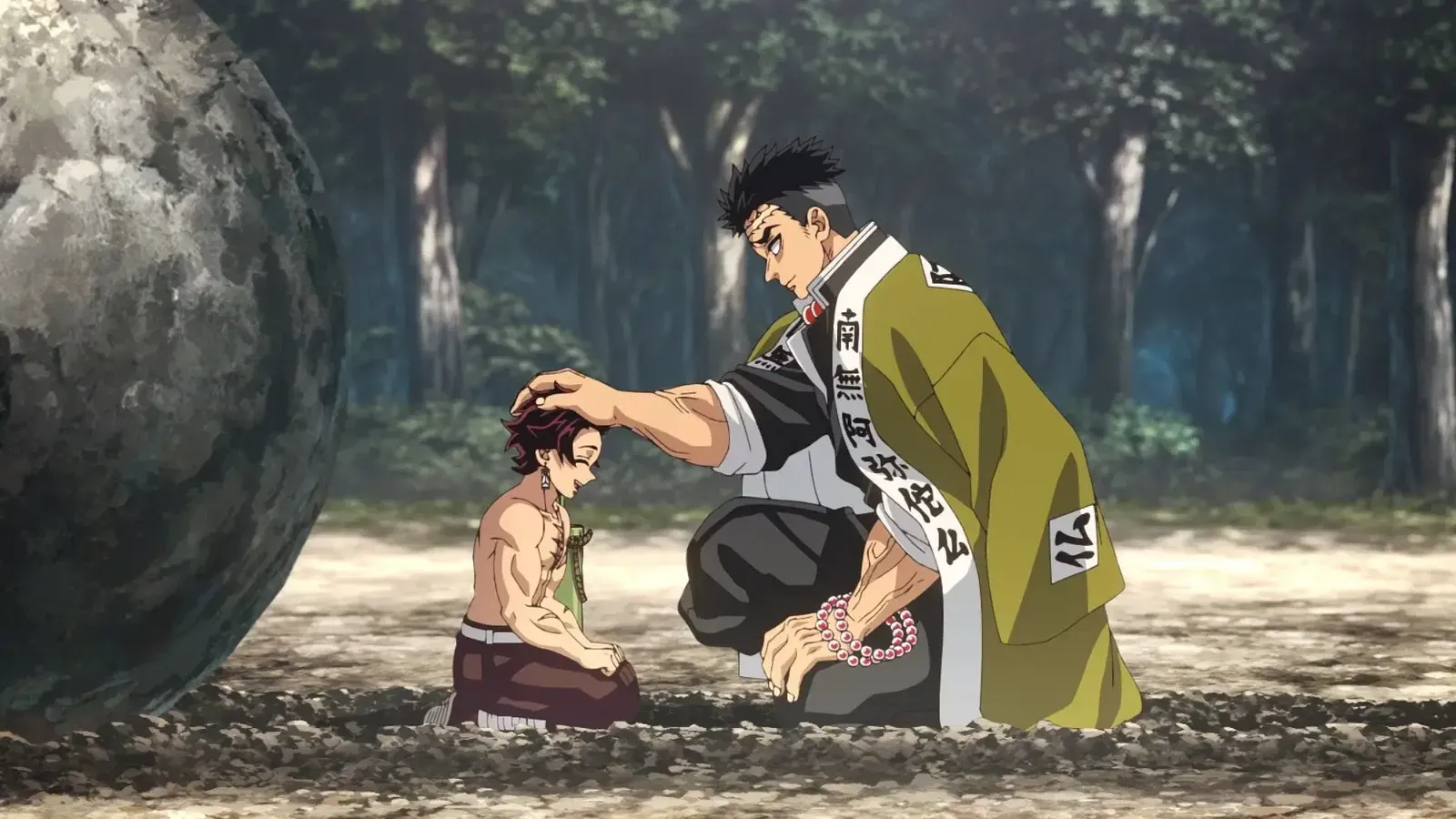
By the time the Hashira Training arc arrives, the story has earned its larger canvas. The Infinity Castle sequence, released theatrically in stages, represents the culmination of both the narrative and the studio’s craft. The fortress itself becomes a shifting architecture of dread and possibility. The confrontations with the remaining Upper Moons and the final approach toward Muzan Kibutsuji are staged with an intensity that few animated films have matched. Each breathing style is given room to breathe and then to break. The choreography is relentless, yet the camera still finds the faces — the exhaustion, the resolve, the moments when a character remembers why they are still standing.
Infinite Castle
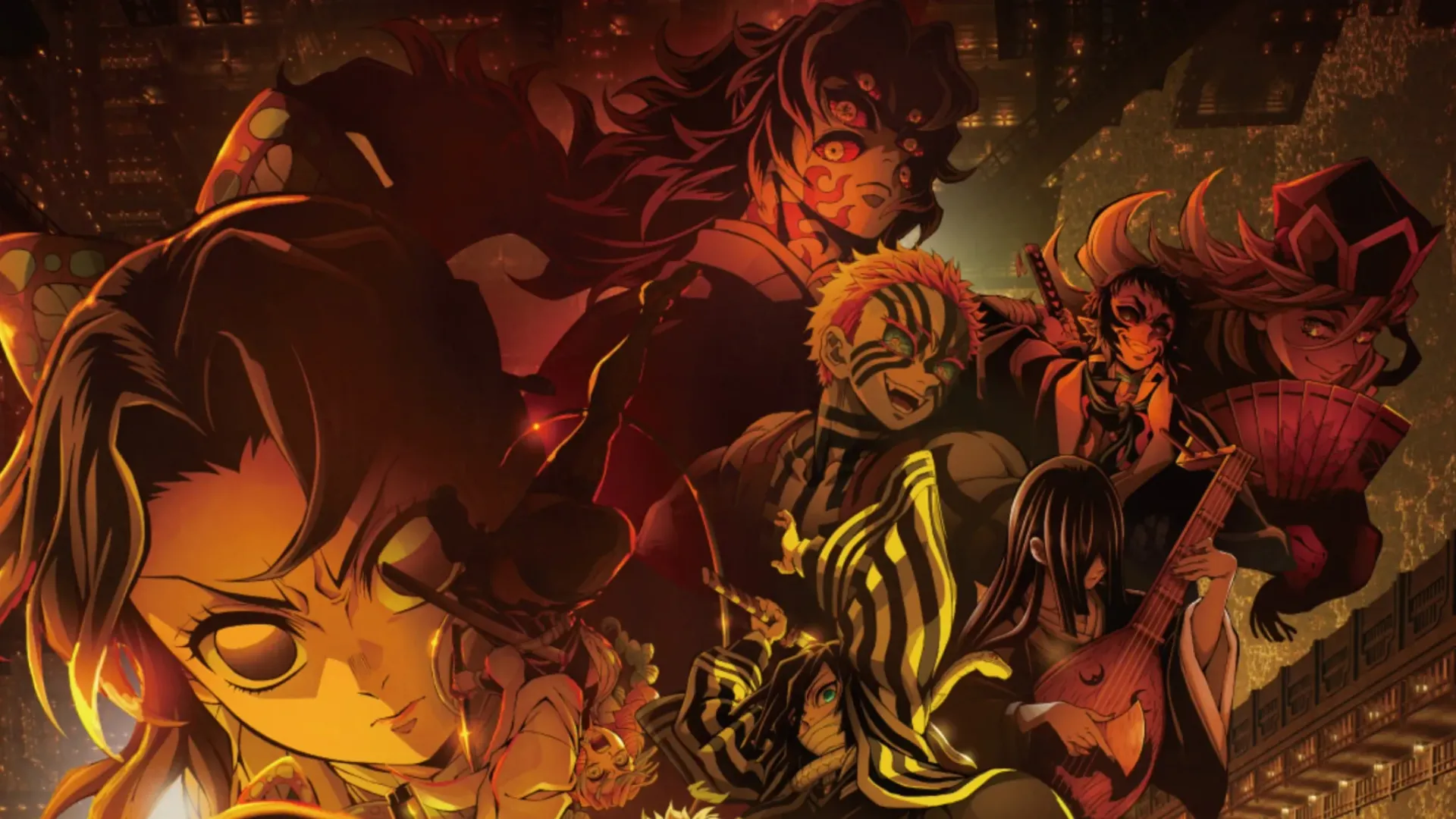
The theatrical releases of the Infinity Castle arc did more than complete the story. They became a global event. Audiences filled cinemas across continents, drawn by the promise of seeing the climax on a scale that matched its emotional ambition. The box-office performance reflected something rarer than hype: a widespread recognition that the fusion of precise animation and earned feeling had reached a level worth gathering for. Night after night the films held the screen with battles that felt both mythic and intimate. The success was not merely commercial. It confirmed that the series had taught a worldwide audience to feel the cost of every swing of the blade.
Animation Masterpiece by Ufotable
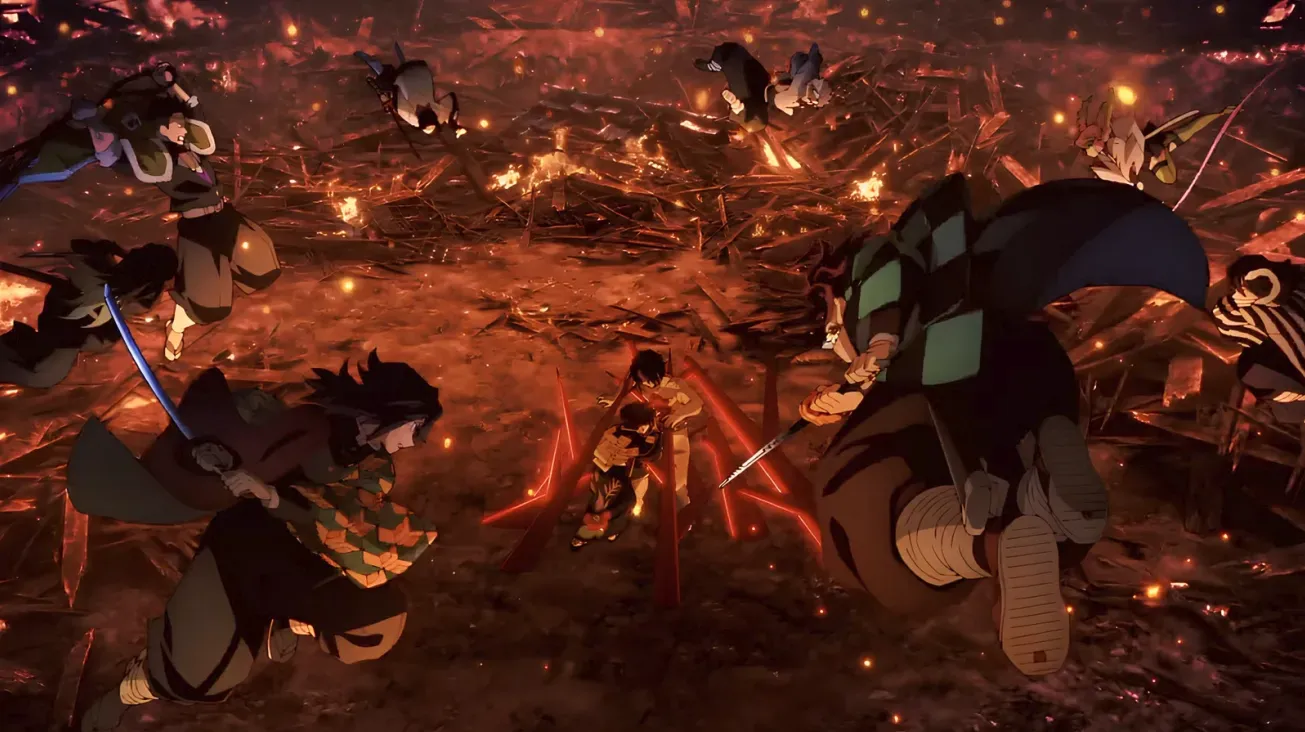
Throughout the series the animation never exists for its own sake. Ufotable’s work turns water into memory, flame into will, and darkness into something that can be cut only at great personal price. The emotional impact is not layered on top of the action. It is built into the movement itself. When a character falls, the audience has already been taught to feel the absence that will follow. The superlative action sequences steal the breath, yet they never steal the heart of the story. That heart remains the quiet determination of a brother trying to bring his sister back into the light.
Koyoharu Gotouge’s other published work remains limited, yet the same attention to quiet suffering and fierce loyalty that defines Demon Slayer can be felt in the early one-shots that preceded it. Those shorter pieces share the same refusal to treat pain as decoration.
What lingers after the final confrontation is not the scale of the battles. It is the image of a boy who once carried charcoal, still trying to carry his sister toward a dawn that might finally be free of demons. The series never claims that every wound can be healed. It only insists that the attempt itself is worth the full measure of a life.
Couch talk
Quiet on this thread so far — say something (we mod before it goes live).