Attack on Titan Series Review
The walls have stood for a hundred years. Humanity lives crowded inside them, telling itself the Titans are the only enemy left beyond the stone. Then one afternoon the Colossal Titan appears above the outer gate, and the world as it was ends in steam and falling masonry.
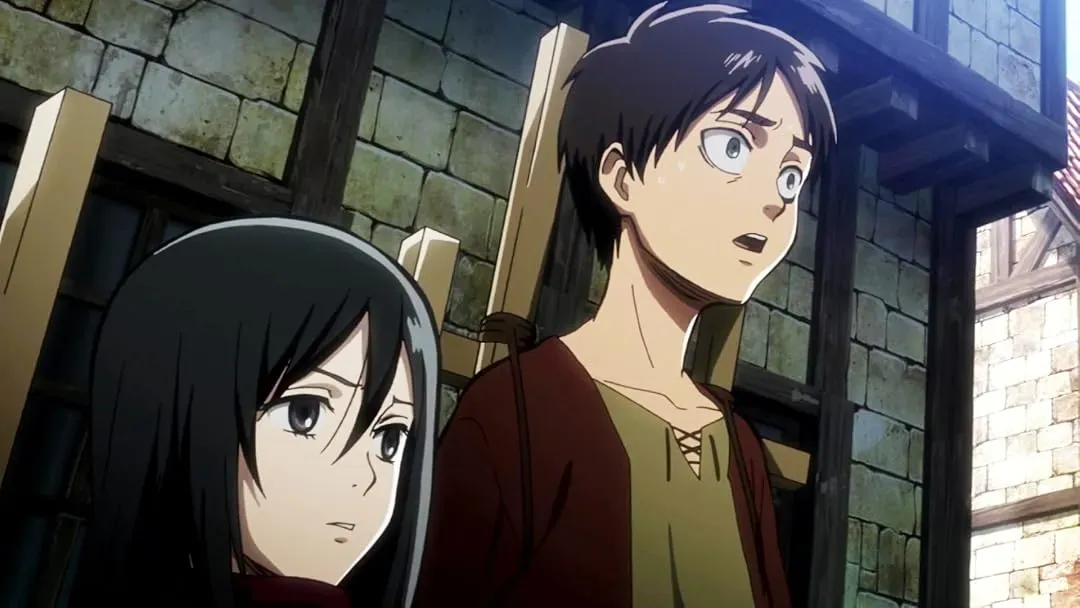
A boy stands in the street of Shiganshina and watches his mother crushed beneath the debris. Eren Yeager does not look away. The rage that takes root that day will outlive almost every other force in the story.
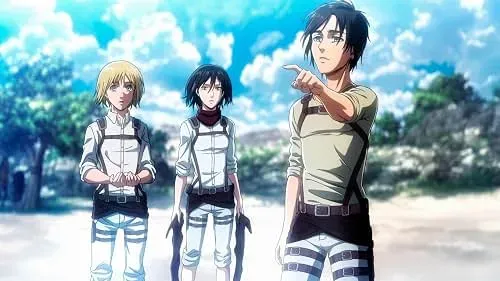
Beside him is Mikasa Ackerman, the girl taken into his family after her own parents were murdered in the mountains. She moves with a quiet finality the world will later learn to fear. Their friend Armin Arlert is smaller, already carrying books and ideas that feel useless against the new reality. The three of them survive the fall of Wall Maria together. That survival becomes the first chain that binds them.
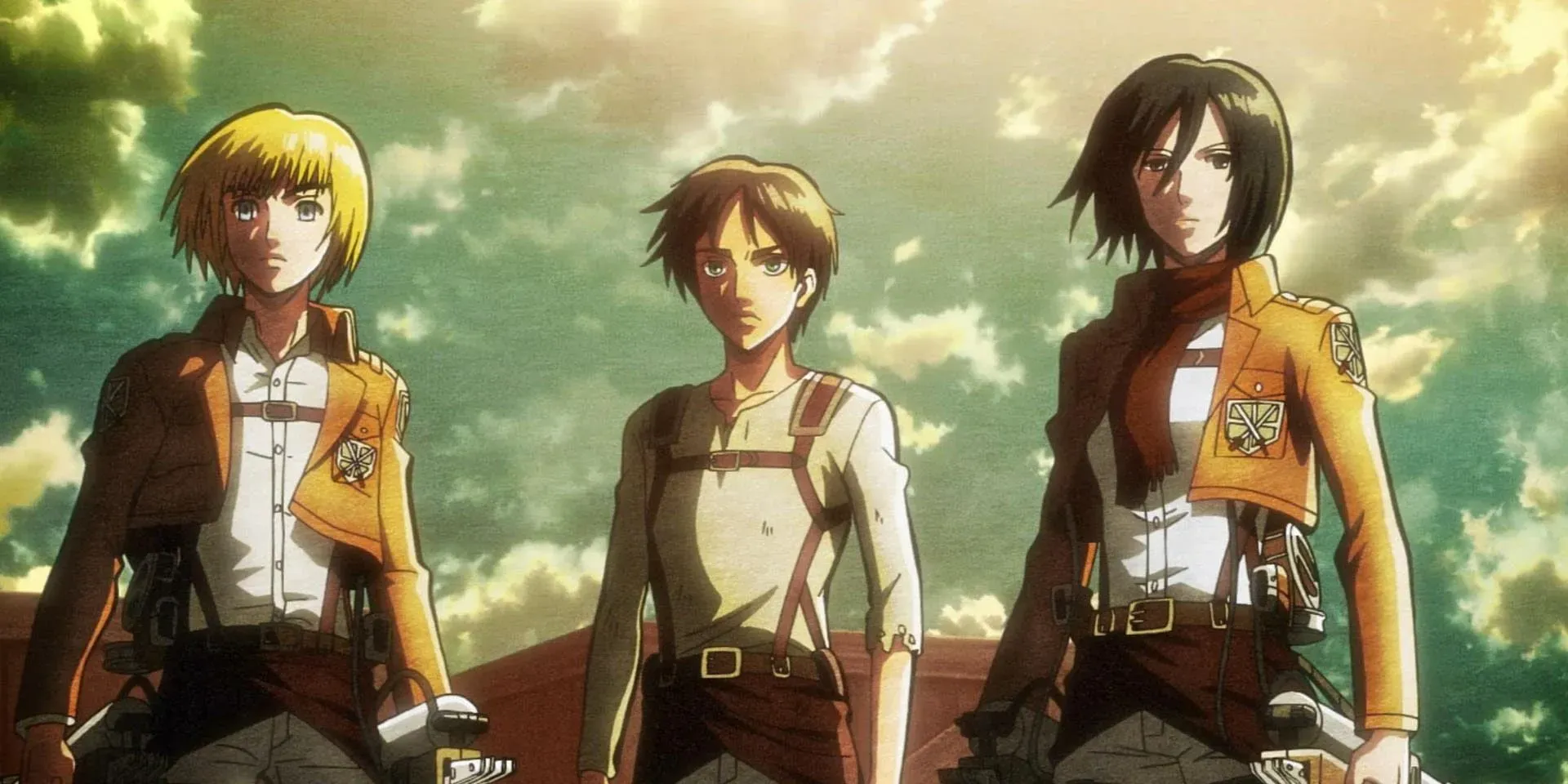
They grow up in the shadow of the breach. The military drafts them. They join the Survey Corps, the branch that still rides beyond the walls even when most of humanity has chosen the safety of forgetting. The Corps is a place of measured suicide. Most who join it die. Eren, Mikasa, and Armin join it anyway.
The early years are spent learning the language of vertical maneuvering gear, the thin wires and gas canisters that let a soldier fly between buildings and Titans alike. They learn how fragile a human body is against a creature that can regenerate and whose only true weakness is a precise cut to the nape. They watch comrades die in the mud and the steam. They keep moving.
The first real fracture in the story’s surface comes with the Female Titan. A human intelligence is controlling one of the monsters. The discovery forces the Survey Corps deeper into a conspiracy that reaches inside the walls themselves. Secrets kept by the royal family, by the military police, by people who have lived among them for years begin to surface. The basement of Eren’s childhood home becomes the center of gravity. What is found there does not merely explain the Titans. It rewrites the entire history of the world they thought they knew.
Humanity is not the last remnant of the species. Beyond the ocean is another nation, Marley, that has used the power of the Titans as a weapon for generations. The people inside the walls are Eldians, descendants of a race once capable of transforming into Titans, now sealed away and hated for the sins of their ancestors. The cycle of hatred is older than the walls. It is older than the living memory of anyone still breathing.
Eren’s rage finds a new shape in this knowledge. The boy who once swore to kill every Titan becomes something harder to name. Freedom, the word he has carried since childhood, begins to demand a price measured in entire populations. The discoveries do not free him. They give the old hatred a larger stage on which to operate.
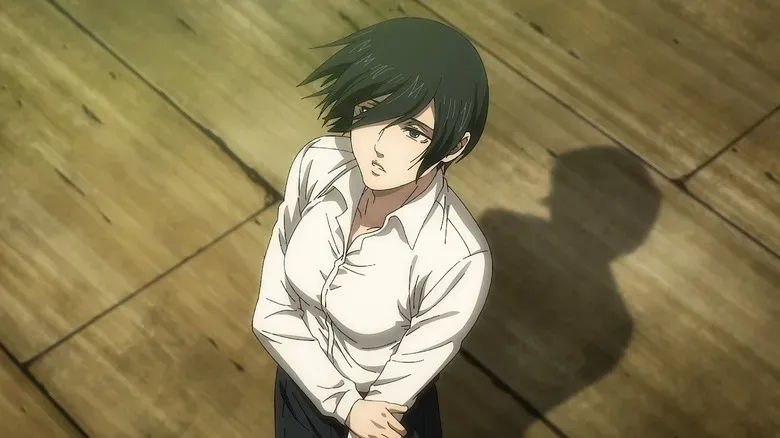
Mikasa continues to stand between him and the world, her loyalty absolute even when the path he chooses turns unrecognizable. Armin, always the one who could see further, begins to understand that seeing further does not always grant the power to stop what is coming. The three of them remain bound, yet the distance between them grows with every new truth the world forces into the light.
The story moves outward. The Survey Corps reaches the sea. For the first time the horizon is not another wall. The war with Marley begins in earnest. Old enemies become temporary allies; temporary allies become enemies again. The power of the Founding Titan, the coordinate that can command every Titan and rewrite the memories of an entire people, falls into Eren’s hands. What he does with it is the question the second half of the work never stops asking.
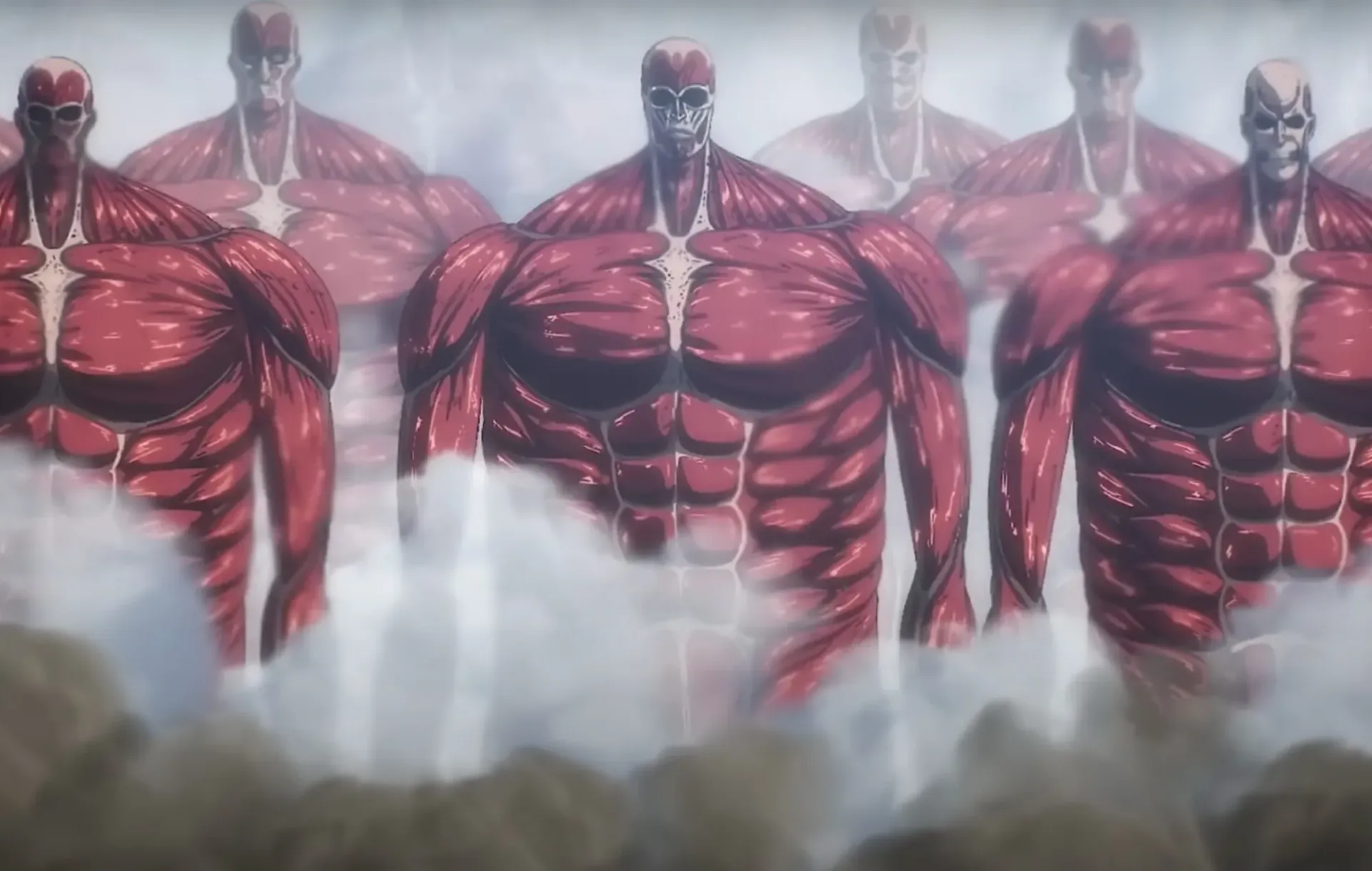
The Rumbling is the answer he chooses. The Wall Titans, the colossal forms that have stood motionless for a century, are set marching across the world. The scale of the destruction is almost abstract until the narrative forces the reader to watch specific lives end under the feet of those giants. Cities disappear. Generations of hatred are answered with a single, overwhelming act of annihilation. The story refuses to look away from the cost. It also refuses to grant any side clean hands. Marley’s oppression of Eldians is real. The Eldian desire for survival is real. The violence each side is willing to commit in the name of that survival is also real.
In the final stretch the remaining members of the Survey Corps, joined by former enemies, attempt to stop the march. The conflict is no longer simply human against Titan. It is the question of whether any future is possible once the cycle of vengeance has been allowed to run this far. Eren and his oldest friends meet again on the edge of that question. What passes between them is not resolution in the conventional sense. It is the recognition that some bonds survive even the worst choices, and that survival itself may not be enough.
Manga Serialization
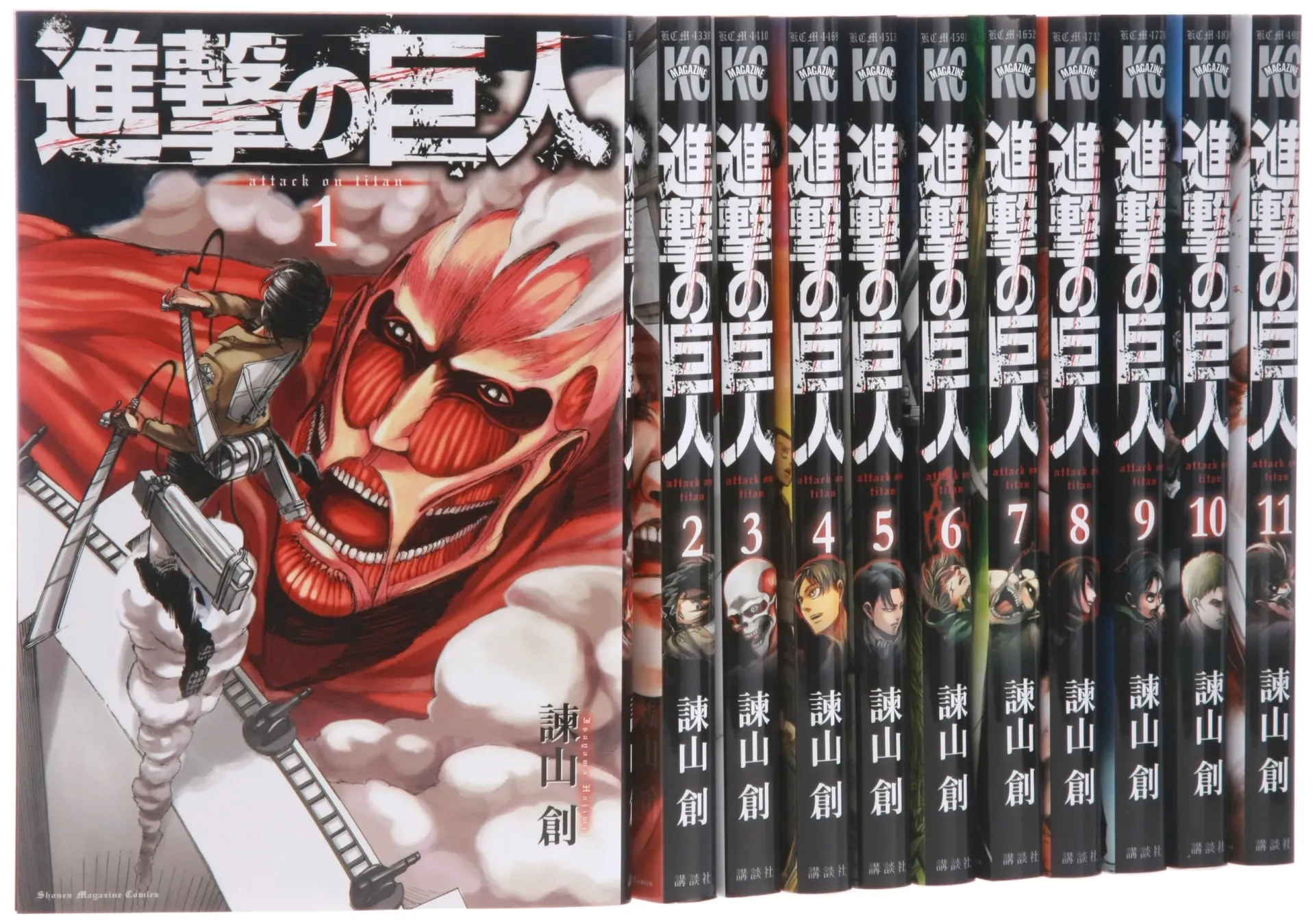
The manga that carried this story began serialization in September 2009 in the first issue of Kodansha’s Bessatsu Shōnen Magazine. It ran for eleven and a half years, ending in April 2021 across thirty-four volumes. What started as a dark, almost hermetic tale of survival inside stone walls grew, issue by issue, into a global examination of inherited violence, the cost of freedom, and the ease with which one people’s history of suffering becomes another people’s justification for atrocity. The serialization itself became part of the phenomenon: readers followed the monthly revelations in real time, watching the scope of the narrative expand until the original walls felt like a distant memory.
Anime Adaptation
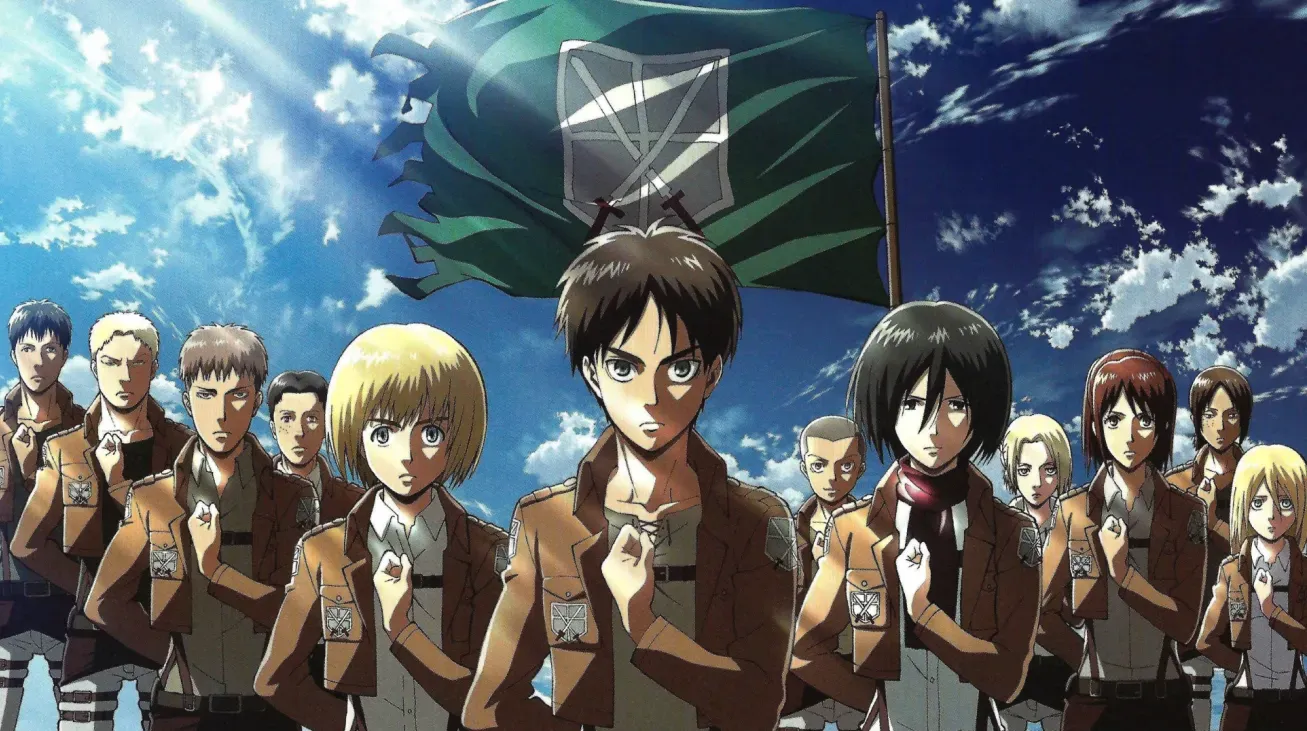
The anime adaptation that followed in 2013, first under Wit Studio and later MAPPA, carried the same intensity into a wider world. The early seasons translated the claustrophobic dread and kinetic violence of the manga into motion with a precision that few adaptations match. When the final season shifted studios, the scale of the story had already outgrown the original production frame; the later episodes had to hold the full weight of the Rumbling and the moral collapse that followed. The series became a global event, one of the rare works that crossed from dedicated anime audiences into broader cultural conversation. Yet the success remains secondary to the pressure the work itself exerts. What lingers is not the size of the audience but the sustained refusal of the narrative to soften its central inquiry: what people are willing to become in the name of freedom, and whether freedom purchased through the suffering of others can still be called freedom at all.
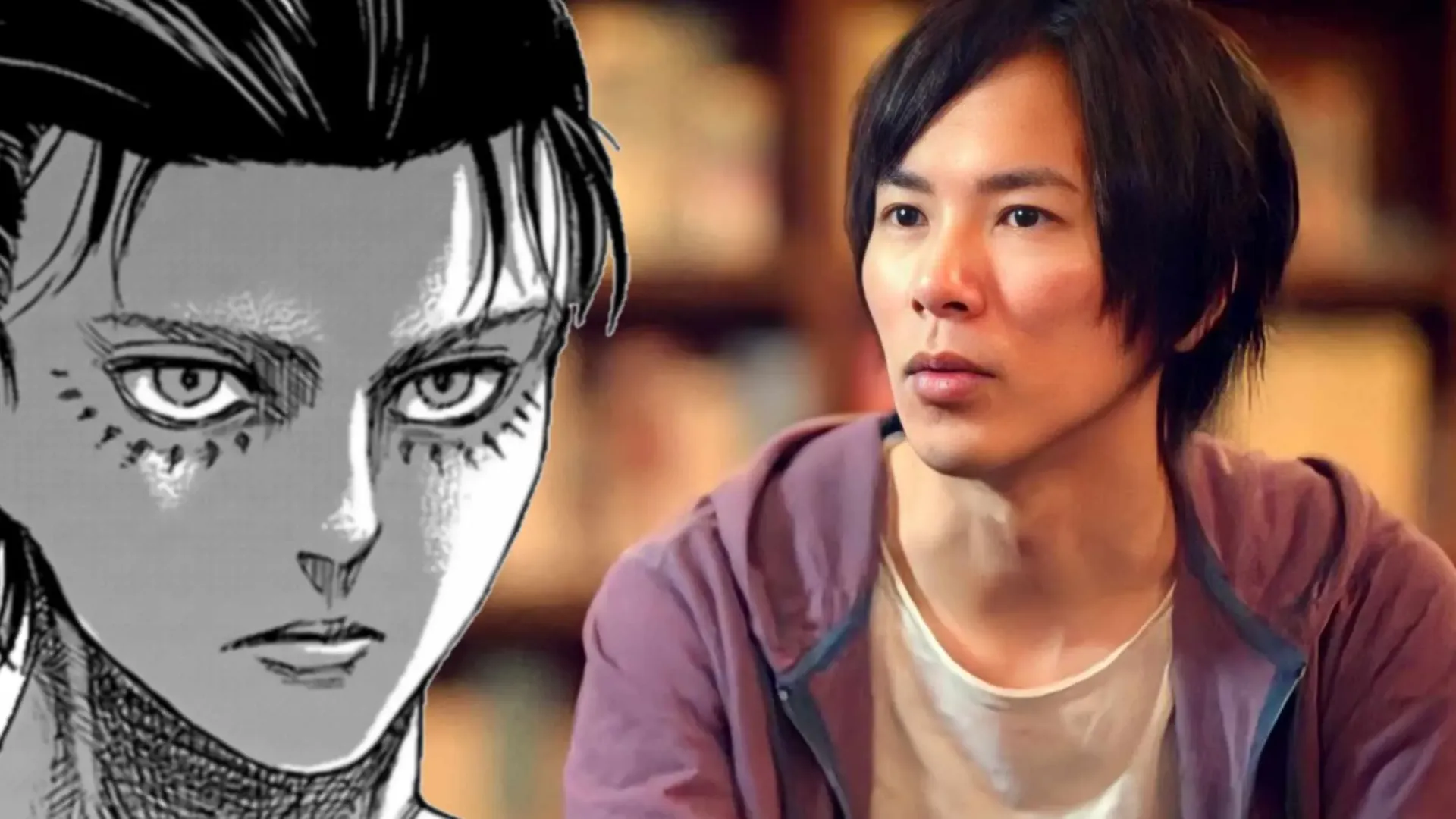
Isayama’s other published work is sparse. A handful of early one-shots already contained the same restless violence and curiosity about power. A few later collaborations and brief pieces exist, but nothing approaches the sustained weight of the long serialization. The energy that might have gone into other stories appears to have been spent here.
The walls fall. The Titans are gone. The questions the story leaves behind do not resolve as easily. They remain, sharp and unfinished, long after the last page is turned.
Couch talk
Quiet on this thread so far — say something (we mod before it goes live).