Assassination Classroom an Ainme Review
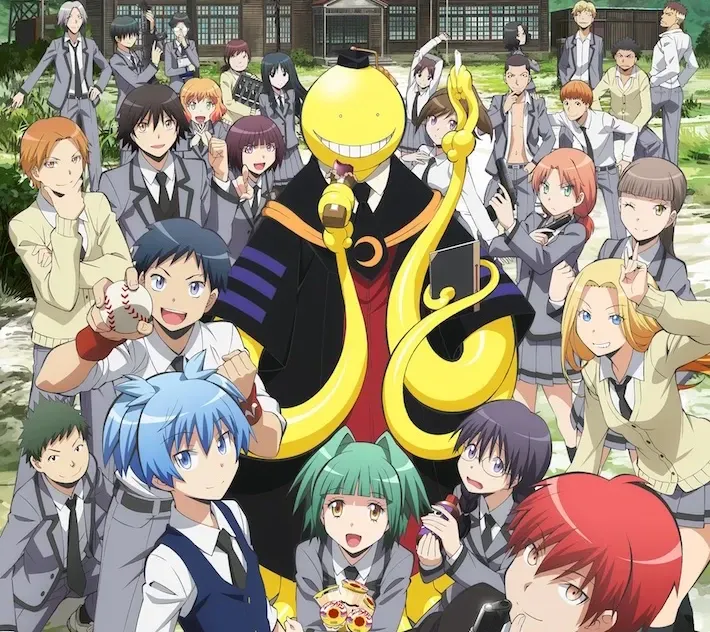
Studio: Lerche
Episodes / Season: Season 1 (22 episodes) + Season 2 (25 episodes)
Genre: Comedy, Drama, Action, School, Supernatural
Air date / Status: January–June 2015 (S1) / January–June 2016 (S2) – Completed
My Score: 9/10
Introduction
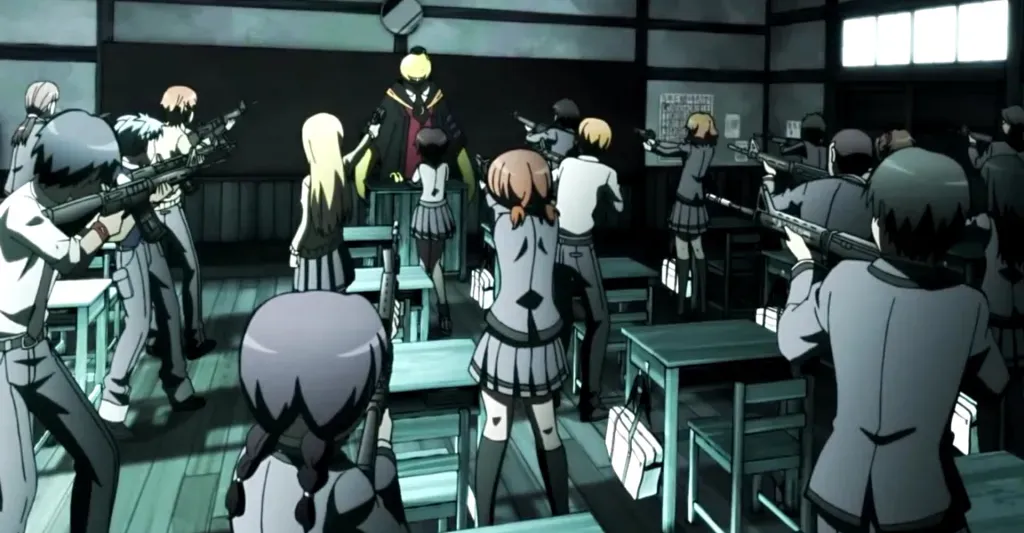
The premise sounds like a dare. A yellow octopus who can move at Mach 20 blows a hole in the moon, parks himself in a junior-high classroom, and asks the students to kill him before graduation — or he will destroy the Earth. Then Assassination Classroom spends two seasons doing something kinder and more interesting than that logline promises.
It is a comedy first and a school show second. The assassination is the joke that keeps the year moving, not a mystery the series wrings dry. Secrets arrive, and they matter, but they arrive the way a good teacher introduces a hard unit: one piece at a time, after you already care about the people in the room.
Mild spoiler warning: The synopsis stays with the premise. Later sections discuss the shape of both seasons and the class’s bond without walking through late-plot revelations. If you want the last stretch completely cold, watch first.
Spoiler-Free Synopsis
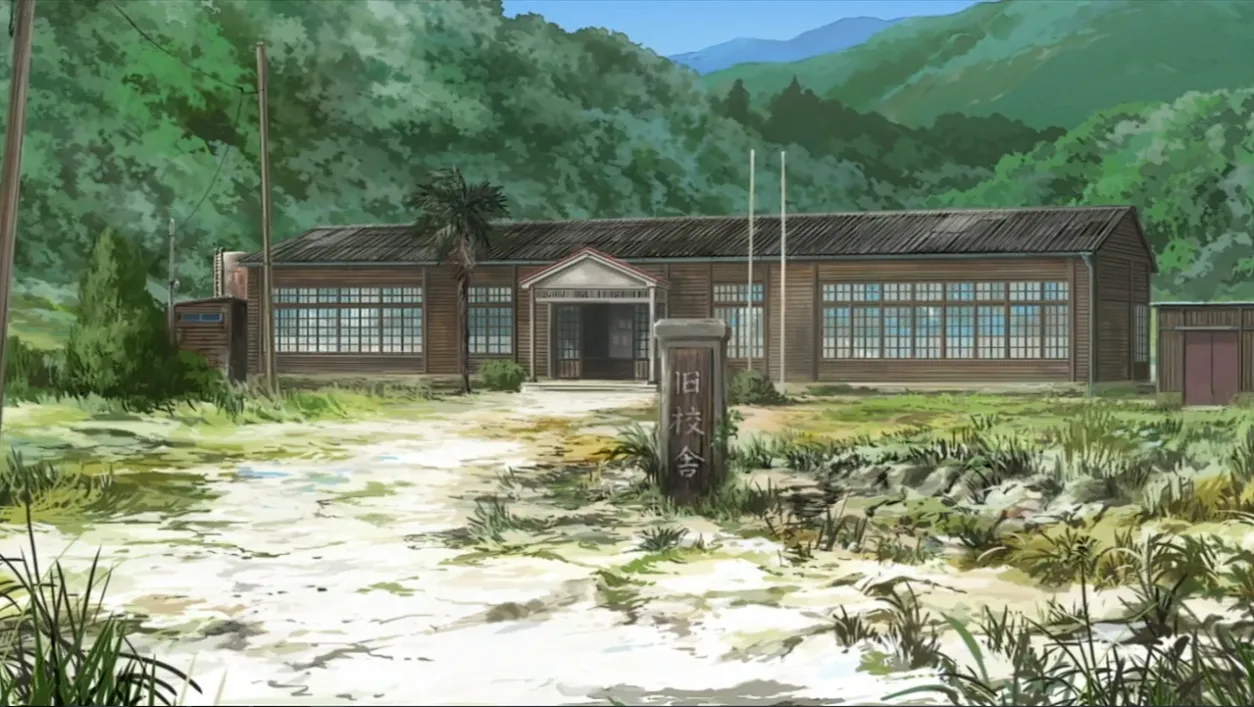
After most of the moon is vaporized, an unkillable creature takes the homeroom desk of Class 3-E at Kunugigaoka Junior High — the mountain shed reserved for the students the rest of the school has already written off. He is Koro-sensei, a name the class coins because he will not die. The government will pay a fortune to whoever finishes him. He, in return, will teach them everything he knows, including how to try.
What follows is a school year where assassination attempts sit between midterms, sports festivals, island trips, and ordinary afternoons on the mountain. Two extra instructors arrive to keep the operation legal and the students alive: a grim ministry agent and a professional killer posing as an English teacher. The clock runs to March. Most days, the more urgent problem is whether Class E can raise its scores and still look each other in the eye.
Characters
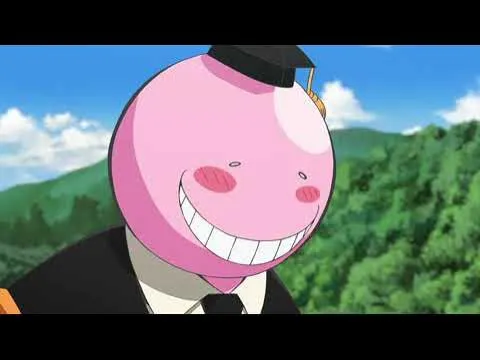
Koro-sensei is the engine and the joke. He is vain, sticky-fingered, easily flustered by gossip, and almost insultingly good at his job. The series never lets the yellow design flatten him into a mascot. Under the comedy is a teacher who takes discarded children seriously, which is why the premise does not collapse into cruelty. Jun Fukuyama’s performance sells both the slapstick and the stillness when a lesson actually lands.

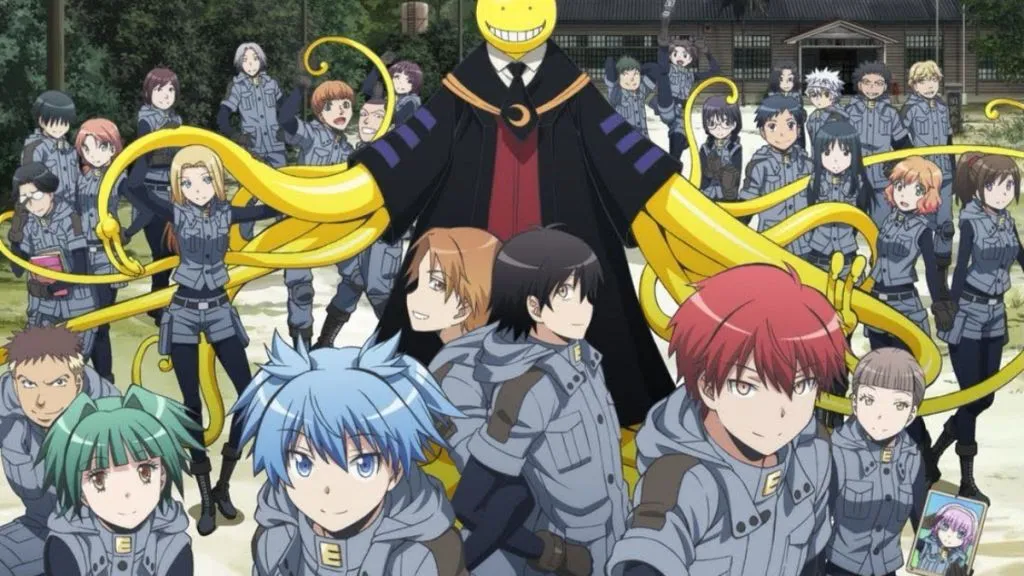
The class is large — nearly thirty students — and the show is honest about that. Not every face gets a novel. Nagisa Shiota looks harmless and watches more carefully than anyone in the room, that quiet attention becomes both an assassination skill and a way of seeing people. Karma Akabane is the opposite temperature: brilliant, mean when it is easy, loyal when it costs him something. Kaede Kayano starts as the cute seatmate and becomes one of the most carefully turned characters once the writing trusts her with more than punchlines.
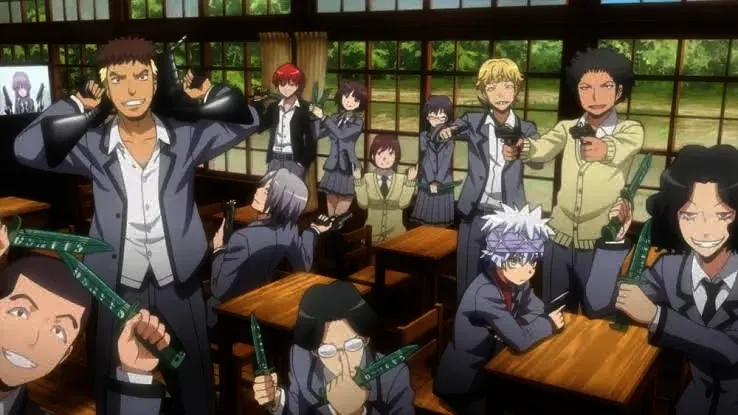
The roster works in clusters rather than solos. Yūma Isogai, Hiroto Maehara, Rio Nakamura, and Manami Okuda keep the room social. Ritsu, the digital transfer, is a clever use of the sci-fi premise. Itona Horibe arrives as a rival and stays as a student, which is the thesis in miniature.

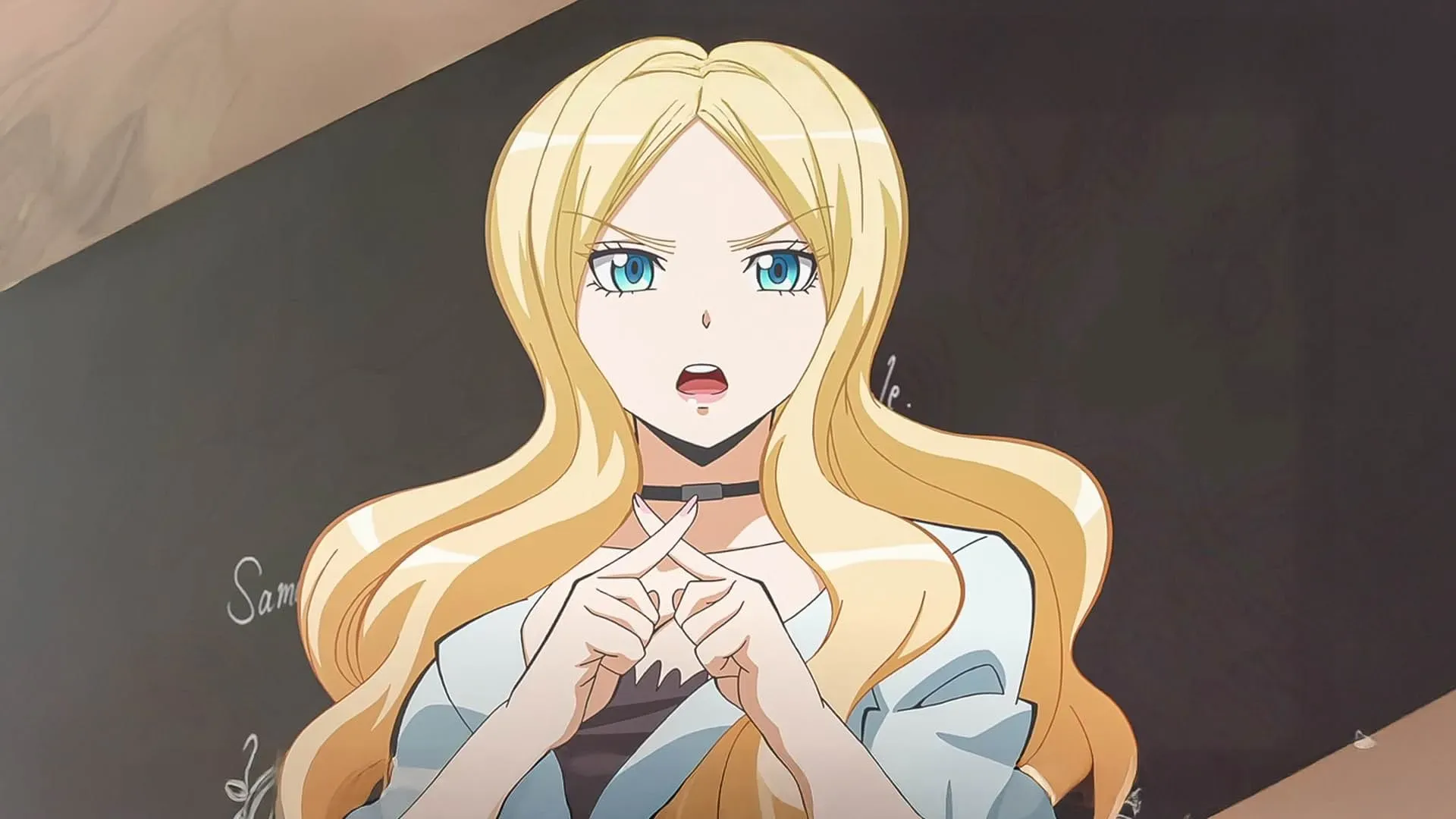
The adults matter as much. Tadaomi Karasuma is the government handler who discovers that teaching is not a side job. Irina Jelavić is the assassin hired as English faculty — glamorous, mercenary, and gradually unable to treat the class as a contract. Principal Gakuho Asano and his son Gakushū give the main campus a philosophy to fight: excellence used as a weapon against anyone who falls behind.
Story & Pacing
Season 1 is the school year as a sitcom with knives. Episodes often open on an assassination plan, slide into a class event, and close on a lesson that is specific rather than preachy. Baseball, midterms, the school trip — the structure is familiar on purpose. The show is not trying to out-suspense you, it is trying to make the mountain classroom feel like a place you would miss.
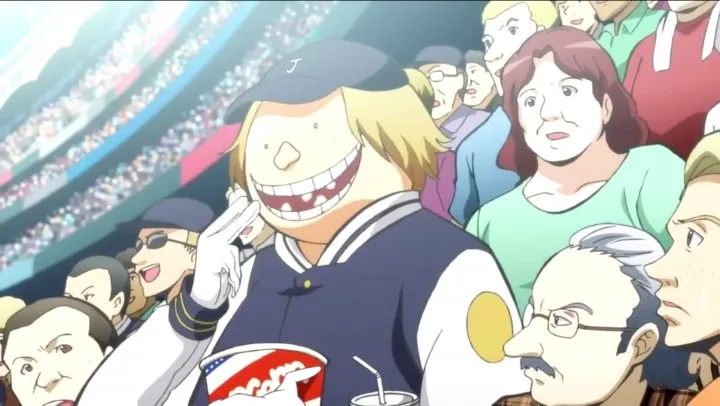
That patience is the series’ best instinct. Details accrue without a drumroll. By the time larger questions about Koro-sensei and the government’s interest in Class E come forward, you already care who sits where. Season 2 keeps the comedy but lets the year get heavier. The late stretch is more serialized and more talky, a few episodes exist mainly to set the board and the trade is worth it. The ending does not work unless the daily life has been allowed to exist first.
Forty-seven episodes is long for one academic year. The length is the point. You cannot fake this bond in twelve episodes of plot machinery.
Themes & Writing
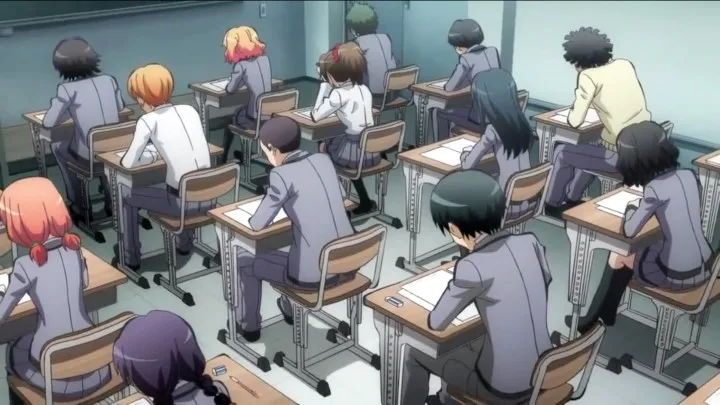
Under the tentacles is a sharp argument about school. Kunugigaoka’s main building sorts children into winners and leftovers. Class E is the leftover bin, parked on a mountain so the rest of the campus can feel tall. Koro-sensei’s method is the rebuttal: teach the same kids as if they are worth the effort, and watch the ranking system look small.
Assassination becomes a metaphor the writing earns. To kill someone you have to study them. To study them you have to pay attention, and paying attention is the beginning of care. The comedy keeps that from turning into a lecture. A failed sniper shot and a failed quiz live in the same register.
The series is also about found family without using the phrase. The bond that forms by the last stretch feels unbreakable because it was assembled out of ordinary Tuesdays — cleaning the old building, arguing over strategy, watching a teacher eat a pudding cup at Mach 20. When the year runs out, the emotion is not manufactured suspense. It is the fact that a classroom became a home.
Animation & Art
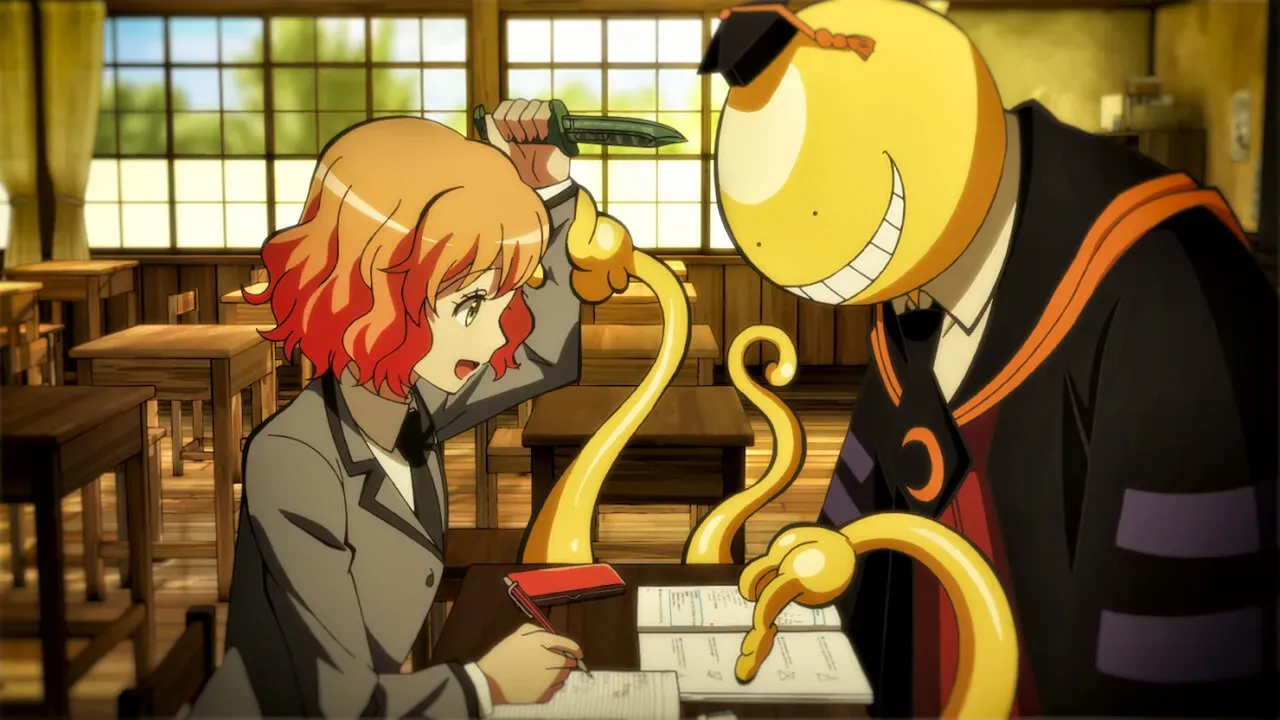
Lerche is not a prestige painter, and the series does not pretend otherwise. What it has is a strong design sense and a director, Seiji Kishi, who can stage a gag and a quiet desk shot in the same episode. Koro-sensei’s palette — yellow, dotted smile, color-coded moods — reads instantly. The mountain classroom versus the main campus’s glass-and-order architecture does as much thematic work as the dialogue.
Action is clear rather than lavish. Mach-20 movement is suggested with afterimages and cutting more often than with wall-to-wall fluid animation, which is the right call for two long seasons. Character acting carries the week: Nagisa going still, Karma’s grin tightening, Kayano’s expression dropping half a degree. There are off-model stretches. The identity holds.
Music & Sound Design
Naoki Satō’s score knows when to be a school-show soundtrack and when to lean ominous. Light cues cover classroom business; heavier motifs wait until the assassination stops being a game. The openings, performed by the in-universe student unit 3-nen E-gumi Utatan, are part of the joke and part of the glue — “Seishun Satsubatsu-ron” and “Jiriki Hongan Revolution” in Season 1, “Question” and “Bye Bye Yesterday” in Season 2.

The endings do different work. moumoon’s “Hello, shooting-star” is Season 1’s aftertaste: warm, a little lonely. Season 2’s “Kaketa Tsuki” and “Mata Kimi ni Aeru Hi,” both sung by Shion Miyawaki, look more directly at a year that cannot last. Sound design treats the assassination kit as classroom objects — the pop of a pellet, the snap of a knife that will never land.
What Worked / What Didn’t

What worked:
Treating the year as daily life instead of a ticking thriller. Koro-sensei as both comic object and genuine teacher. Nagisa and Karma as complementary ways of being dangerous and kind. A class identity that feels earned by the finale. Comedy that makes room for grief without announcing a tone shift. A complete story across two seasons.
What didn’t fully land:
A roster this size leaves several students as running gags with names. Irina’s early fanservice is broader and cheaper than the character she becomes. A handful of first-season episodes repeat the “plan, fail, learn” shape until you can see the template. Animation quality wobbles. Season 2’s backstory chapters explain more than they dramatize.
Those are real limits. They are also the limits of a show that chose warmth and completeness over tightness.
Who This Is For
This is one of the easiest first-watch recommendations I can make for someone trying comedy-drama with a little supernatural on the side. You do not need to love battle shonen or grimdark. You need a tolerance for Jump-style humor, a large cast, and a premise that looks nastier on the poster than it feels by episode three.
Skip it if classroom ensembles bore you, if assassination-as-comedy is a hard no, or if you want a mystery that withholds information for the sake of tension. The violence is stylized, but people do get hurt, and the last stretch is sincerely sad. Both seasons belong together; stopping at Season 1 is leaving before the year ends.
About the Original Manga & Author
Assassination Classroom is written and drawn by Yūsei Matsui, serialized in Weekly Shōnen Jump from July 2012 to March 2016 and collected in twenty-one volumes. Viz Media published the English edition between December 2014 and April 2018. By October 2023 the series had more than 27 million copies in circulation.
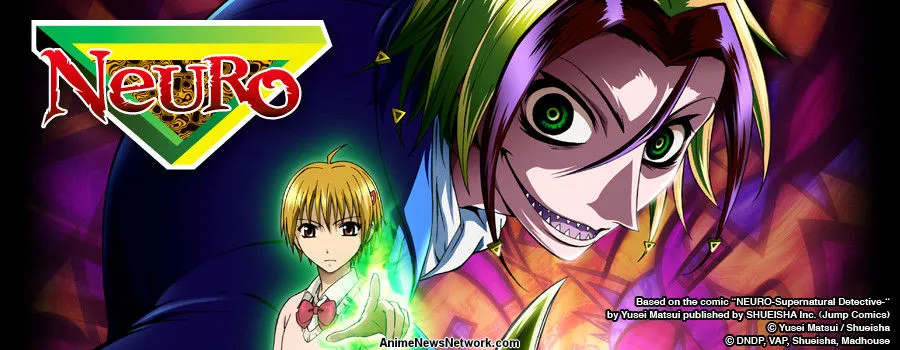
Matsui’s earlier Jump title, Neuro: Supernatural Detective, already mixed grotesque comedy with an earnest core. After this he moved to The Elusive Samurai, another odd-angle adventure that has also been adapted to anime. The television series follows the manga’s year with unusual completeness; the 2016 compilation film 365 Days and the Koro-sensei Q! spin-off are extras rather than required chapters.
Final Verdict + Score
Assassination Classroom is a complete, generous school story hiding inside a ridiculous contract killing. It unfolds instead of clutching its secrets. It spends its time on the classroom. By the time the year is over, the bond among those students and that teacher feels as solid as anything the medium has built out of a joke premise.
Final score: 9/10
Recommended — as a first anime for the comedy-drama curious, and as a rewatch for anyone who still thinks about a teacher they did not expect to miss.
Closing
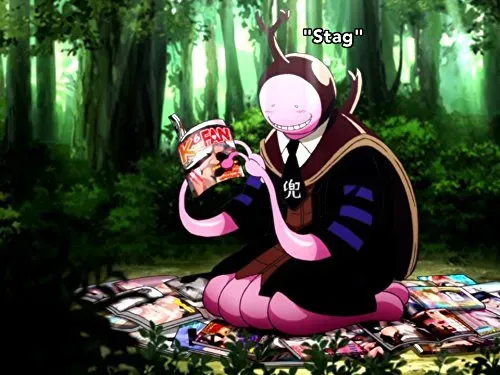
I keep coming back to Class E on that mountain, planning a murder and then getting distracted by homework. That is the series in one frame: the stakes on the poster, the life in the actual episode. The last stretch works because the show never treated the middle as filler.
If you have seen it, I would like to know which student you adopted first. If you have not, start at episode one, let the yellow octopus be ridiculous, and stay through graduation.
Couch talk
Quiet on this thread so far — say something (we mod before it goes live).