100 Girlfriends who really really love you : a tale of Rentaro Family.
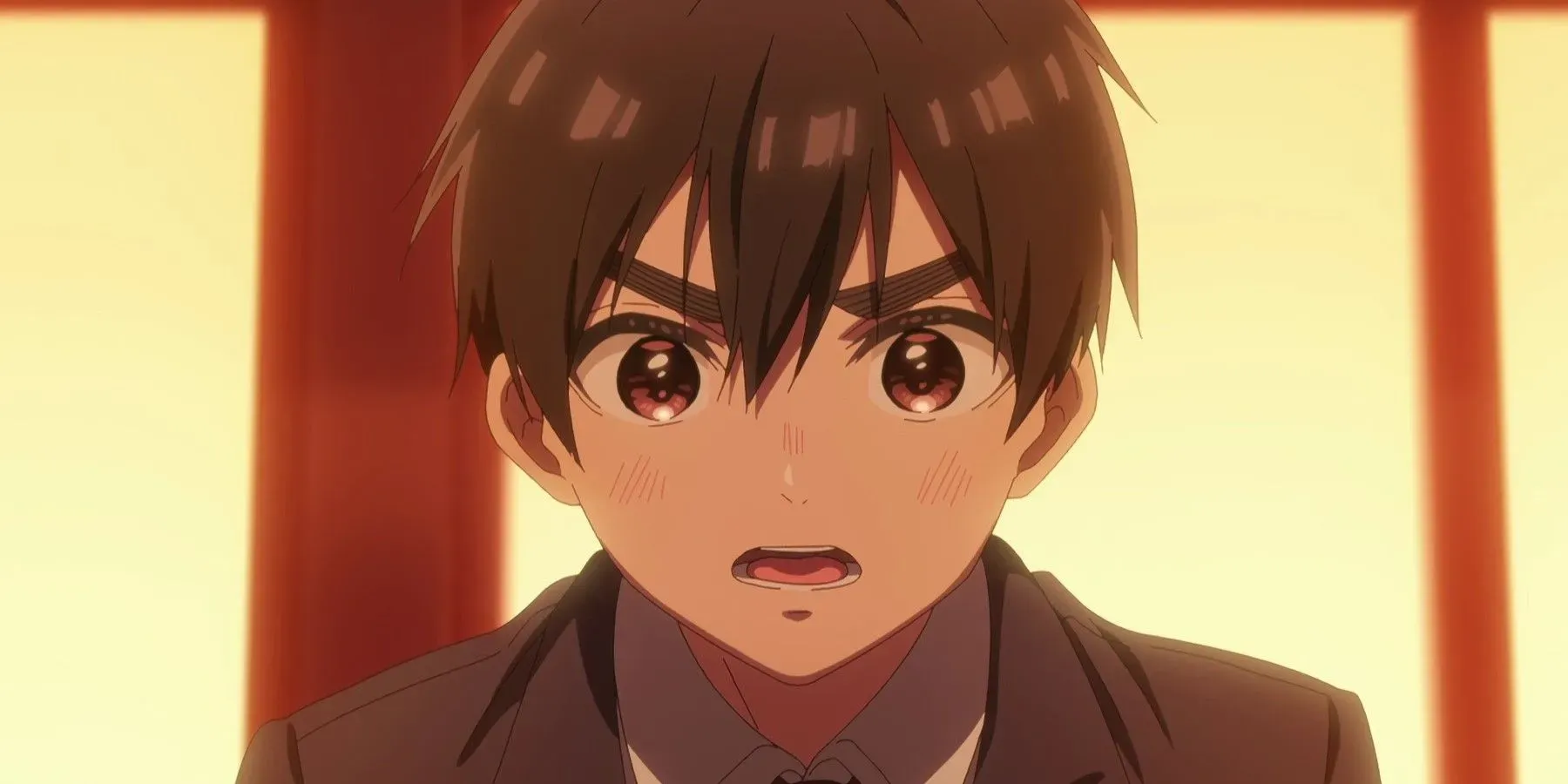
Rentarō Aijō ends middle school the same way he began it—alone. One hundred confessions. One hundred rejections. On the final day he walks to a shrine and asks, simply, for a girlfriend. The God of Love appears. A clerical error has been made. Most people are allotted one soulmate, if they are allotted any at all. Rentarō has been given one hundred. They will find him in high school. If he fails to love any of them in return, that soulmate will die.
The first day of high school arrives. He collides with two girls at once.
Hakari Hanazono recovers first, already calculating, already radiant with the certainty of love at first sight. Karane Inda recovers second, flushed and furious at the same certainty. Both feel the same electric recognition. Both claim him. That evening Rentarō returns to the shrine and learns the full weight of the error: rejection means death. He cannot choose. He will not hide. He kneels and asks them both to become his girlfriends together.
They accept.
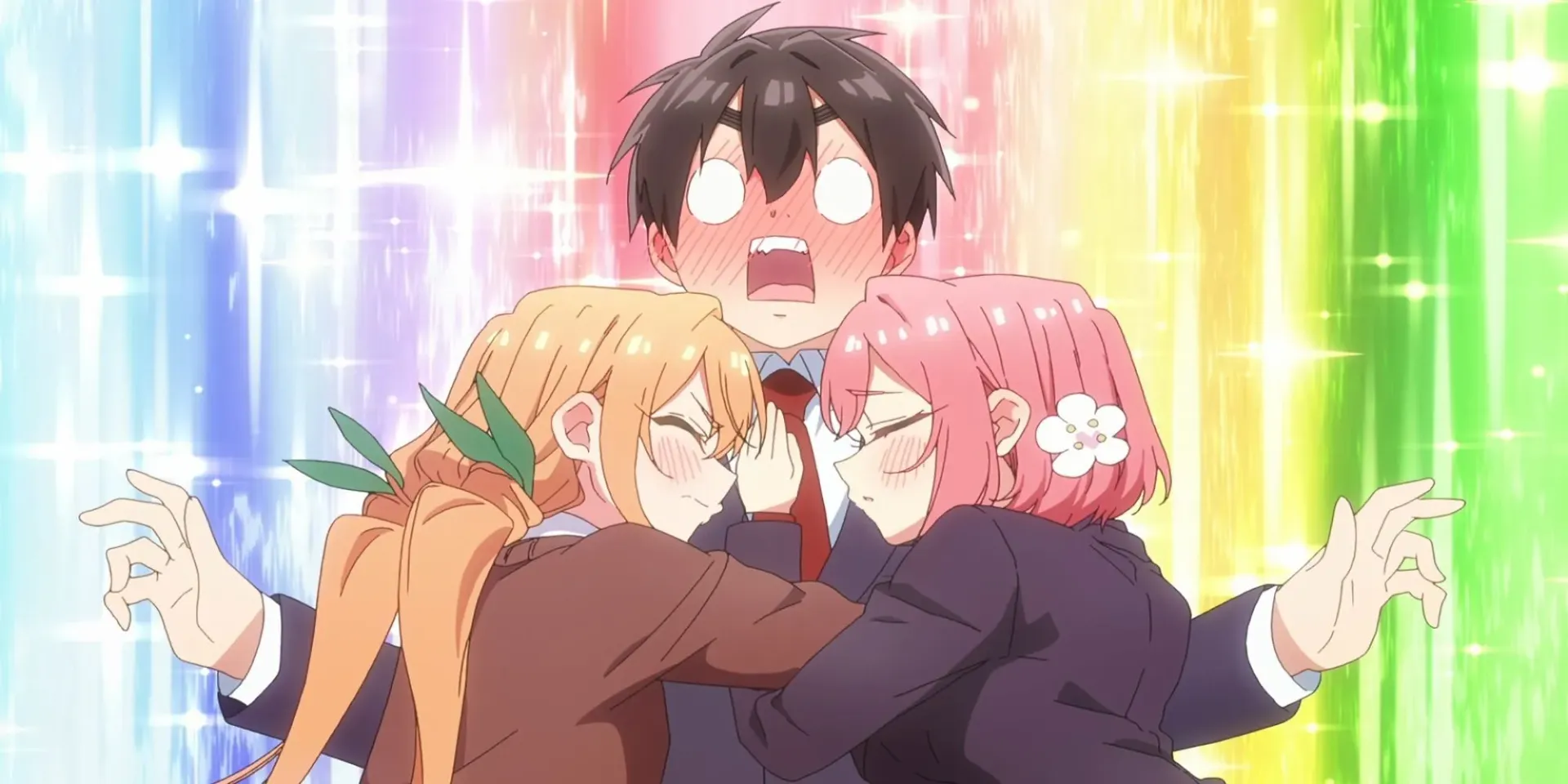
What follows is not the usual harem arithmetic of competition and elimination. It is the slow, deliberate construction of a family that refuses to leave anyone behind. The comedy is immediate and extreme. Hakari’s affection arrives as open, almost predatory devotion. Karane’s arrives as violence and denial that somehow never quite becomes rejection. Their first shared crisis is Rentarō’s complete lack of kissing experience. The contest that follows is pure farce—schemes, near-misses, a panicked three-way attempt involving an unexpected authority figure—yet underneath the slapstick sits a quieter insistence: no one will be left wanting.
Then the third soulmate appears.

Shizuka Yoshimoto does not speak. She carries a book and points to the words she needs. The other students treat her silence as an invitation to cruelty. Rentarō does not try to make her talk. He borrows the book she loves, sits with her, and later spends an entire night typing every page into a text-to-speech file so she can look someone in the eyes while the words leave her. When he brings her to Hakari and Karane and asks permission to love her as well, he offers his own life as collateral if he ever fails her. The vow is absurd. The sincerity is not. Shizuka’s first kiss arrives not as conquest but as quiet permission to exist without apology.
The pattern continues. Each new soulmate arrives already complete in her extremity, and the family expands to hold her without sanding her down.
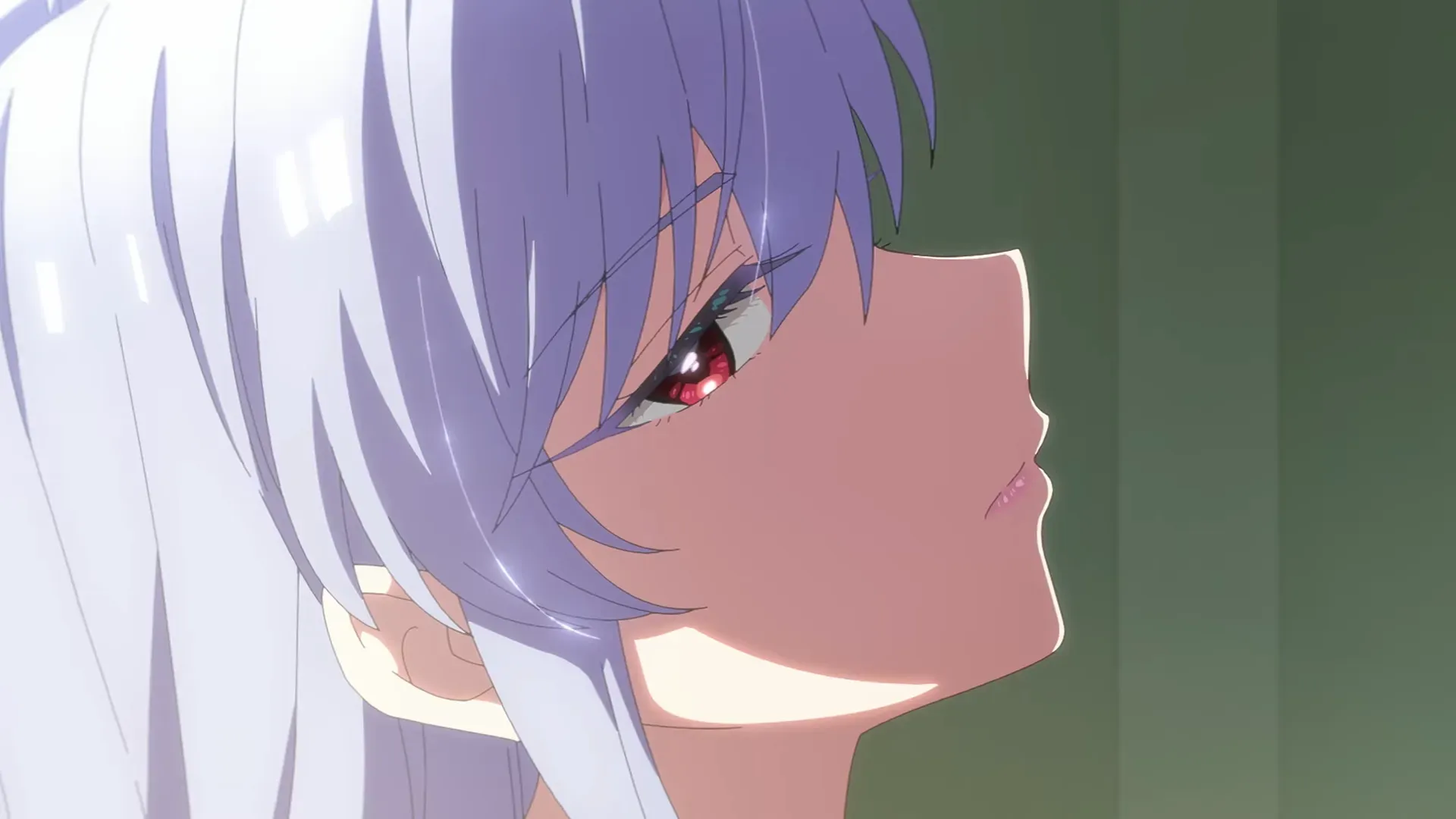
Nano Eiai is the school’s perfect machine—top grades, zero wasted motion, a face that registers nothing. Rumor calls her a robot. Rentarō takes her to an amusement park anyway. Efficiency collapses. She tries to discard the photographs of the day and discovers she cannot. The tears arrive without permission. The kiss that follows is the first inefficient act she has ever chosen. When she is introduced to the others, the group does not demand she become softer. They simply make room for the person who has finally decided room is worth having.
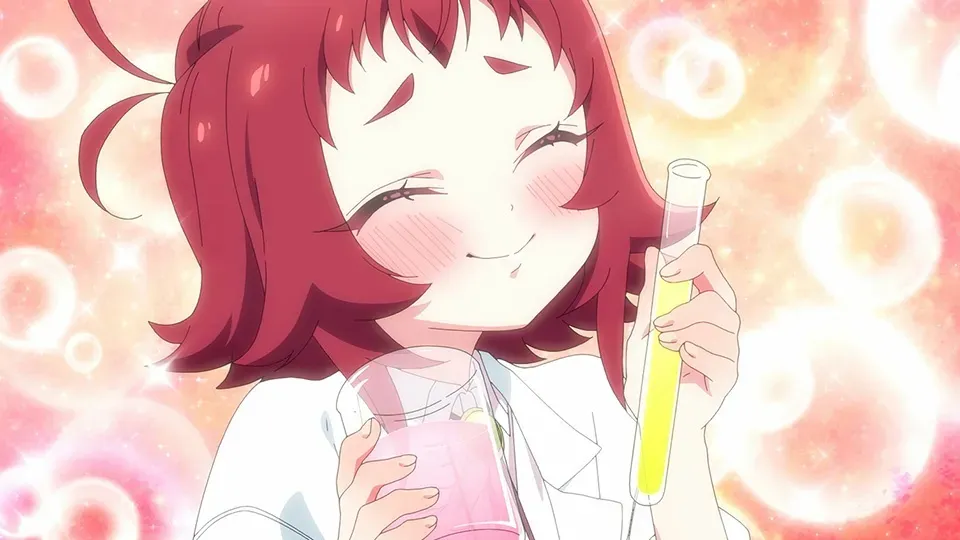
Kusuri Yakuzen arrives through chemistry. A love potion in the tea. A failed immortality drug that has left her body the size of a child’s while her mind remains eighteen and brilliant and dangerously curious. She invents compounds that turn the other girlfriends into kiss-hungry zombies, then invents the antidote while the chaos is still unfolding. Rentarō does not scold her for the risk. He tells her he will love her even when her inventions threaten to unmake the family she has only just joined. The declaration is ridiculous. It is also the only possible answer to a girl who has spent her life treating people as test subjects because no one ever insisted she was more than that.
The sixth soulmate is the one the story has been circling all along.
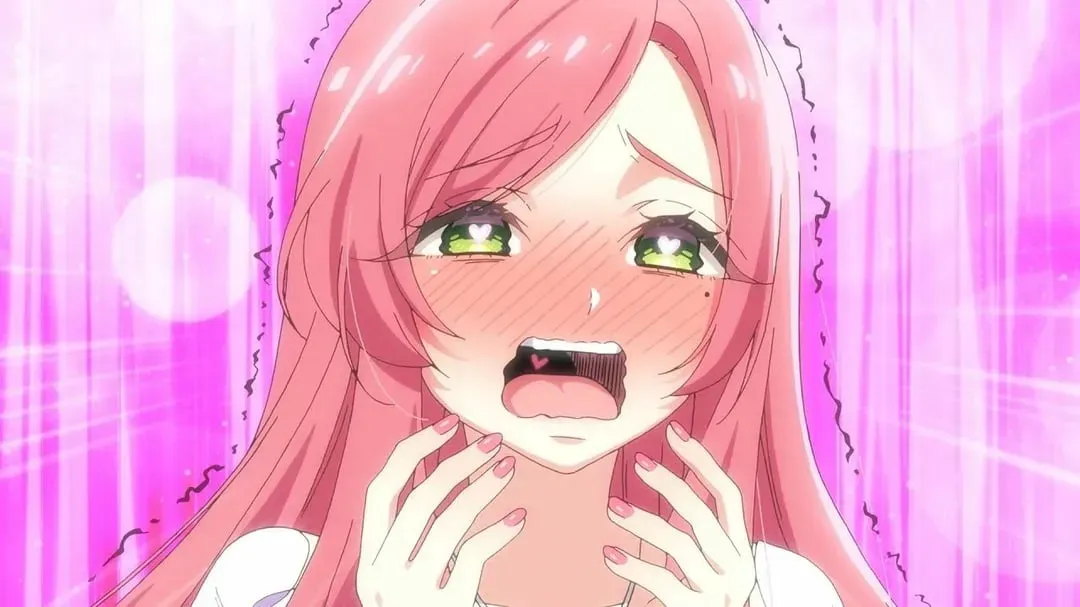
Hahari Hanazono, Hakari’s mother, appears first as an obstacle. Wealthy, powerful, still carrying the scar of a childhood love that ended before a single kiss. She intends to remove her daughter from the “pest” who claims to love five girls at once. The infiltration of the Hanazono mansion is pure genre excess—drugs that fool sensors, disguises, alarms. Then the drug that was masking Hahari’s own recognition wears off. The same electric recognition that struck her daughter strikes her. She resists. She tests. She nearly loses Hakari when the girl decides death is preferable to separation. Rentarō throws himself between Hakari and the ground. In the fountain that receives them both, Hahari finally understands that the boy’s love is not divided. It is multiplied. She asks him to take care of her daughter. He answers that he will take care of both of them.
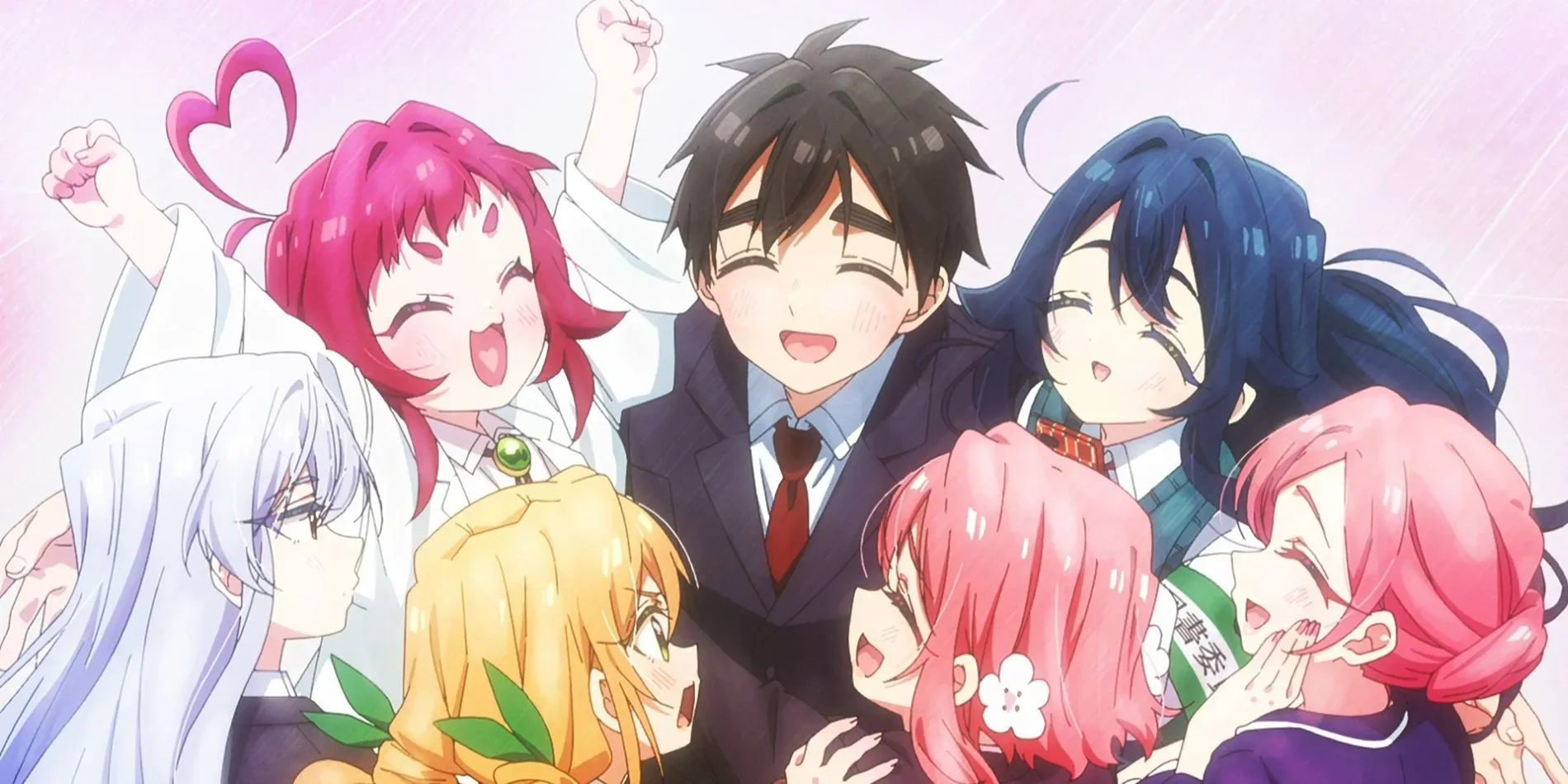
The season ends with the family already larger than the original two, already denser than any ordinary romance. They peep. They cross-dress. They buy a high school so no one has to be far from anyone else. They stand together on a rooftop and wait for the next kiss as if it is the most natural thing in the world.
What lingers is not the number. One hundred is a joke the series tells on itself and never stops laughing at. What lingers is the absolute refusal to treat any single affection as lesser. The comedy works because the premise is taken more seriously than any ordinary harem ever dares. Every exaggerated trait—Hakari’s open hunger, Karane’s explosive denial, Shizuka’s silence, Nano’s calculation, Kusuri’s chemical recklessness, Hahari’s wounded over-protection—is allowed to remain exaggerated and is still met with the same unwavering care. The emotional turns arrive without announcement: a transcribed novel, a photograph that cannot be thrown away, a mother who finally believes her daughter will not be abandoned the way she once was. The absurdity does not undercut the feeling. It clears space for it.
Rikito Nakamura’s earlier stories—brief, sharp pieces about failed heroes and quiet tragedies—already showed a fondness for characters who refuse to accept the limits the world assigns them. Yukiko Nozawa’s previous gag work, especially the Eguchi-kun series, perfected the art of letting a single ridiculous trait generate endless, affectionate chaos. Together they have built something that feels both continuous with those earlier instincts and larger than either of them could have reached alone. The same precise timing that once made a single eccentric boy endlessly funny now sustains an entire expanding household. The same attention to emotional residue that once colored smaller tragedies now gives weight to a premise that should have remained pure farce.
Season 3 Running now
The family is still only six strong when the first season closes. Ninety-four remain. Season 2 carries the count to eleven before it ends. Season 3 is airing now, the family still growing, the remaining number still absurdly large. The number itself is a joke the series never stops telling. The care required to meet each new soulmate is not. That tension—between the impossible scale and the absolute seriousness with which every individual is held—continues after every screen goes dark.
Couch talk
Quiet on this thread so far — say something (we mod before it goes live).